

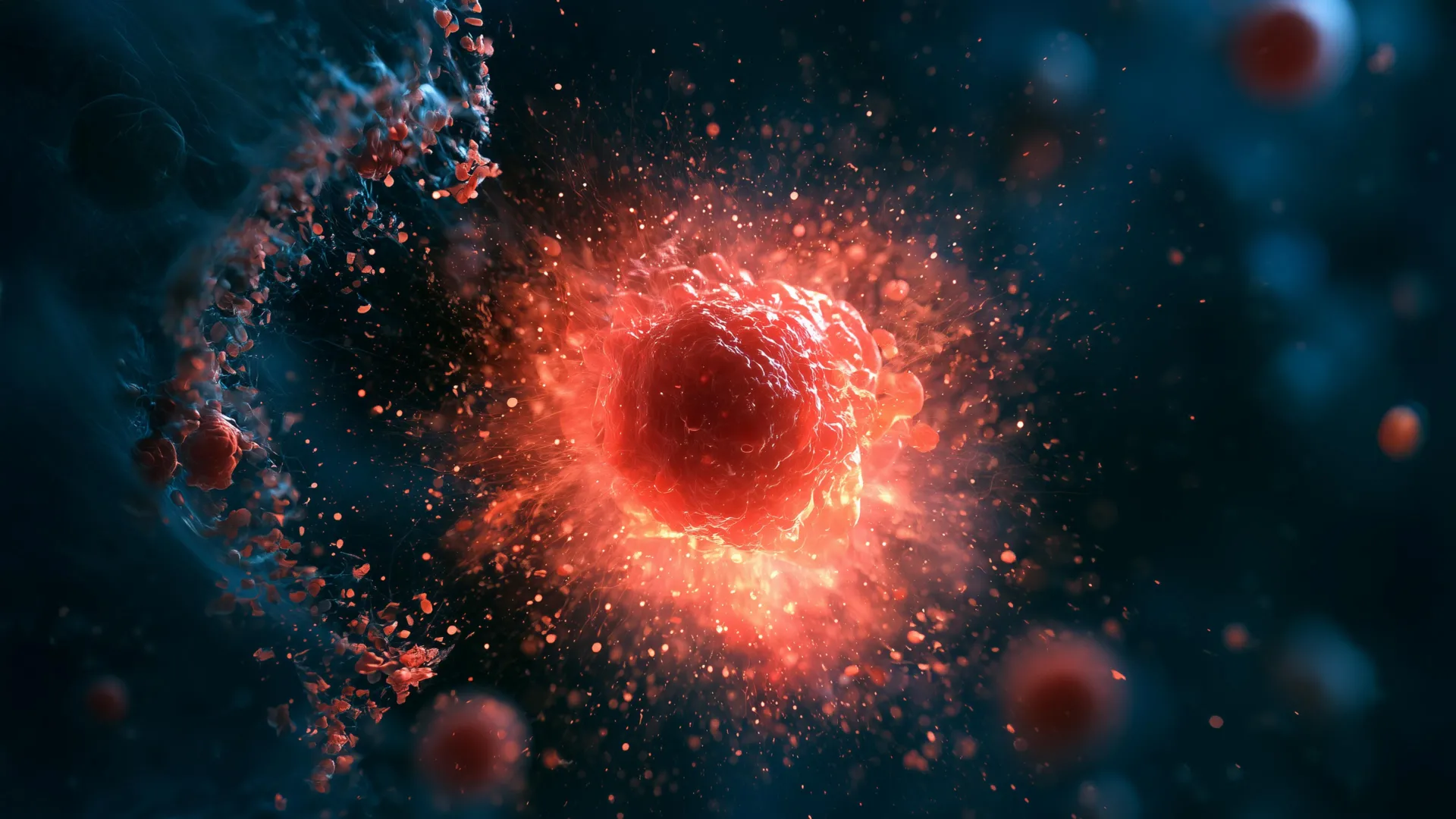
Scientists at Stanford University have discovered a previously unknown type of immune cell in planarian flatworms that destroys neighboring cells through a rapid explosive process. The discovery, published in Cell, identifies these cells as playing a critical role in the flatworm’s ability to reject foreign tissue.
The research began when postdoctoral researcher Chew Chai investigated whether flatworms could distinguish their own tissues from those of other individuals. To test this, Chai surgically fused portions of different worms together, creating hybrid organisms. While flatworms possess remarkable regenerative abilities, these fused worms mounted a severe immune response against the foreign tissue, ultimately dying within several days. The reaction resembled organ rejection in humans but operated through a distinctly different cellular mechanism.
During this immune response, Chai detected elevated levels of the hormone activin, which triggered chronic inflammation. Using advanced microscopy and flow cytometry techniques, she observed that a small population of cells suddenly burst open, released toxic substances into their surroundings, and vanished completely within five minutes. Senior author Bo Wang and his team named these cells ruptoblasts and the explosive process ruptosis. This cell death mechanism operates far more rapidly than comparable explosive cell death processes observed in mammals and bacteria, which typically unfold over several hours.
Testing revealed that ruptoblasts could destroy multiple target types, including bacteria, human kidney cells, and mouse blood cells. The damage remained localized to cells immediately adjacent to the explosion, with no chain reaction or lasting toxicity. Researchers believe ruptoblasts intensify their normal secretion systems to release toxic materials suddenly after encountering activin, with calcium from within the cell driving the explosive process. These cells represent a distinct immune strategy, differing fundamentally from blood cells like T cells and neutrophils.
When researchers searched for similar cells in other species, they found them only in basal bilaterians such as flatworms, suggesting ruptoblasts emerged early in animal evolution. Vertebrates likely lost this defense mechanism because they cannot easily repair the surrounding tissue damage caused by ruptosis, whereas flatworms contain abundant stem cells enabling rapid tissue replacement. The findings demonstrate the value of studying unconventional research organisms and suggest that examining diverse animal immune systems may reveal strategies applicable to treating infections and tumors.
Article Attribution | Read More at Article Source
Article summary produced by Claude AI