

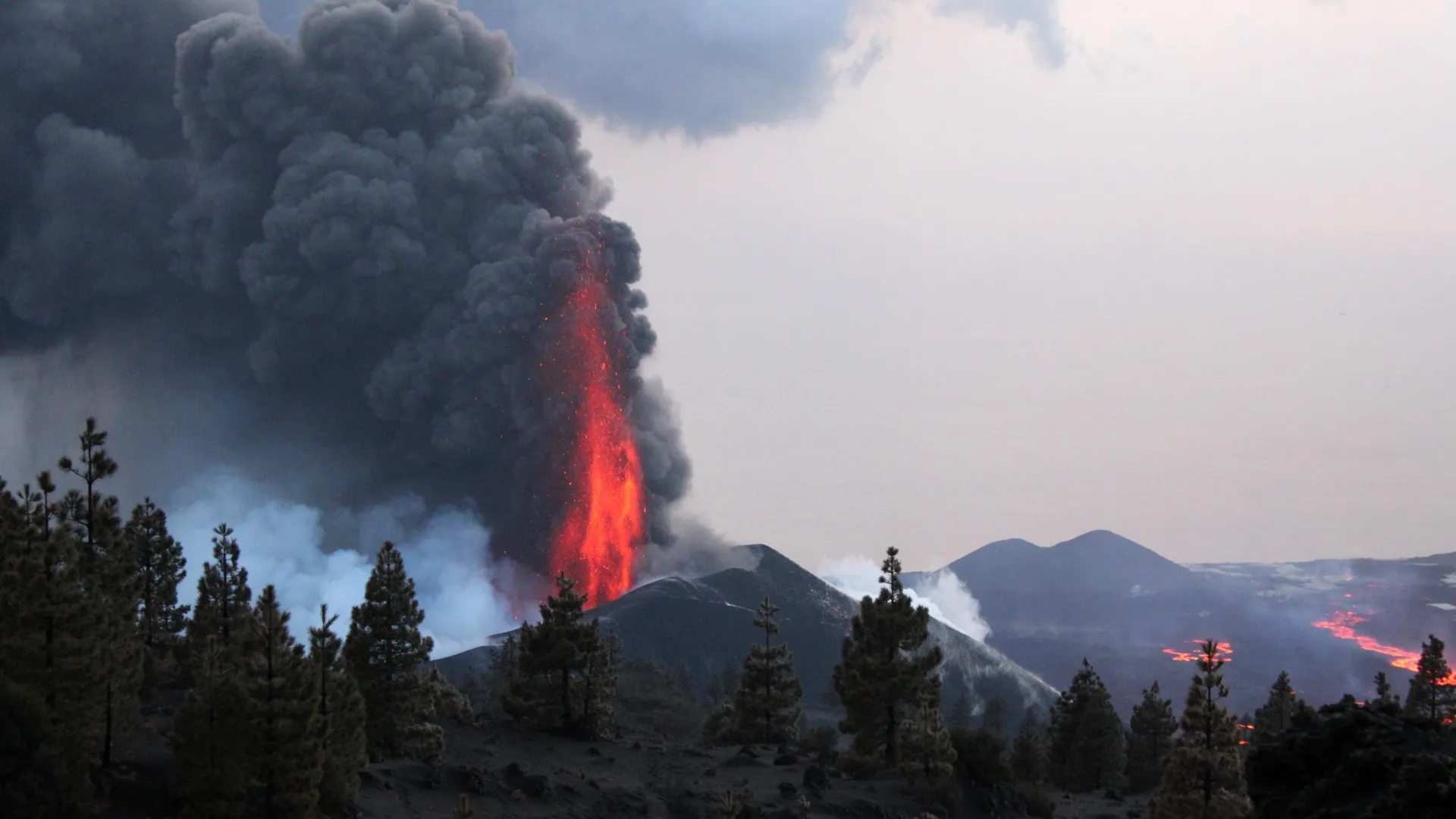
An international research team led by The University of Manchester investigated how thermal processes within magma influence volcanic eruption styles. The researchers analyzed samples from the Tajogaite eruption on La Palma, Spain, publishing their findings in Nature Communications.
The team discovered that superheating—a condition where magma becomes hotter than the temperature at which crystals normally stabilize—can dramatically delay crystallization. When magma experiences intense heat, it dissolves existing crystal nuclei that typically serve as growth templates for new crystals. Additionally, superheating alters the microscopic structure of magma, making it less conducive to new crystal development. These effects substantially influence both the rate at which magma ascends through the crust and the efficiency of volcanic gas escape.
To study this process, researchers recreated volcanic conditions in the laboratory using magma from the eruption. At Diamond Light Source, they employed synchrotron X-ray microtomography to observe crystal formation in real time, while complementary experiments conducted in Prague allowed for longer-term observations. The results revealed stark differences: non-superheated magma began crystallizing after approximately 20 minutes, while strongly superheated magma showed no crystal formation for more than eight hours.
When researchers incorporated these experimental findings into numerical models simulating magma ascent, they found that extended crystallization delays allowed magma to remain fluid enough to rise rapidly, potentially generating powerful lava fountains. Conversely, earlier crystal formation increased magma viscosity, slowing its rise and providing more time for gases to escape, resulting in gentler effusive eruptions.
The findings may enhance volcanologists’ ability to interpret monitoring data and forecast eruption behavior. Scientists noted that volcanic hazard models typically emphasize magma chemistry, gas content, and pressure but may need to incorporate pre-eruptive thermal history and crystallization kinetics for more accurate hazard assessment.
Article Attribution | Read More at Article Source
Article summary produced by Claude AI