

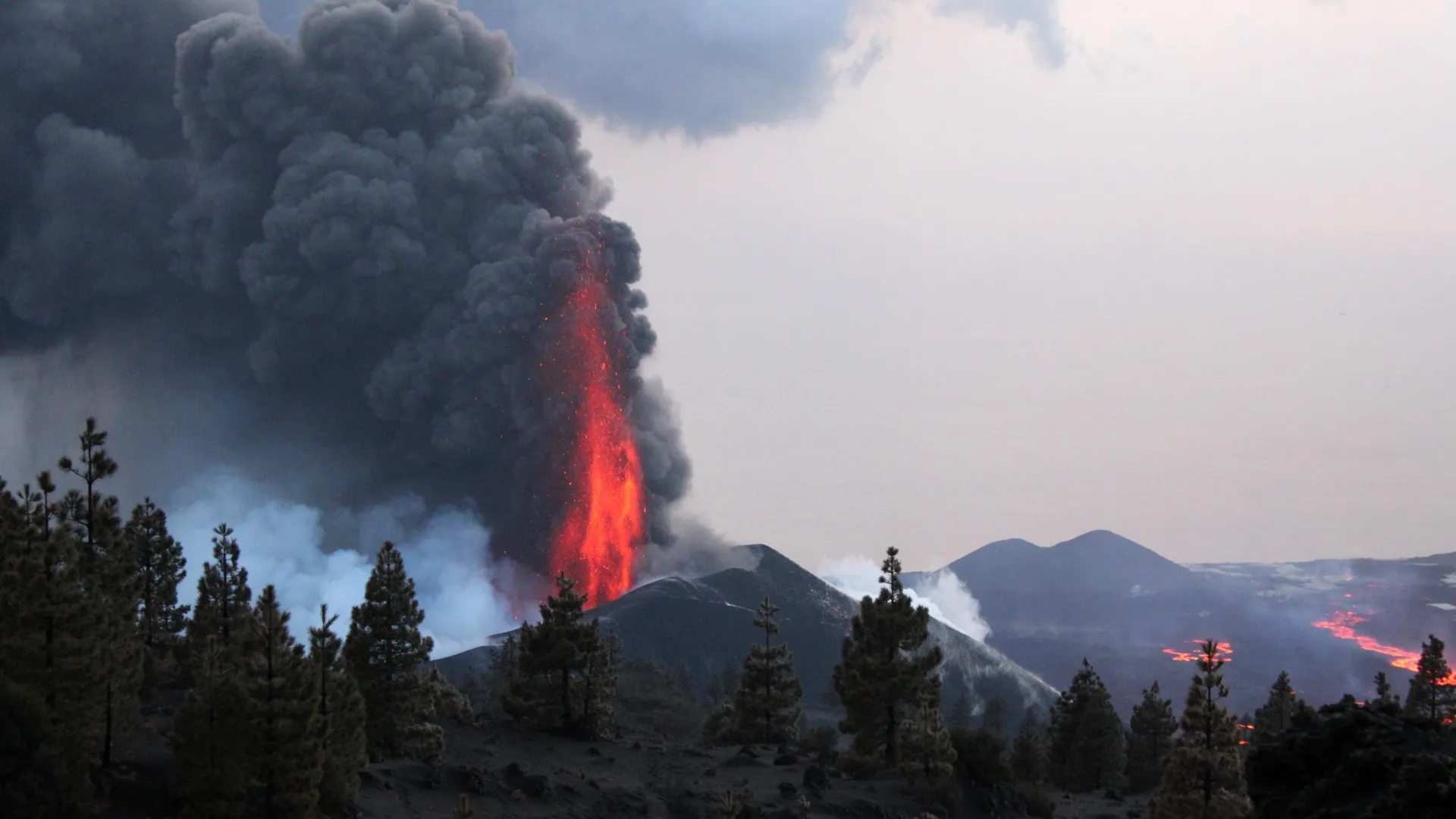
An international team led by The University of Manchester has identified a heat-driven mechanism that may clarify the varying eruption patterns observed across volcanoes with similar characteristics. The researchers analyzed magma samples from the 2021 Tajogaite eruption on La Palma, Spain, focusing on a phenomenon called superheating, wherein magma becomes hotter than the temperature threshold at which crystals normally remain stable.
Superheating operates through two distinct mechanisms. First, the intense heat dissolves existing microscopic crystals that typically serve as nucleation sites for larger crystal growth. Second, the process reorganizes magma at the microscopic scale, creating a more uniform internal structure that is less conducive to crystal development. These alterations can significantly affect both the rate at which magma ascends through Earth’s crust and the efficiency of volcanic gas escape, factors that ultimately determine eruption style.
To investigate these processes, the research team recreated volcanic conditions in laboratory settings using magma samples from the Tajogaite event. Using synchrotron X-ray microtomography at Diamond Light Source, scientists observed crystal formation in real time while subjecting samples to controlled conditions of extreme heat and pressure. Complementary experiments conducted in Prague allowed observation over extended periods. The findings revealed a striking contrast: non-superheated magma began crystallizing after approximately 20 minutes, while strongly superheated magma showed no crystal formation for more than eight hours.
Numerical simulations incorporating these experimentally measured crystallization delays demonstrated that prolonged delays in crystal formation maintain magma in a relatively fluid state, enabling rapid ascent and potentially generating spectacular lava fountains. Conversely, earlier crystal formation increases magma viscosity, slowing its rise and allowing more time for gas escape, which typically results in gentler, effusive eruptions. The researchers suggest this newly identified role of superheating could enhance volcanologists’ ability to interpret monitoring data and refine predictions of eruption behavior, potentially improving volcanic hazard assessments.
Article Attribution | Read More at Article Source
Article summary produced by Claude AI