

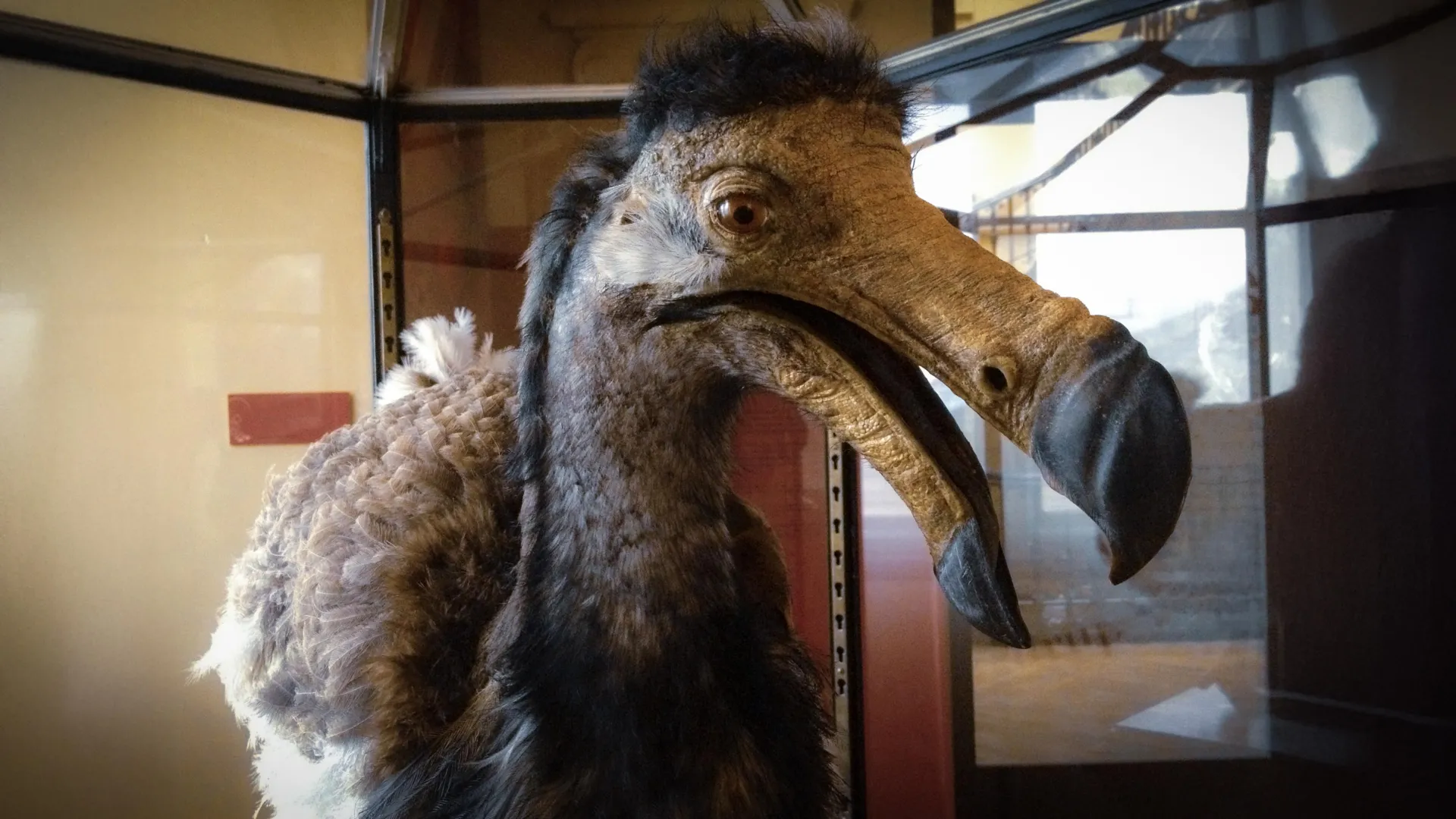
An international research team led by the University of Lethbridge has conducted a detailed study of the dodo’s sensory capabilities by examining rare skull specimens. The investigation focused on two complete dodo skulls, one held at the Natural History Museum Denmark and the other at Oxford University Museum of Natural History, to understand how the extinct bird perceived its environment.
Researchers used high-resolution CT scanning to create precise three-dimensional digital models of the skulls without causing damage. The scanning technology allowed scientists to reconstruct the interior cavities where the dodo’s brain once sat. Since developing brains leave impressions on surrounding bone, these preserved structures provided evidence about how the extinct animal processed sensory information from its surroundings on Mauritius before becoming extinct in the late 17th century.
The study compared reconstructed dodo brain cavities with those of living pigeons and doves, the dodo’s closest modern relatives. The analysis revealed several distinctive traits in the extinct species. The skull anatomy suggests the dodo may not have been exclusively active during daylight hours and could have foraged around dawn and dusk. Additionally, the bird appears to have relied more heavily on smell than its modern relatives and possessed a large upper beak suited for detecting tactile information.
Researchers noted that skull anatomy alone cannot determine exact behavioral patterns, but the findings provide new evidence about how the dodo located food and interacted with its island habitat. The study challenges popular cultural depictions of the dodo as unintelligent or clumsy, instead suggesting the bird possessed a distinctive combination of sensory adaptations developed over millions of years in isolation. While the research does not answer all questions about the dodo, combining data from multiple specimens allows scientists to move beyond historical speculation and make more evidence-based interpretations of the bird’s biology and ecology.
Article Attribution | Read More at Article Source
Article summary produced by Claude AI