

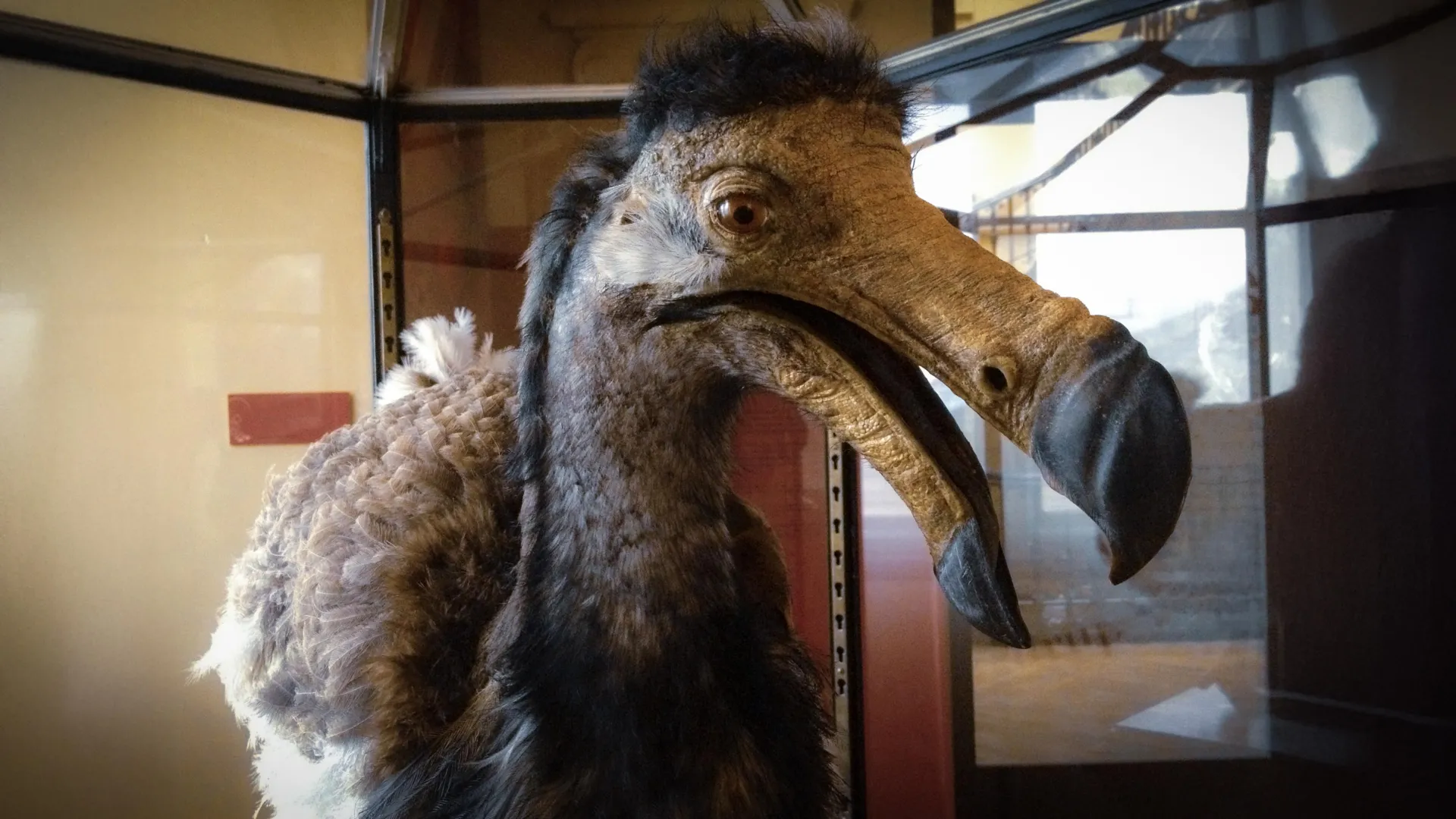
An international team of researchers led by the University of Lethbridge in Canada has conducted a detailed analysis of dodo skull anatomy to better understand how the extinct bird perceived its environment. The study utilized high-resolution CT scanning of the Copenhagen specimen housed at the Natural History Museum Denmark, producing detailed three-dimensional digital models that revealed the internal structure of the skull, including the cavity where the bird’s brain once resided. The research also incorporated data from the only other complete dodo skull known to exist, located at the Oxford University Museum of Natural History, allowing for comparative analysis.
By reconstructing the spaces that housed the dodo’s brain and comparing them with modern pigeons and doves—the bird’s closest living relatives—researchers identified several distinctive sensory characteristics. The skull anatomy suggests the dodo may have possessed a heightened sense of smell compared to contemporary pigeon species and that its large upper beak was particularly sensitive to tactile information. Additionally, the findings indicate the bird may not have been strictly diurnal, potentially foraging and moving about during twilight hours at dawn and dusk.
The research was facilitated by museum preparations for new permanent galleries scheduled to open in 2027, which provided an opportunity to study the valuable specimen in greater detail without causing damage. Scientists emphasize that while skull anatomy alone cannot definitively determine behavior, the comparative analysis of the only two complete dodo skulls offers a more evidence-based foundation for understanding the species than centuries of speculation.
The findings challenge popular depictions of the dodo as a cognitively limited creature, instead suggesting an animal with specialized sensory adaptations that developed over millions of years on an isolated island. Researchers note that while this study does not answer all questions about the dodo’s behavior and ecology, it provides a stronger framework for moving beyond myths and constructing more accurate interpretations of how the extinct bird lived on Mauritius before its disappearance in the late 17th century.
Article Attribution | Read More at Article Source
Article summary produced by Claude AI