

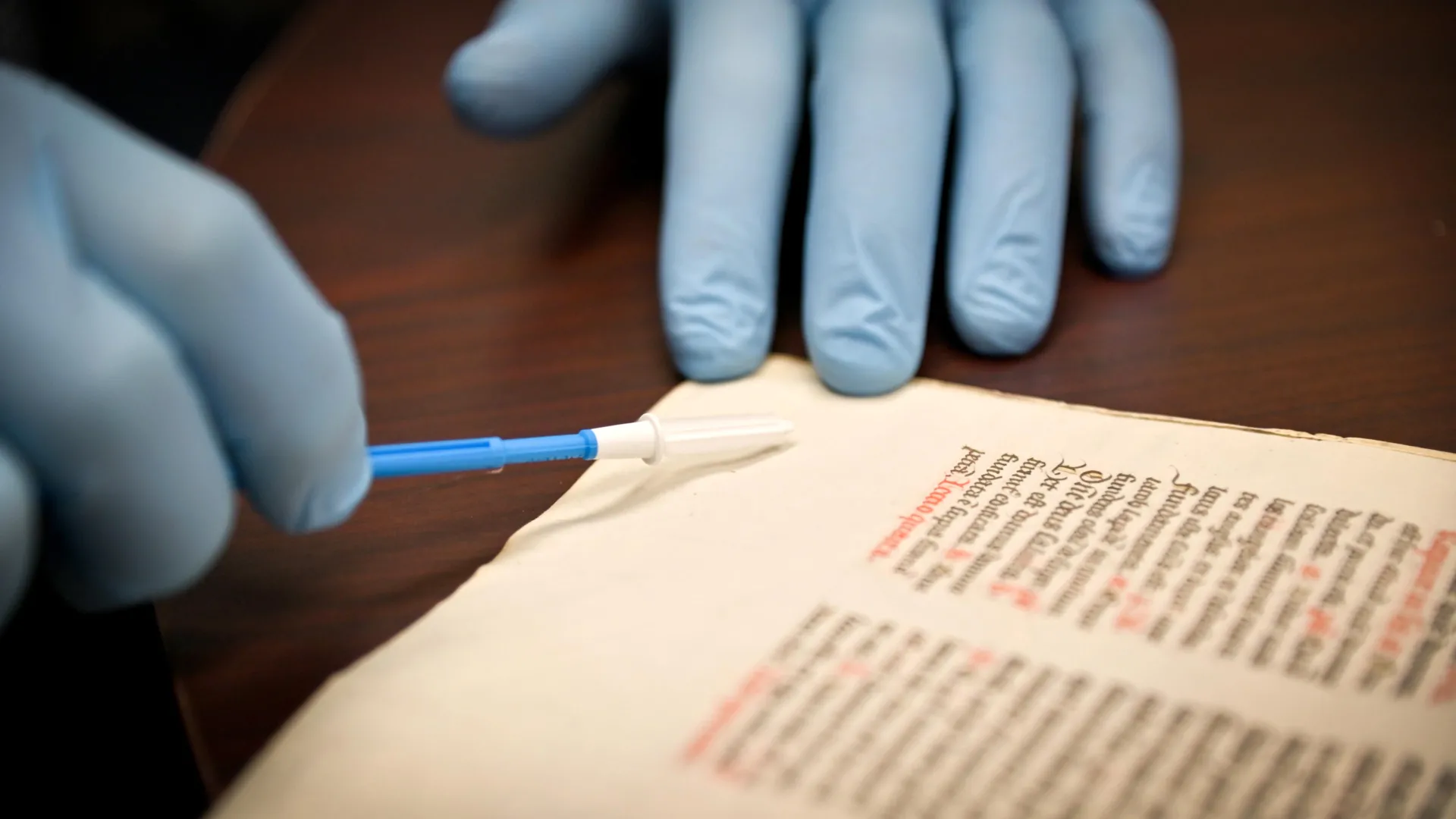
Researchers at North Carolina State University have devised a technique to extract cellular material from historic parchment documents without causing damage. The approach uses a standard dry cytology brush to gently collect cells from manuscript surfaces, which are then analyzed using forensic-level genetic sequencing technologies to isolate and amplify DNA sequences.
Parchment, made from animal skin, has been used for thousands of years across Europe, the Middle East, and parts of Africa for documents including legal records and maps. Because the biological material in animal skins is preserved within the parchment, researchers can recover genetic information alongside the written text, providing insights into the origins and composition of historic manuscripts.
To validate their methodology, the team collected samples from 91 manuscripts housed at Duke University’s Rubenstein Library, with documents originating from locations spanning England to Ethiopia and dating from the late eighth century through the early twentieth century. The genetic data extracted could illuminate how domesticated animals evolved over time, how different breeds developed, and what diseases affected livestock populations throughout history.
Previously, a significant barrier to this type of research has been institutional reluctance to allow sampling of rare and culturally important manuscripts due to concerns about potential damage. The non-invasive sampling method addresses this concern, potentially encouraging libraries and museums to grant researchers greater access to historic documents for genetic analysis.
The research represents the emergence of an interdisciplinary field that combines genetic analysis with traditional historical scholarship, archaeology, and agricultural study, according to the researchers involved in the project.
Article Attribution | Read More at Article Source
Article summary produced by Claude AI