

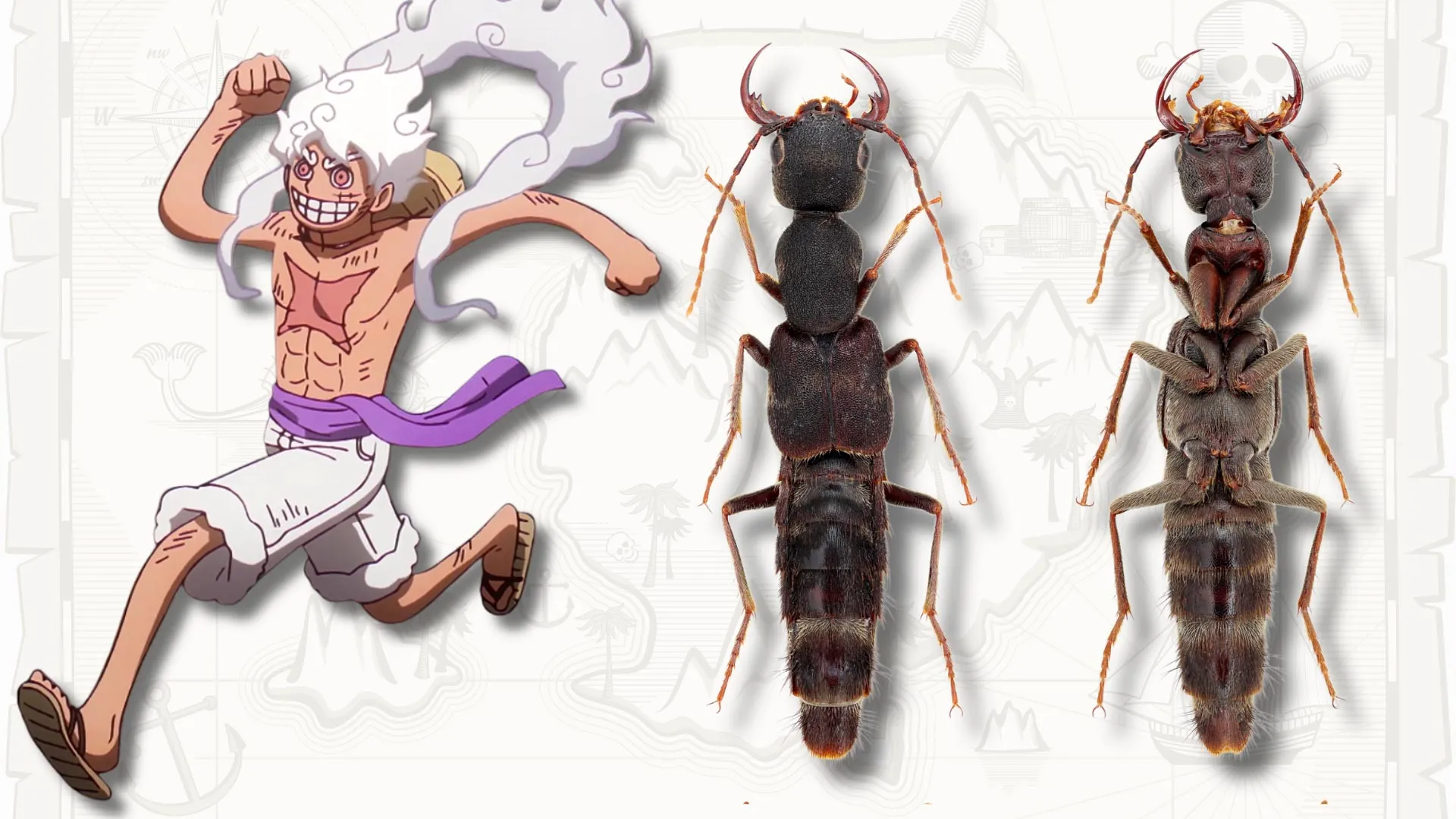
Researchers have formally established a new beetle genus designated Luffy and identified two species within this classification. The genus received its name because members exhibit exceptionally long and slender mandibles, antennae, and maxillary palps that visually parallel the rubber body characteristics of Luffy, the protagonist from the manga series One Piece. The taxonomic descriptions were published in the peer-reviewed journal ZooKeys.
The first identified species, Luffy schillhammeri, was discovered in broadleaf forests located in Yunnan Province, China. The species epithet honors Dr. Harald Schillhammer of the Natural History Museum Vienna for his significant contributions to rove beetle research. The second species, Luffy nika, was collected in Louang Namtha in northern Laos and derives its species name from a storyline element in One Piece involving Luffy’s Devil Fruit awakening. This beetle displays prominent white hair bands on its elytra and body, characteristics the research team noted resembled Luffy’s appearance during a specific transformation sequence.
Beyond its pop culture connection, the discovery holds evolutionary significance within beetle classification. PhD student Fang-Shuo Hu and researcher Alexey Solodovnikov of the Natural History Museum of Denmark conducted a comprehensive analysis of the Ocypus beetle group and several related classifications with previously uncertain positions in beetle family relationships. Through detailed anatomical comparisons across numerous specimens, they identified shared characteristics that define specific lineages and determined that Luffy occupies an intermediate position between the Eucibdelus lineage and other Ocypus-group members. This positioning fills a classification gap and provides new insights into the evolutionary history of the subtribe Staphylinina.
The researchers have indicated their intention to use this discovery’s narrative to increase public engagement with taxonomic science and encourage broader interest in biodiversity research and species classification among younger audiences.
Article Attribution | Read More at Article Source
Article summary produced by Claude AI