

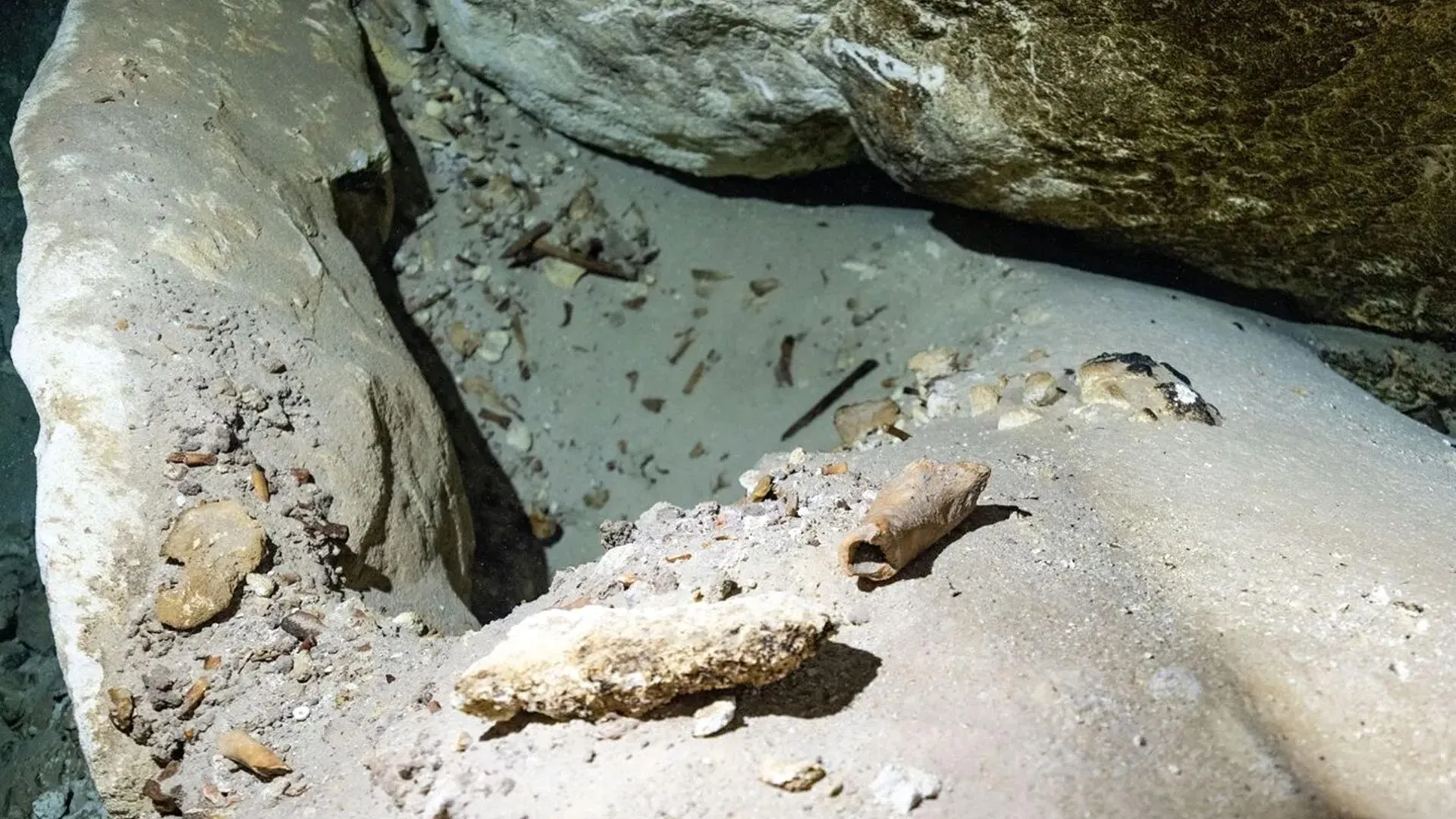
Researchers at Griffith University have created a new methodology for interpreting skeletal remains found in submerged cave systems, addressing a long-standing gap in paleontological research. By examining animal bones from two underwater cave networks in South Australia, the team identified how distinct cave environments create characteristic preservation patterns on bone surfaces and structures.
The study compared bones from illuminated cave entrances with those from deep, lightless regions. In brightly lit areas near entrances, algae and aquatic plants colonized bone surfaces, leaving recognizable biological signatures. In contrast, bones preserved in complete darkness retained their original pristine condition without such aquatic markings. This contrasted sharply with skeletal material recovered from dry caves, which exhibited different alteration patterns including bacterial degradation and grooves created by plant root activity.
The research incorporated bones from both native and introduced animal species recovered from Green Waterhole and Gouldens Sinkhole cave systems near Mount Gambier. The specimens included remains from kangaroos, emus, dingoes, and introduced species such as cattle, sheep, and rabbits, with some dating to the period surrounding European settlement in the 1840s. Specialist cave divers from the Cave Divers Association of Australia assisted in specimen collection and analysis.
By analyzing these more recent animal remains and their preservation conditions, the researchers established baseline knowledge applicable to interpreting fossils from extinct megafauna. The framework employs multiple analytical approaches ranging from spatial bone distribution patterns to microscopic examination of elemental composition and preserved cellular proteins. The findings have been published in PLOS One under the title “Neotaphonomic characteristics of vertebrate site formation in underwater caves.” Researchers indicate the methodology will provide paleontologists and archaeologists worldwide with enhanced capacity to reconstruct ancient environmental conditions from underwater fossil sites.
Article Attribution | Read More at Article Source
Article summary produced by Claude AI