

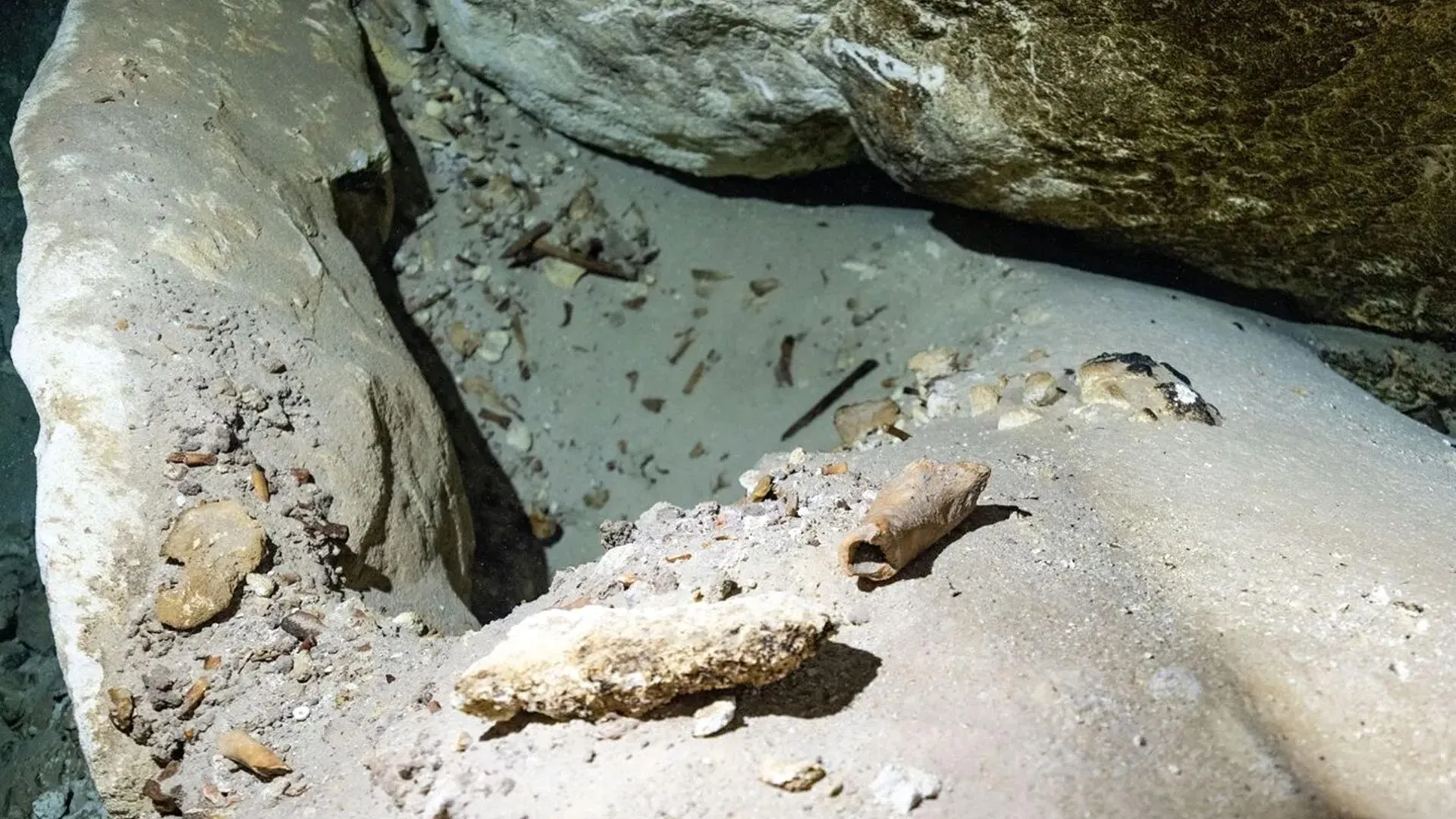
A research team led by Griffith University has produced the first systematic framework for understanding how animal bones are preserved in submerged cave environments. The study, conducted by PhD candidate Meg Walker and colleagues at the Australian Research Centre for Human Evolution, examined skeletal remains from two underwater cave systems in South Australia to identify the distinct physical and chemical signatures left by underwater preservation processes.
The researchers collected historical animal bones from Green Waterhole and Gouldens Sinkhole, cave systems near Mount Gambier, which contained remains of both native and introduced species including kangaroos, emus, dingoes, rabbits, and domestic animals such as cattle and sheep. By analyzing these more recently deposited bones using radiocarbon dating and multiple analytical techniques, the team documented how skeletal material transforms over decades and centuries when submerged in cave environments.
The analysis revealed that underwater caves preserve bones with exceptional quality, often retaining original structure and surface detail. However, the specific preservation characteristics vary significantly depending on cave location and lighting conditions. Bones near brightly illuminated cave entrances show signatures of algae colonization and plant growth on their surfaces, while remains in perpetually dark zones remain largely pristine. In contrast, bones from dry cave environments display different alteration patterns, including damage from terrestrial bacteria and grooves created by plant root growth.
According to Walker, the preservation differences between underwater and terrestrial cave environments create distinctive “fingerprints” on skeletal material. These markers are determined by factors including light availability, water chemistry, and the particular organisms inhabiting each zone. The research has produced what the team characterizes as a powerful new interpretive tool for paleontologists and archaeologists investigating how extinct megafauna remains entered and were modified within submerged cave systems, potentially allowing reconstruction of ancient environmental conditions surrounding these fossil deposits. The findings were published in PLOS One.
Article Attribution | Read More at Article Source
Article summary produced by Claude AI