

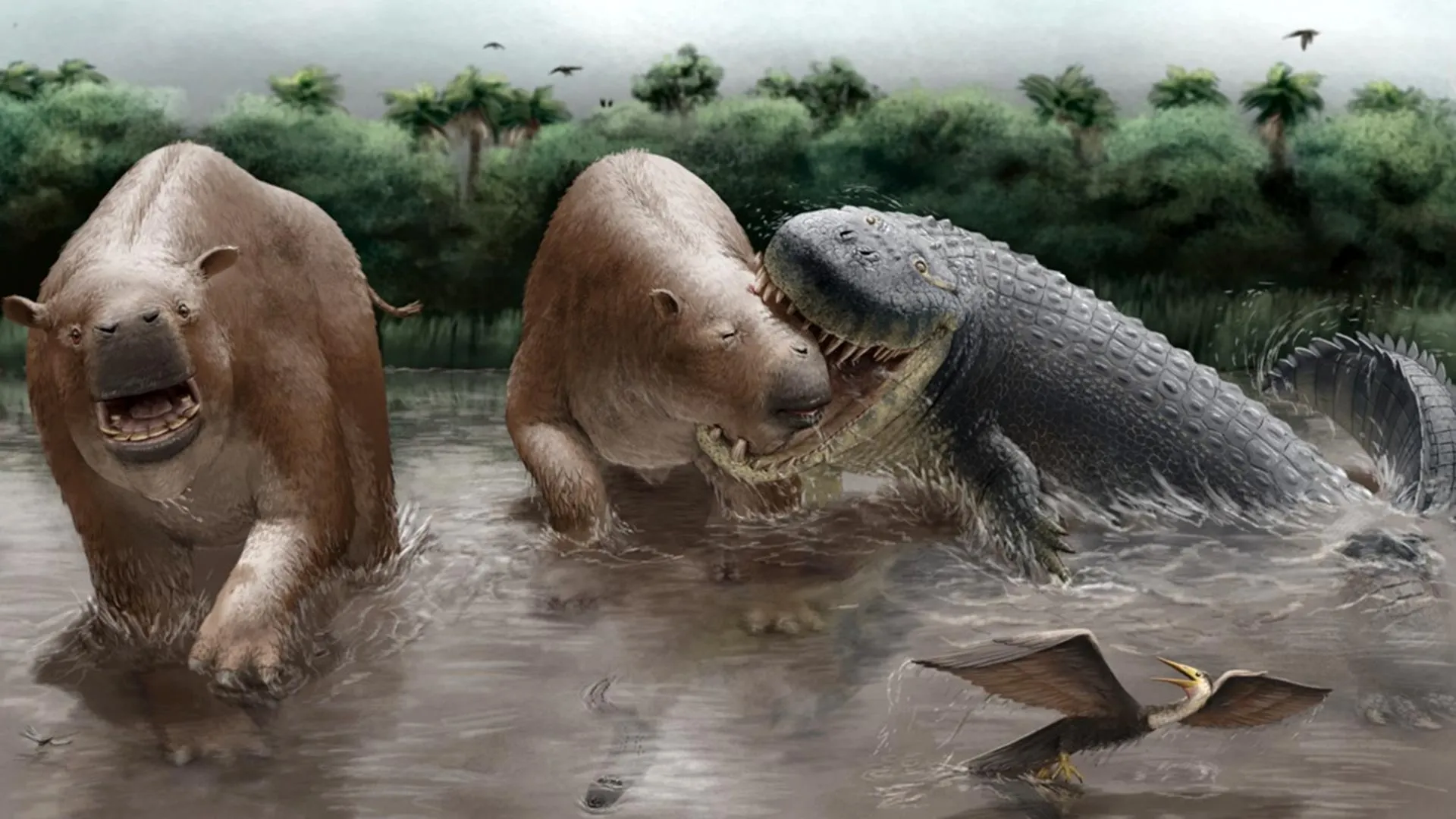
More than 10 million years ago, South America hosted a diverse ecosystem during the Miocene geological period, when a vast lake covered significant portions of the continent. The region supported an array of enormous herbivores, including giant ground sloths, glyptodonts, and various ungulate species that could weigh over a metric ton. This abundance of large prey sustained an impressive collection of predators competing for food resources.
The ecosystem included anacondas, saber-toothed mammals, flightless terror birds, and sebecids alongside crocodylians. Despite this intense competition among carnivores, new research published in the Journal of Vertebrate Paleontology indicates that crocodylians held the most significant predatory role in the region. According to researchers at the University of Helsinki, the available prey was sufficient enough that mammalian predators could not have consumed it all, allowing crocodylians to dominate as the primary apex hunters.
Purussaurus neivensis, a massive crocodylian related to modern caimans, represented the largest known predator in this ancient ecosystem. Reaching approximately seven meters in length and weighing roughly 1,800 kilograms, this species occupied a dominant position in the food chain. Scientists suggest that Purussaurus may have wielded sufficient predatory influence to regulate herbivore population sizes across the ecosystem, potentially shaping the structure of tropical communities in ways that extended beyond simple predation of individual animals.
Researchers examined fossilized remains preserved in museum collections, dating between 10.5 and 16 million years old, to document actual predator-prey interactions. Bite marks and tooth impressions left on herbivore bones provided direct evidence of feeding and attacks. The frequency of marks consistent with Purussaurus predation demonstrated that the species functioned as an essential predator within these ancient tropical ecosystems.
Article Attribution | Read More at Article Source
Article summary produced by Claude AI