

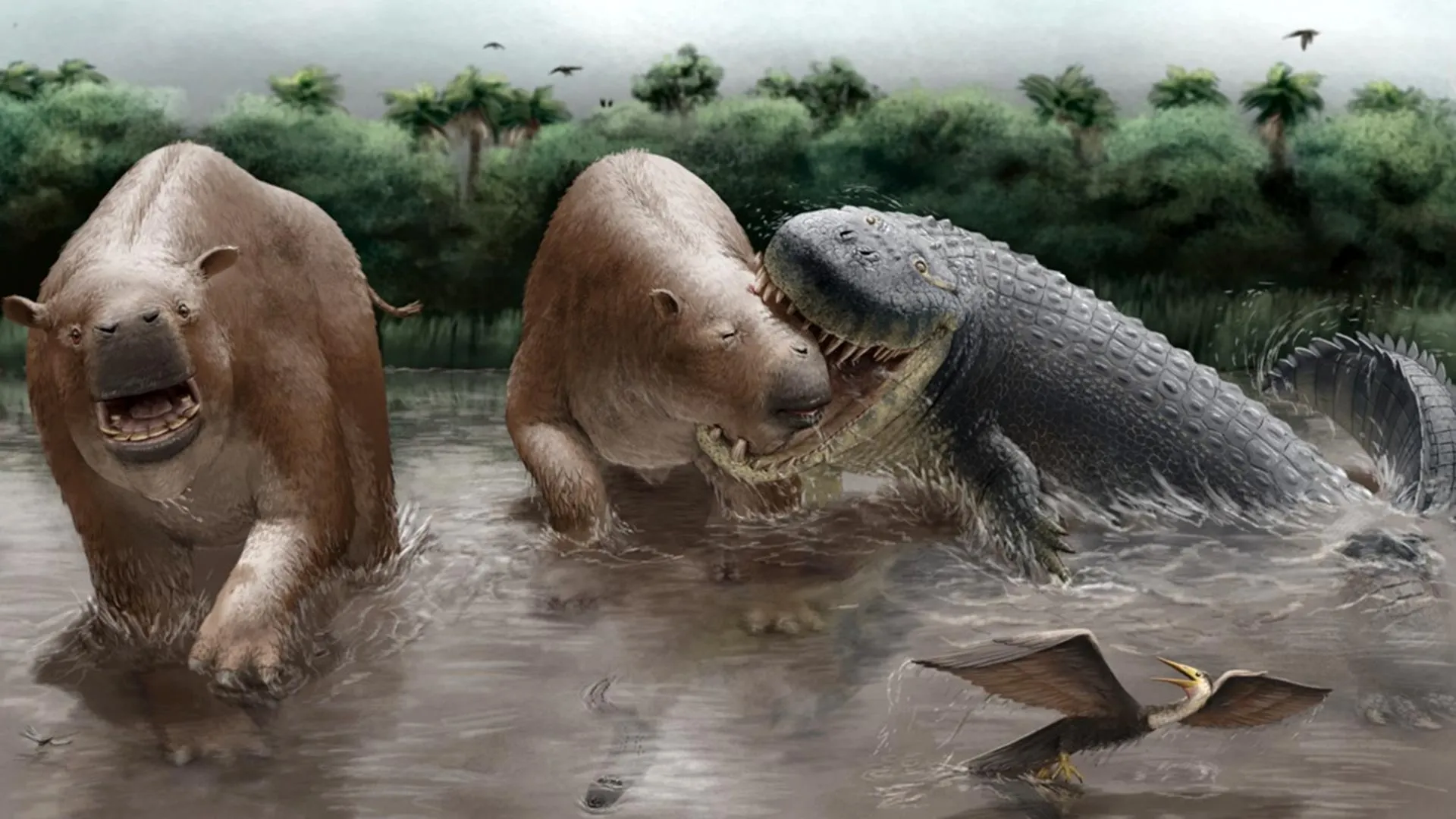
During the Miocene geological period, South America’s landscape included an expansive lake system surrounded by diverse flora and fauna. Researchers studying this ancient ecosystem have determined that crocodylians, particularly the massive Purussaurus neivensis, played a dominant role in shaping predator-prey dynamics in the region.
The ecosystem supported an exceptional variety of large herbivores, including giant ground sloths, glyptodonts, and various ungulates such as astrapotheres and toxodontids. Many of these hoofed mammals reached weights exceeding one metric ton. This abundance of prey was substantial enough to sustain multiple types of large predators simultaneously, including mammalian hunters like saber-toothed mammals, anacondas, and flightless terror birds, as well as sebecids—terrestrial relatives of crocodylians.
Purussaurus neivensis, a caiman relative, emerged as the apex predator in this ecosystem. The creature measured approximately seven meters in length and weighed around 1,800 kilograms, making it the largest known predator of its time. Research suggests that its predatory impact extended beyond individual hunting events and may have influenced the overall population sizes of herbivores across the ecosystem.
Scientists determined the crocodylian’s significance by examining bite and tooth marks preserved on fossilized remains of herbivores dating between 10.5 million and 16 million years old. These physical traces provide direct evidence of actual predation events, offering insights beyond what anatomical features alone could reveal. The frequency and distribution of marks attributable to Purussaurus indicate its importance as a predator in the tropical environment. The findings, published in the Journal of Vertebrate Paleontology, demonstrate how giant crocodylians actively shaped ancient ecosystems rather than merely coexisting with other predators.
Article Attribution | Read More at Article Source
Article summary produced by Claude AI