

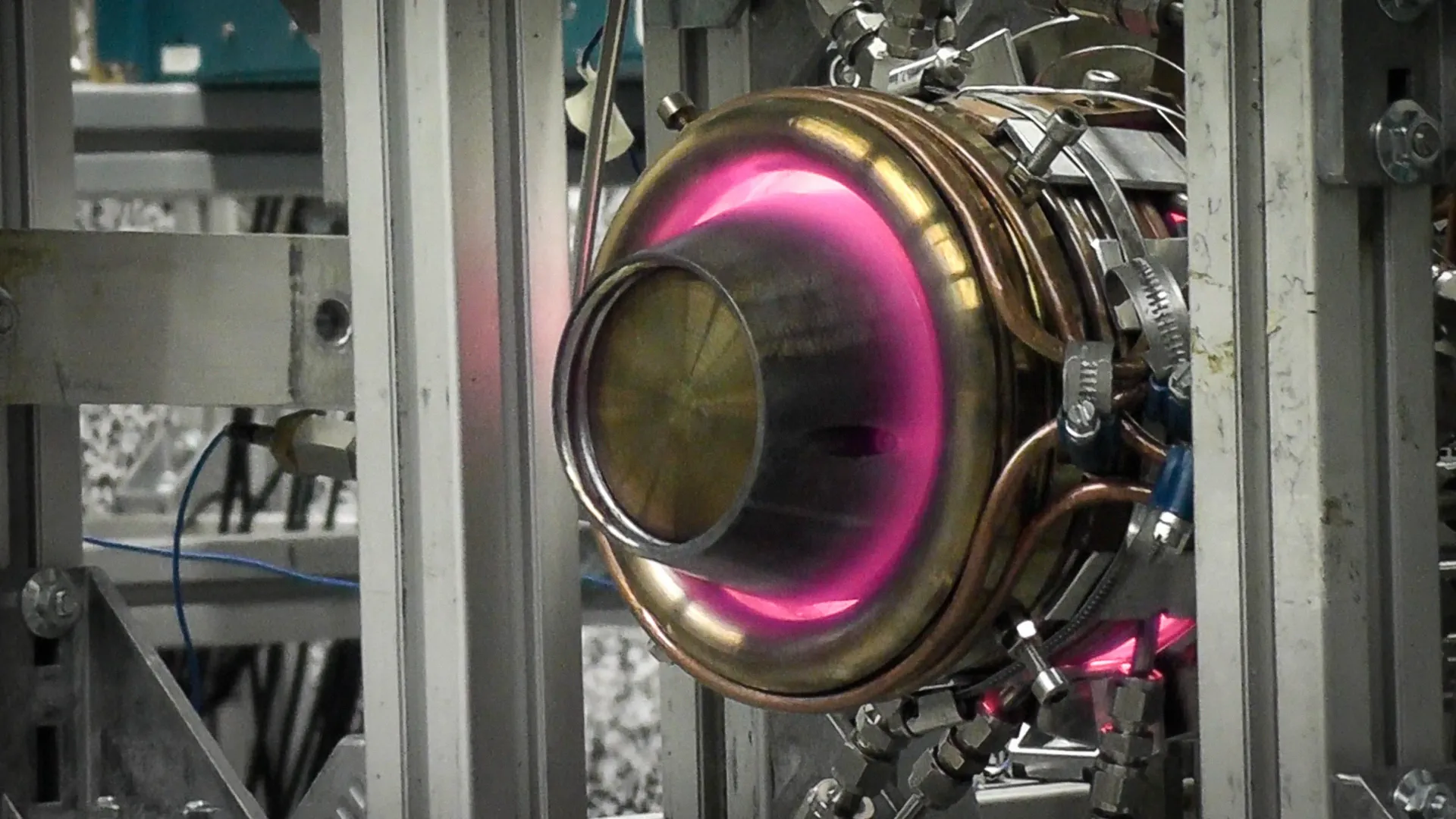
Scientists at the Karlsruhe Institute of Technology have achieved a significant advancement in hydrogen-based power generation by successfully operating a compressorless gas turbine for 303 seconds, exceeding the previous benchmark of 250 seconds set by NASA. The accomplishment represents progress in developing hydrogen as a viable clean energy source, particularly because hydrogen can be produced using renewable electricity rather than fossil fuels.
A primary challenge in extending turbine operation times has been thermal degradation, with earlier experiments limited to fractions of a second due to combustion chamber melting. The extended run time of more than five minutes demonstrates substantial engineering improvements in managing the extreme conditions created by the combustion process. According to Professor Daniel Banuti of the Institute of Thermal Energy Technology and Safety, this represents an important step toward establishing hydrogen-based energy systems in a carbon-free energy landscape.
The turbine’s distinctive design employs pressure-gain combustion technology that eliminates the need for a mechanical air compressor. In conventional gas turbines used in power plants and aircraft engines, approximately half of the generated power is consumed by compressing air to the necessary pressure for efficient combustion. The new system instead creates required pressure directly within the combustion chamber through detonation waves, which form via fluid mechanical instabilities involving wave and vortex patterns in flowing gases.
Hydrogen proves particularly well-suited for this technology due to its rapid reaction characteristics and ability to produce stable pressure increases. By removing the mechanical compressor, the design potentially reduces energy losses, decreases the number of moving components, and improves overall system efficiency. The researchers note that hydrogen is not the only fuel the system can use, though it remains the most advantageous option.
A critical engineering hurdle involves successfully transferring energy from the intense combustion reactions to the turbine while maintaining stable operation and generating electricity. The KIT team achieved this milestone earlier this year, becoming the first to generate electricity using a hydrogen gas turbine without mechanical compression. Future applications could include stationary electricity generation and potentially aviation, with the technology offering the prospect of lighter, less expensive, and more efficient turbines.
Article Attribution | Read More at Article Source
Article summary produced by Claude AI