

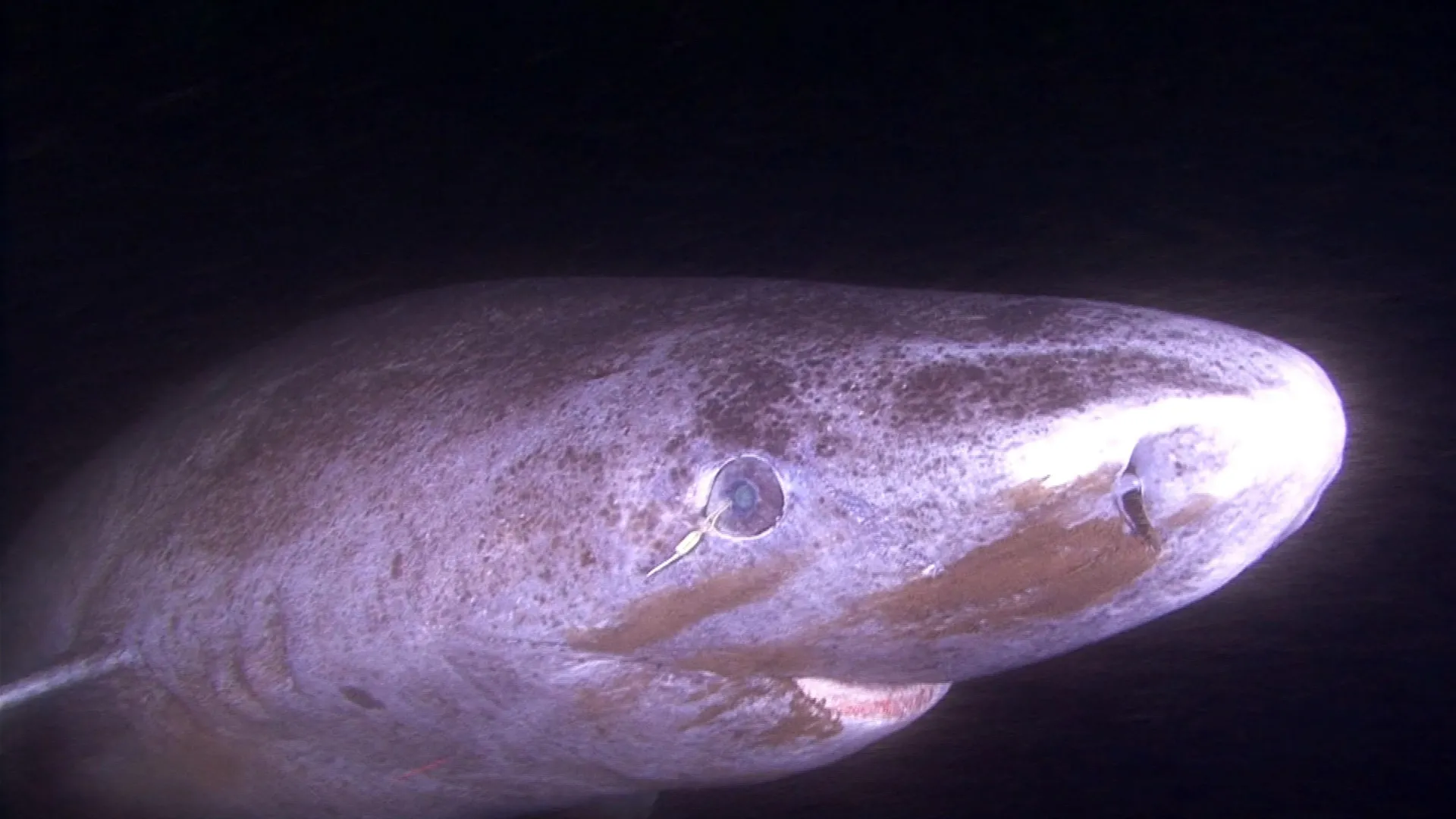
Scientists at the University of California, Irvine have published research in Nature Communications examining the visual systems of Greenland sharks, the longest-living vertebrates known to science. Some individuals of this species survive for approximately 400 years. The study, conducted between 2020 and 2024, challenges previous assumptions that these sharks were functionally blind due to eye parasites and their dark Arctic habitat.
The research team, led by associate professor Dorota Skowronska-Krawczyk, examined preserved eye tissue from sharks captured near Greenland. The investigation was prompted by observations that the animals moved their eyes toward light sources, contradicting earlier theories about their vision capabilities. Histological analyses revealed no evidence of retinal cell death in examined specimens, including eyes estimated to be approximately 200 years old.
The findings indicate that Greenland sharks possess specialized visual adaptations suited to low-light environments. Researchers identified active rhodopsin, a protein crucial for vision in dim conditions, which in these sharks is tuned to detect blue light prevalent in deep Arctic waters. The study suggests a DNA repair mechanism may preserve eyesight across the sharks’ lengthy lifespans without the retinal degeneration typically expected in aging organisms.
The research opens pathways for understanding age-related vision loss in humans. Scientists propose that studying protective mechanisms in Greenland shark eyes could eventually inform strategies for preventing conditions such as macular degeneration and glaucoma. The work also raises broader questions about how vision evolves and how tissues maintain functionality over extremely extended periods, with potential implications for human health research and longevity studies.
Article Attribution | Read More at Article Source
Article summary produced by Claude AI