

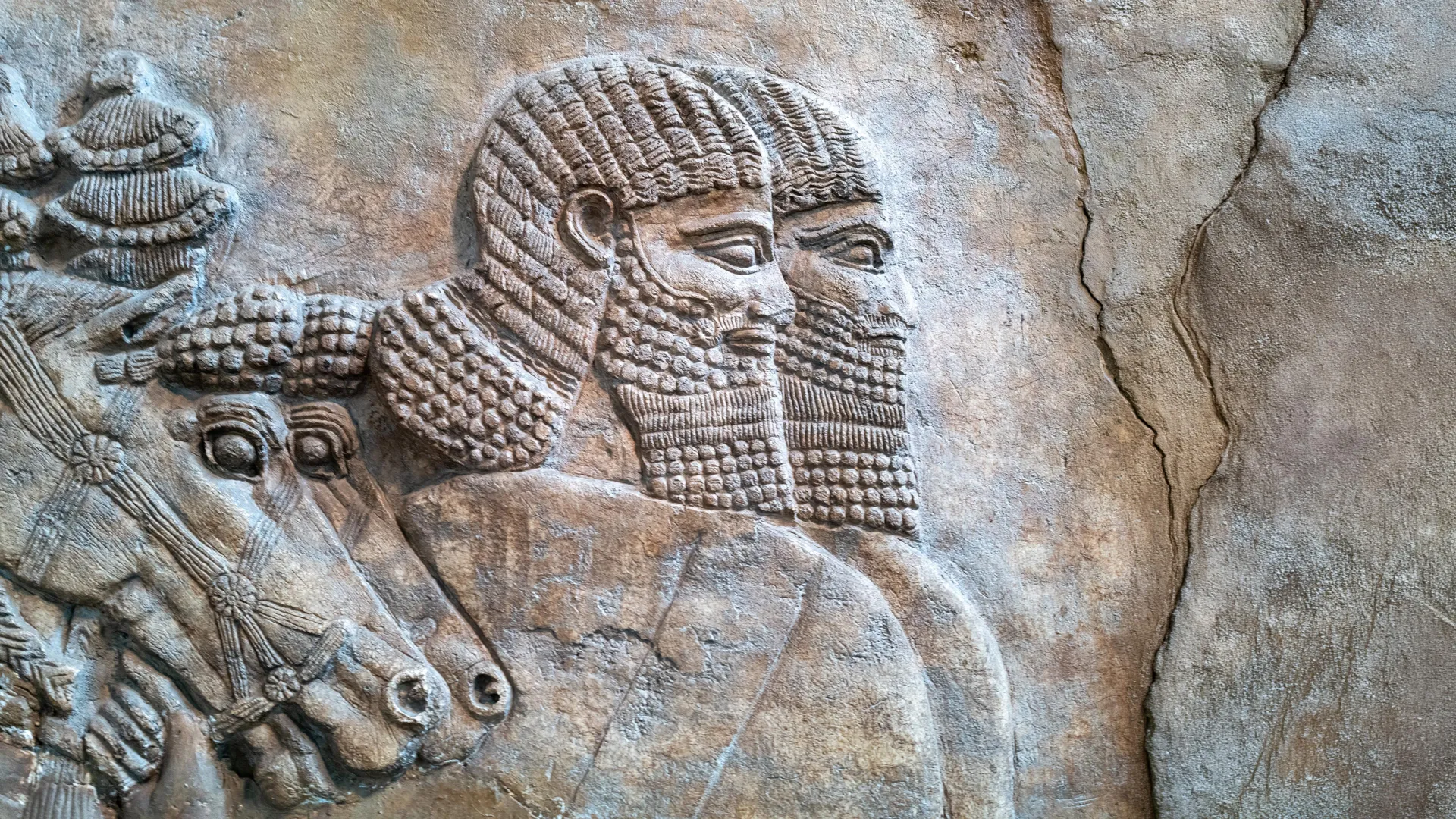
Researchers Alexander Johannes Edmonds and Eckart Frahm have published findings in the Journal of Cuneiform Studies that challenge the traditional understanding of ancient Assyrian royal succession. Their work, titled “Three New Kings of Assyria,” proposes that the Assyrian King List, long treated as a definitive chronicle, may have omitted rulers for political reasons rather than providing a complete historical account.
The first overlooked ruler was a king named Tiglath-pileser who appears to have reigned concurrently with the officially recognized king Aššur-dān III around 763-762 BCE. This Tiglath-pileser took the name of an earlier monarch and attempted to seize power following a solar eclipse, an event with significant religious and political implications in the ancient world. Evidence of his administration appears on a clay tablet held by the British Museum documenting a royal grant.
A second missing king was identified through analysis of a monument discovered in 1894 at Tell ‘Abta in Iraq. The stela had puzzled researchers for years due to evidence that one ruler’s name had been deliberately overwritten with another’s. Edmonds and Frahm propose that a king named Shalmaneser ruled immediately before Tiglath-pileser III ascended to power in 745 BCE, explaining this historical oddity.
The third case involves a ruler named Aššur-uballiṭ, whom the researchers suggest reigned from 913-912 BCE. A cuneiform text attributed to an earlier king references a vessel restored by someone named Aššur-uballit, yet no such ruler appears in the official king list. This gap may also explain the identity of a heavily damaged royal statue discovered at Aššur.
The findings suggest the Assyrian King List functioned as a legitimizing document that was periodically revised to exclude short-lived or rival rulers rather than serving as an impartial historical record. This interpretation raises new questions about how political legitimacy and cultural memory shaped the official narrative of Assyrian royal history.
Article Attribution | Read More at Article Source
Article summary produced by Claude AI