

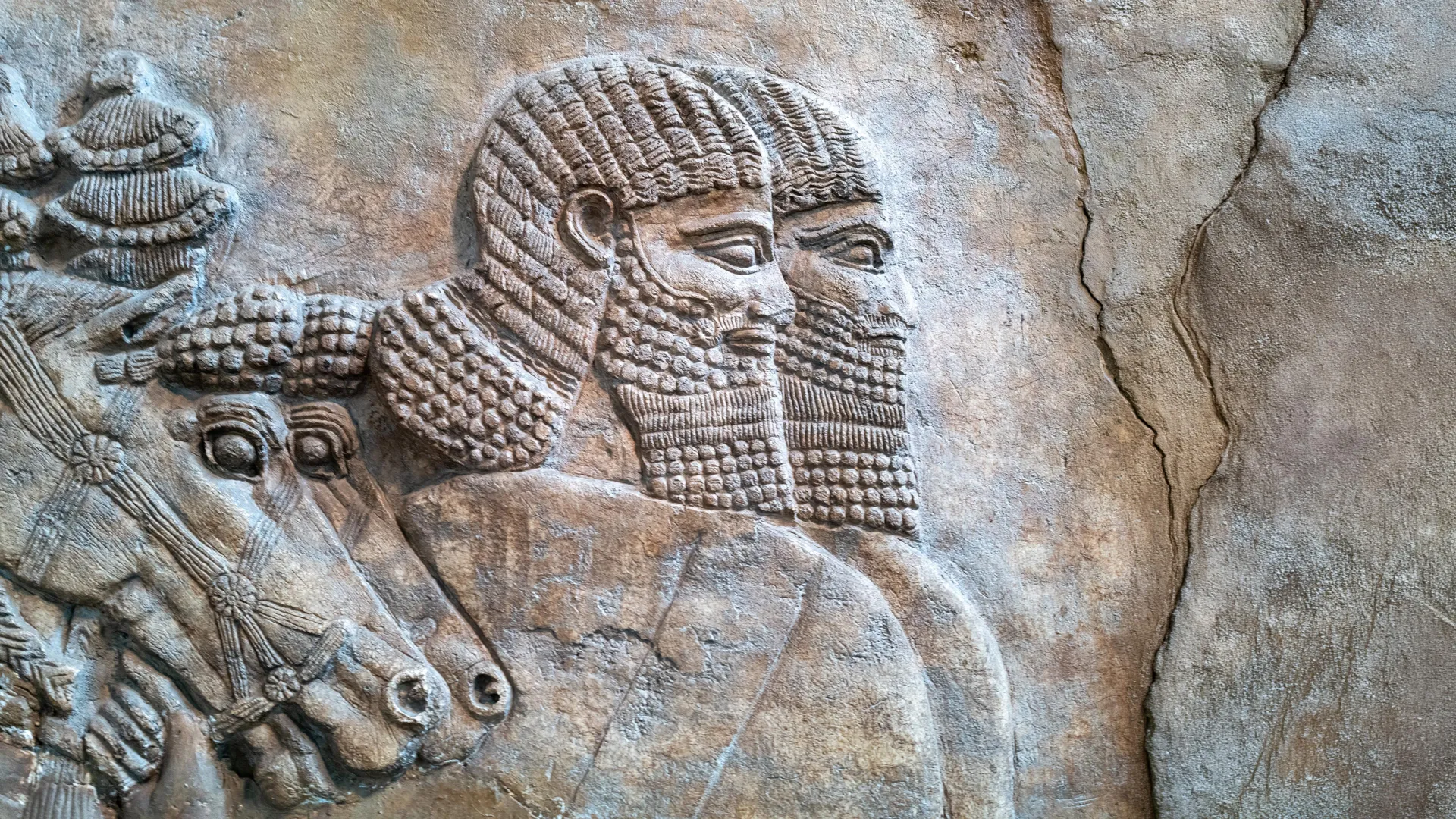
Researchers Alexander Johannes Edmonds and Eckart Frahm have published findings in the Journal of Cuneiform Studies that challenge the completeness of the Assyrian King List, a document long regarded as the authoritative record of Assyrian rulers. Their work identifies three monarchs whose reigns can be reconstructed from archaeological and textual evidence but who do not appear on the traditional list.
The first overlooked ruler adopted the name Tiglath-pileser and apparently reigned concurrently with the officially recognized king Aššur-dān III, who was his nephew. Following a solar eclipse that held significant political and religious meaning in the ancient world, this Tiglath-pileser attempted to seize power from Aššur-dān III. Documentation of his administration survives on a clay tablet held by the British Museum, which records a royal grant and suggests his rule lasted from approximately 763-762 BCE until his removal from power.
The second missing monarch was named Shalmaneser, whose existence is inferred from a stela discovered in 1894 at Tell ‘Abta, Iraq. The monument originally bore the name of a different ruler, which was later overwritten with the name Tiglath-pileser. Edmonds and Frahm propose that Shalmaneser’s insertion into the royal sequence explains this centuries-old archaeological puzzle, with his reign occurring immediately before Tiglath-pileser III’s accession to power in 745 BCE.
The third case involves a ruler named Aššur-uballiṭ, referenced in a cuneiform text attributed to King Tukultī-Ninurta II. The text mentions a ceremonial vessel originally created by Tukultī-Ninurta I and later restored by Aššur-uballiṭ, yet the official king list contains no ruler by this name between those two monarchs. Researchers propose that Aššur-uballiṭ reigned from 913-912 BCE, a period previously unaccounted for in the traditional sequence.
The researchers suggest the Assyrian King List functioned not as an impartial historical record but as a legitimizing canon that was periodically revised to exclude short-lived or rival rulers. This interpretation raises fundamental questions about how political authority and historical memory shaped Assyrian records, indicating that early Neo-Assyrian political history was far more complex and contested than previously understood.
Article Attribution | Read More at Article Source
Article summary produced by Claude AI