

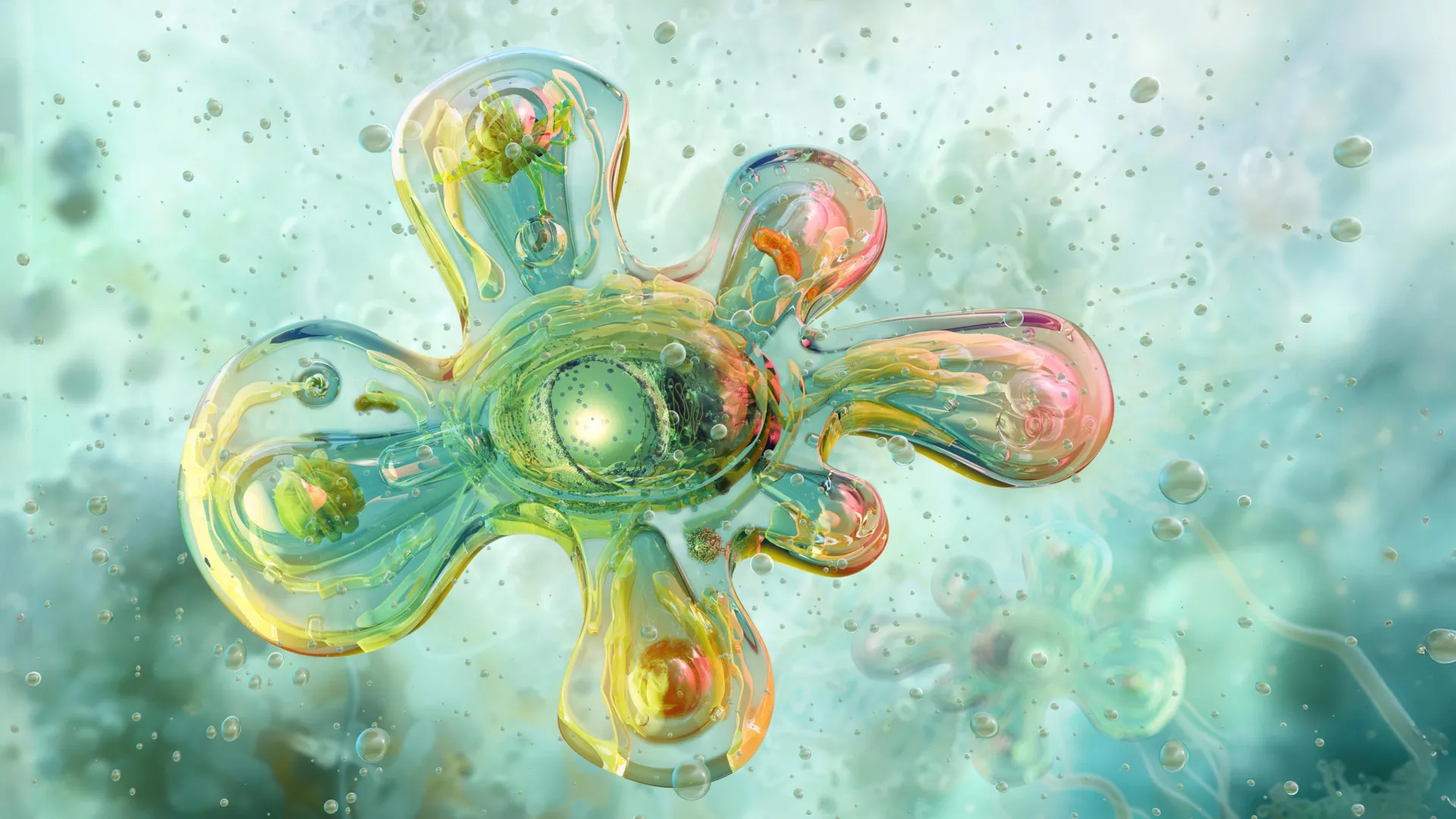
Paleontologists continue investigating a fundamental question in astrobiology: when the earliest eukaryotes appeared on Earth and how they paved the way for complex multicellular organisms. Life originated on Earth more than 3.5 billion years ago, with oxygen-producing cyanobacteria present by at least 2.3 billion years ago. Eukaryotes had emerged by at least 1.7 billion years ago, followed by algae roughly one billion years ago. Animals appeared at least 570 million years ago. According to researchers, the common ancestor shared by plants and animals dates back approximately 1.6 billion years.
Eukaryotic cells fundamentally differ from earlier microbial forms by containing a nucleus that encloses DNA and specialized structures called organelles, including mitochondria that provide energy to support more complex life. These cellular innovations ultimately enabled the development of large visible organisms including animals, plants, and fungi. However, tracing the ancestry of early eukaryotes remains extremely difficult because organisms predating 500 million years ago lacked shells or skeletons, leaving paleontologists dependent on rare environments capable of preserving fragile cellular structures.
Researchers are focusing their search on ancient coastal regions and arctic landscapes where geological conditions favored fossil preservation. A remote area near Svalbard, Norway, approximately 100 square kilometers in size, represents one promising location where a shallow sea once existed. Australia has also yielded significant discoveries, with researchers recently identifying eukaryotic microfossils dating to roughly 1.75 billion years ago. Scientists often target pristine locations with substantial clay deposits, which may have helped preserve ancient eukaryotic remains through billions of years of geological alteration.
The extreme difficulty of locating these microfossils stems from their microscopic size, lack of protective hard tissues, and exposure to extensive degradation over billions of years. A major challenge involves the poor sampling of the fossil record from early periods. Despite these obstacles, scientists are improving their ability to identify rock types most likely to contain early fossils, gradually reconstructing Earth’s biological history.
The implications of this research extend beyond understanding Earth’s past. Insights gained from studying which environments preserve ancient organisms on this planet may help scientists recognize potential signs of life on other worlds, making this research a critical component of broader astrobiology efforts.
Article Attribution | Read More at Article Source
Article summary produced by Claude AI