

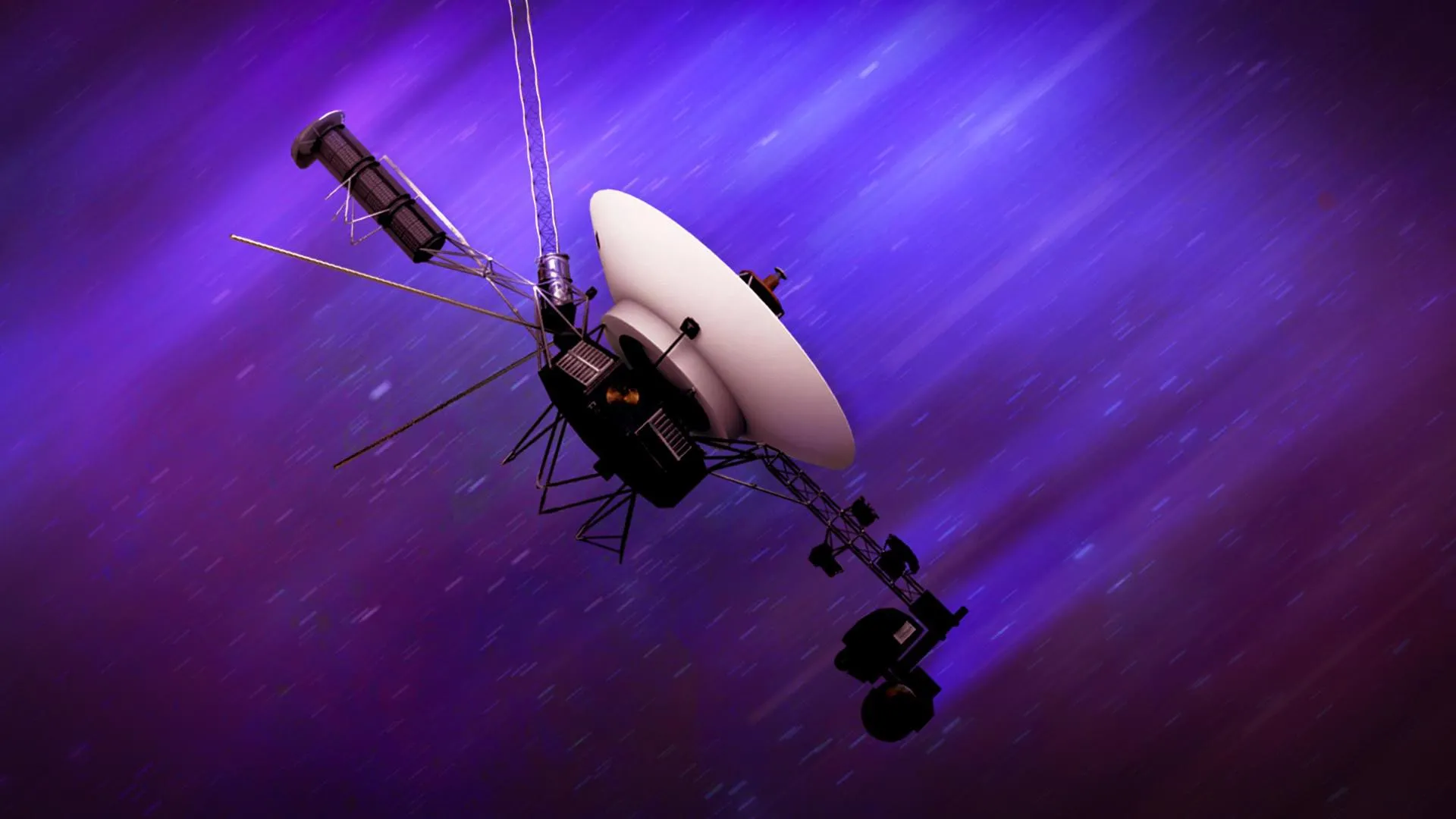
NASA’s Jet Propulsion Laboratory has successfully executed a power conservation initiative on Voyager 2, a spacecraft that has been operating in space for nearly 50 years. The procedure, referred to internally as the “Big Bang,” involved simultaneously deactivating certain power-consuming systems and replacing them with more efficient alternatives while maintaining adequate thermal conditions for the spacecraft to continue functioning.
Both Voyager 2 and its twin spacecraft Voyager 1 depend on radioisotope thermoelectric generators to produce electrical power from the decay of plutonium fuel. This power source has been steadily diminishing since their launches, with each spacecraft losing approximately 4 watts of available power annually. After decades of space exploration, both spacecraft now operate with severely constrained energy resources.
Power constraints have necessitated increasingly difficult decisions regarding which systems to maintain. Beginning in 2024, declining power levels forced mission controllers to deactivate two scientific instruments on each Voyager spacecraft. Each craft carries 10 instruments total, though several had previously been disabled after completing their intended functions during planetary observation phases.
Without the recent power optimization effort, Voyager 2 would have required the shutdown of another instrument before the conclusion of 2026. The power conservation procedure has provided sufficient additional capacity to sustain the spacecraft’s three remaining active instruments for at least one additional year of operation. NASA intends to apply the same power-saving methodology to Voyager 1, with engineers expecting to complete that modification work in the coming months.
Article Attribution | Read More at Article Source
Article summary produced by Claude AI