

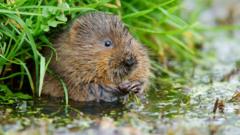
Conservation efforts in Surrey have yielded positive results for water vole populations following a reintroduction initiative. South East Rivers Trust and Citizen Zoo released 42 water voles into the Hogsmill River approximately one year ago, and recent monitoring indicates the species has not only survived but is reproducing and expanding its range.
Urban rewilding officer Pia Trevelyan-Ashby has been documenting the population’s progress through unconventional methods, primarily by examining droppings and burrows along the riverbank. Additional monitoring tools include camera traps and floating “latrine rafts” designed to collect evidence of water vole activity. Surveys have found signs of established populations both upstream and downstream of the original release site, with an increasing number of active burrows discovered during successive field visits.
The water vole reintroduction is part of a broader ecological restoration strategy for the Hogsmill River. Coordinated efforts with the Waterlife Recovery Trust target invasive mink populations, which prey on approximately one animal daily. By reducing mink numbers, conservation teams aim to create safer conditions for water voles and other native species vulnerable to predation.
Water voles play an important ecological role within river systems, controlling vegetation growth and serving as a food source for predators higher in the food chain. The species faces significant conservation challenges; the United Kingdom has experienced approximately 90% population loss since the 1970s, according to the International Union for Conservation of Nature. The Hogsmill River catchment had been without water voles for more than 20 years, making the current reintroduction a notable milestone for regional biodiversity. Catchment officials note that the presence of thriving water vole populations indicates improving river health and adequate habitat conditions.
Article Attribution | Read More at Article Source
Article summary produced by Claude AI