

Researchers at Virginia Tech have published findings indicating that glyphosate, the active ingredient in widely used weedkillers, produces detectable effects on honeybee behavior and brain function. The study, led by Associate Professor Margaret Couvillon and conducted with support from the National Institute of Food and Agriculture, appears in the Journal of Experimental Biology.
Glyphosate works by blocking an enzyme essential to plant photosynthesis, a mechanism absent in honeybees. This led to the long-standing assumption that the herbicide posed minimal risk to bees. However, researchers suspected that exposure could cause sublethal effects—harm that does not kill the insects but nonetheless impairs their functioning, similar to how antihistamines relieve allergies while causing drowsiness.
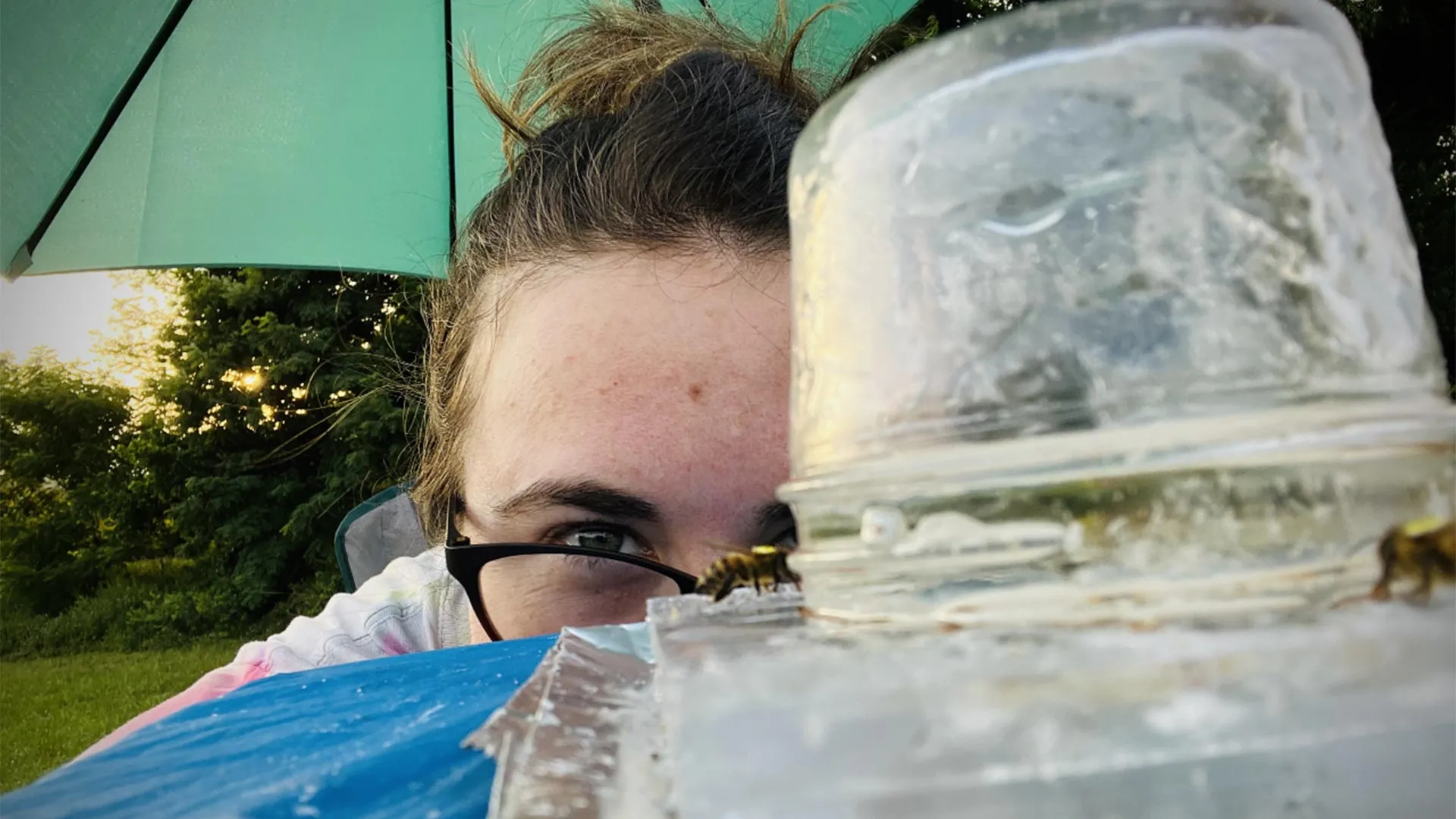
To test their hypothesis, the team established two artificial feeding stations, one containing glyphosate and one without. After monitoring trained honeybees over several days, researchers observed that those exposed to the herbicide showed a 13 percent reduction in foraging activity within three days. This decline was accompanied by measurable changes in brain chemistry, including shifts in neurotransmitter and amino acid levels not detected in unexposed bees.
The researchers emphasized that while a 13 percent reduction in a single bee might seem modest, the aggregate effect across an entire colony could prove consequential. Diminished foraging trips could result in decreased food entering the hive, lower honey production, and reduced pollination of nearby vegetation. These changes could ultimately threaten both colony survival and long-term stability.
Couvillon and her team concluded that the findings underscore the importance of revised herbicide regulations, improved application practices, and continued research to minimize unintended harm to pollinators. Given that honeybees rank among the planet’s most critical pollinators and glyphosate remains one of the world’s most frequently applied herbicides, the frequency of potential contact between the two may result in more significant consequences than previously recognized.
Article Attribution | Read More at Article Source
Article summary produced by Claude AI