

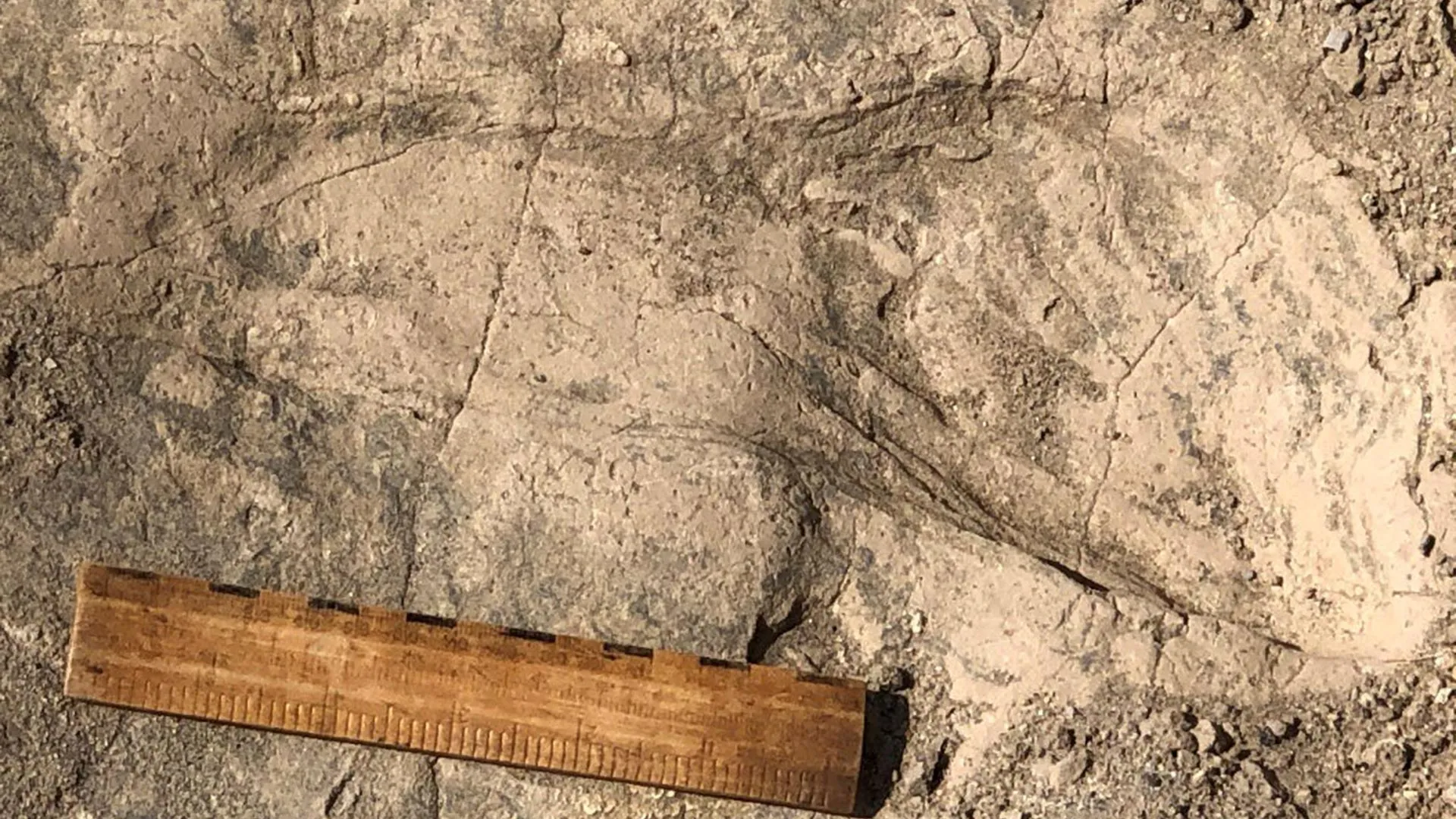
An international research team has analyzed a significant collection of fossil footprints discovered near an ancient lakeshore in northern Kenya, providing new insights into an extinct hominin species. The tracks, attributed to Paranthropus boisei, appear to have been created by eight individuals occupying the same location at approximately the same time period 1.4 million years ago. The discovery offers what researchers describe as a snapshot of “fossil behavior” because footprints can capture brief moments in time, unlike skeletal remains that may accumulate over extended periods.
Analytical techniques developed by the research team in 2024 enabled identification of the tracks as belonging to Paranthropus boisei based on foot anatomy and locomotion patterns. The footprint sizes revealed that these individuals were considerably larger than previous estimates based on limited skeletal evidence. According to lead researcher Kevin Hatala of Chatham University, the tracks indicate human-like body dimensions reaching up to 1.8 meters in height and approximately 75 kilograms in weight. This finding challenges earlier research suggesting the species was substantially smaller than Homo erectus, a contemporary hominin considered a possible direct ancestor of modern humans. Prior to this discovery, most known Paranthropus boisei fossils consisted primarily of skulls and jaw structures, with relatively little information available about the rest of their skeletal anatomy.
Beyond anatomical insights, the footprints provide evidence of social behavior and group dynamics. The eight trackmakers appear to have traveled together, with most likely being adult males and no obvious evidence of females or children among them. Co-author Neil Roach of Harvard University suggests this pattern indicates a complex social structure, possibly involving large groups where males competed for mates while maintaining tolerance for one another during periods requiring group safety in hazardous environments.
The discovery forms part of a broader collection of hominin footprints identified at multiple sites around Lake Turkana in East Africa. The concentration of these tracks at ancient lakeshore environments suggests such locations provided resources valuable enough to repeatedly attract extinct human relatives. Researchers have documented hundreds of hominin footprints across more than half-dozen regional sites, and teams plan to continue investigations later this year. Each newly documented surface preserves different moments from the distant past, revealing details about anatomy, movement, social interactions, and environmental conditions that traditional fossil evidence often cannot provide.
Article Attribution | Read More at Article Source
Article summary produced by Claude AI