

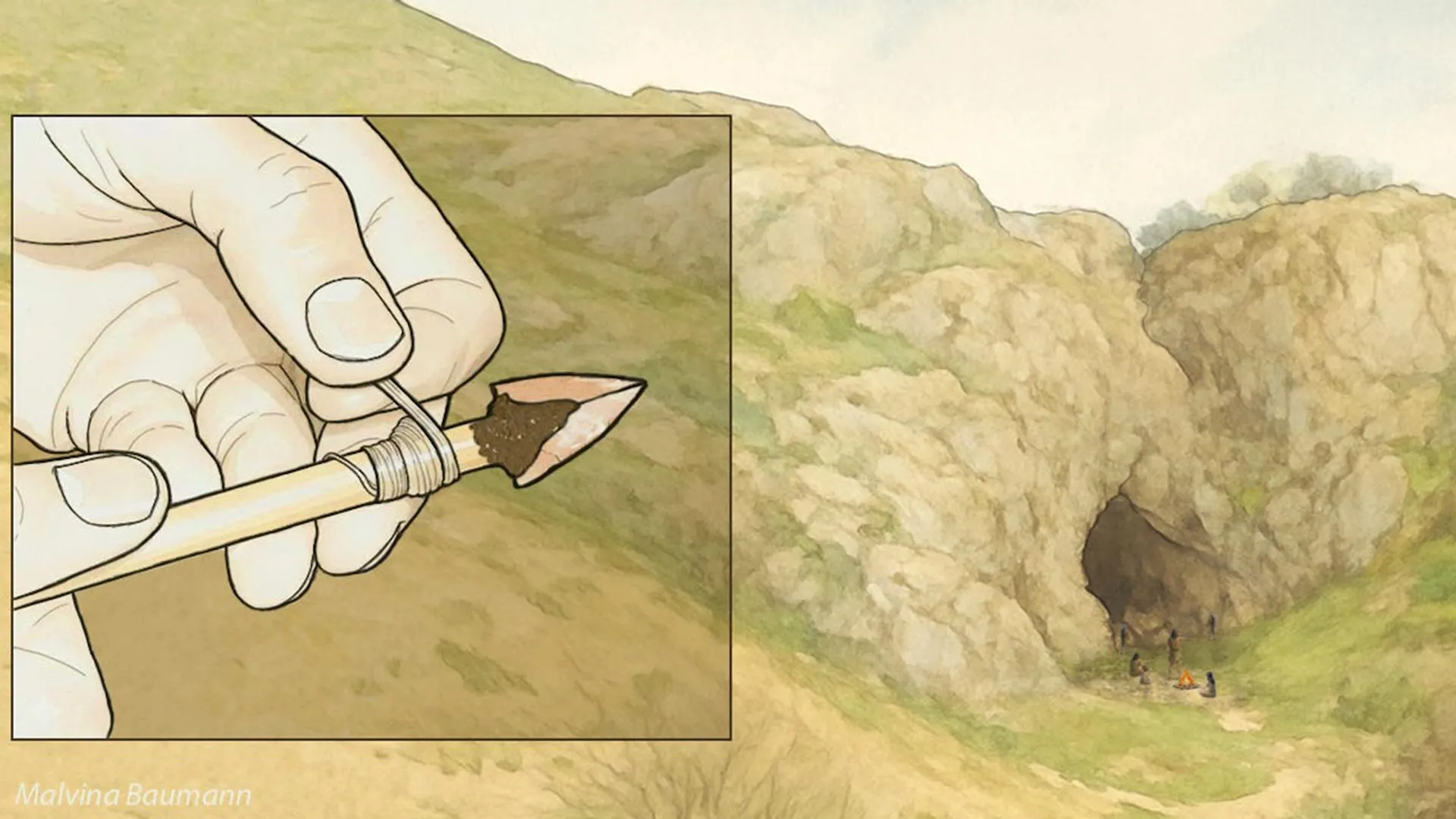
An international research team has identified microscopic triangular projectile points in the oldest occupation layers of the Obi-Rakhmat rock shelter in Uzbekistan, dating back approximately 80,000 years. The findings, published in PLOS One, indicate these artifacts were deliberately crafted as small arrowheads rather than being a byproduct of tool manufacture. The points measure less than 2 centimeters in width and weigh only a few grams, with characteristics suggesting they were designed for use with low-poundage bows rather than hand-held or heavy thrown weapons.
The discovery challenges established narratives about early human settlement patterns in Eurasia. Previously, most archaeological frameworks emphasized European origins of behavioral modernity in Homo sapiens, with the Upper Paleolithic culture in Western Europe serving as the reference point for understanding human development. However, mounting evidence demonstrates that anatomically modern humans reached Australia approximately 65,000 years ago, predating confirmed European settlement by roughly 10,000 years. The temporal gap between African origins and Western Eurasian colonization remains poorly understood, creating space for alternative migration routes.
The Obi-Rakhmat site, located in the Tien Shan mountains at an altitude of 1,250 meters, provides a stratigraphic sequence spanning over 10 meters and covering approximately 40,000 years of occupation. The lithic assemblage contains various tool types including points, blades, and bladelets. Notably, the site has yielded skull remains of a child from a layer dating to approximately 70,000 years ago exhibiting both Neanderthal and anatomically modern features, possibly indicating genetic admixture between populations.
Analysis reveals that the presence of multiple projectile point types within a single assemblage—some microlithic and others robust enough for hand-thrown weapons—characterizes known Homo sapiens sites. Comparable evidence appears in South African sites such as Pre-Still Bay deposits exceeding 77,000 years old and later layers at Sibudu cave. In contrast, similar projectile point diversity remains rare in the archaeological record associated with Neanderthals. These findings suggest Central Asia may have functioned as a crucial corridor facilitating human movement across Eurasia or as a refuge zone during climatic shifts, supporting the hypothesis of a Central Asian origin for the Initial Upper Paleolithic culture that subsequently spread westward.
Article Attribution | Read More at Article Source
Article summary produced by Claude AI