

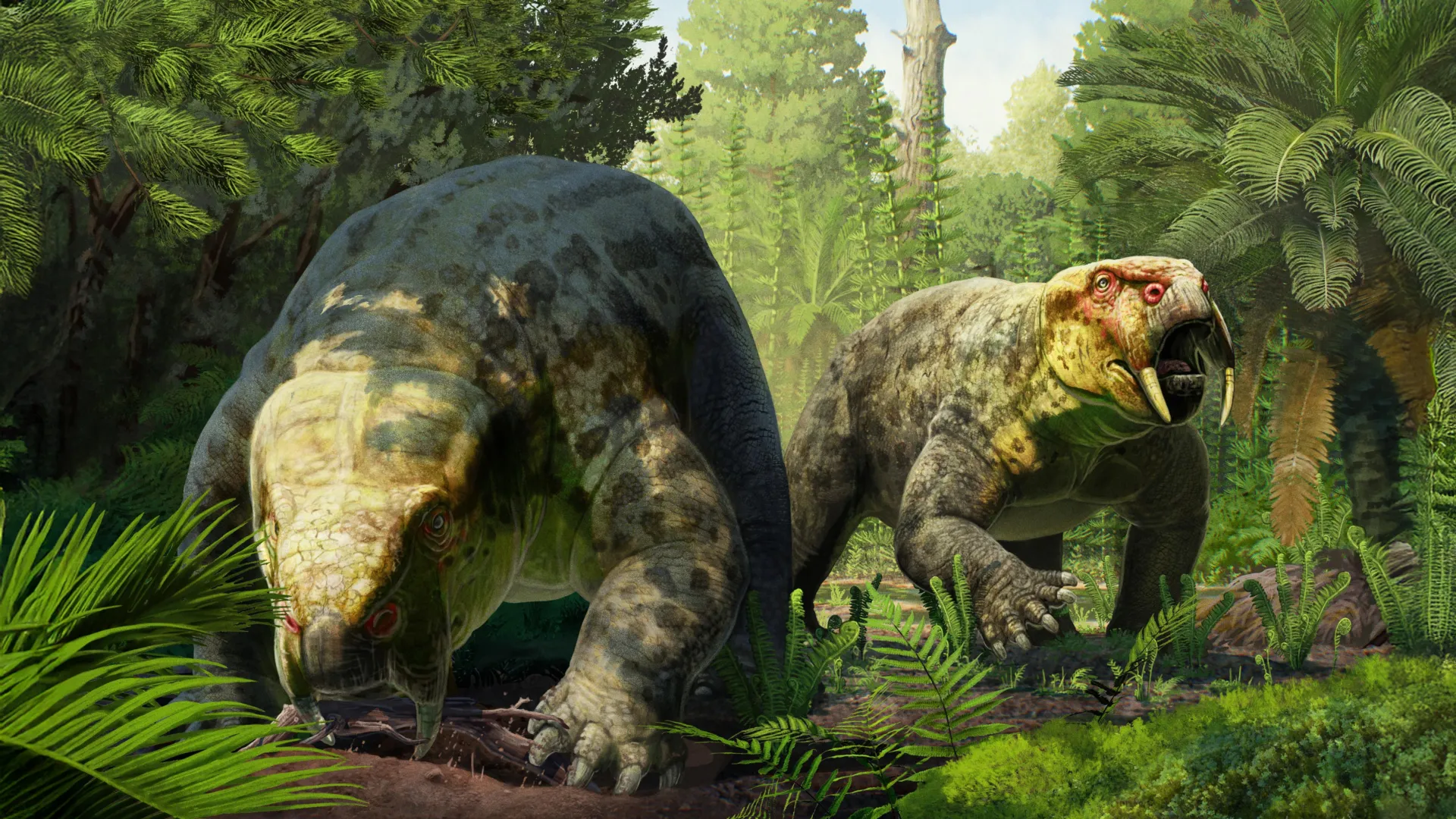
An international research team led by the University of Bristol has identified a new prehistoric species from fossils discovered in Tanzania approximately 240 million years ago during the Triassic period. Named Dinodontosaurus isiyavamanda, the discovery was published September 15 in the Journal of Vertebrate Palaeontology. The species belongs to dicynodonts, a group of plant-eating synapsids that existed long before dinosaurs dominated terrestrial ecosystems. The identification is significant because it provides new insights into the timing and geography of early dinosaur evolution.
The fossil specimens originate from material collected during a British expedition in 1963 and have been held in the Natural History Museum in London for over 60 years. Among the collection was an associated skeleton and a fragmentary skull that researchers examined and identified as belonging to the genus Dinodontosaurus. The discovery was notable because Dinodontosaurus had previously only been confirmed in South America, making the Tanzanian find the first confirmed record of this genus outside that region. A co-author noted that he had recognized the skeleton as a new species decades earlier during his graduate thesis work in 1994, but the formal identification required modern analytical techniques and international collaboration.
The finding has important implications for understanding early dinosaur evolution. By establishing that Dinodontosaurus occurs in both Tanzania and South America, researchers can now better correlate the ages of rock sequences in those regions. Recent radiometric dating of South American rocks indicates these sequences are approximately 10 million years younger than comparable rocks in South Africa, suggesting that Tanzanian deposits previously considered to contain the oldest potential dinosaurs should be reconsidered. This research indicates that the earliest dinosaur candidates from Tanzania are likely no older than those from South America, refining scientific understanding of when and where dinosaurs first emerged.
The work demonstrates the continued scientific value of museum collections and specimens that have been stored for decades. Substantial portions of the Tanzanian Dinodontosaurus remains remain unstudied, particularly postcranial skeletal elements. Future research will examine these materials in greater detail and investigate the biomechanics and ecology of Triassic dicynodonts, potentially explaining how multiple large plant-eating species coexisted millions of years before dinosaurs achieved dominance in terrestrial environments.
Article Attribution | Read More at Article Source
Article summary produced by Claude AI