

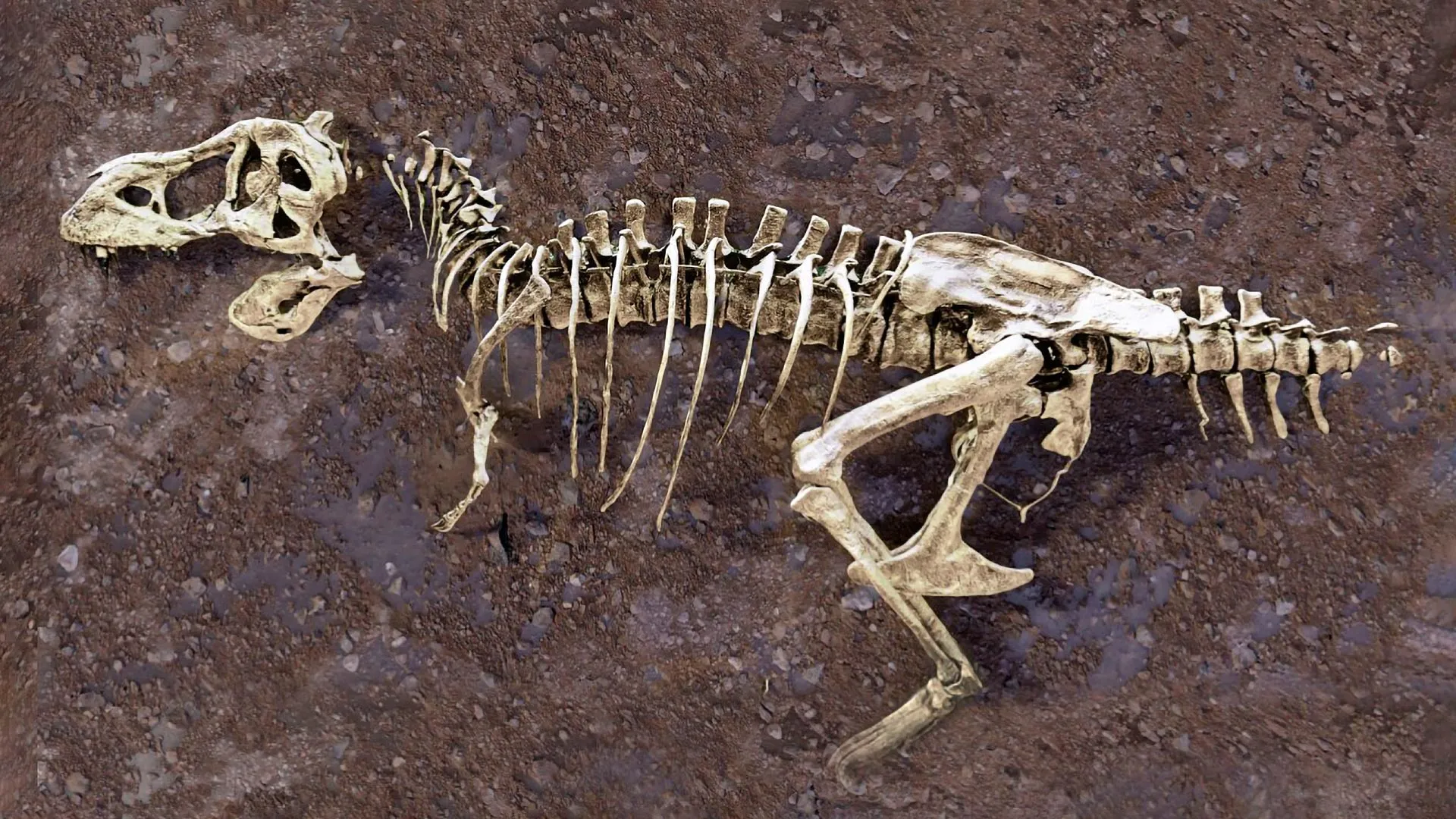
Scientists have discovered preserved soft tissue in a healing rib fracture from Scotty, the largest known Tyrannosaurus rex skeleton ever found. Using advanced imaging technology at the Department of Energy’s Oak Ridge National Laboratory, researchers detected a network of mineralized blood vessels within the bone—an extraordinarily rare find in the fossil record. The discovery provides insight into the dinosaur’s biology during the final moments of its life, as the injury was still actively healing when the animal died.
The preservation of the blood vessels occurred under unusual circumstances. After the rib broke, iron-rich blood entered the damaged area and new blood vessels formed as part of the natural healing response. Scotty subsequently died before the fracture could fully heal. The animal’s remains ended up in a salty marsh environment, where conditions slowed decomposition and allowed the delicate network of blood vessels to be preserved through fossilization.
Researchers employed both neutron and X-ray imaging technologies to examine the specimen without causing damage. Earlier work in 2020 using X-ray computed tomography first identified evidence of fossilized soft tissue. In April 2026, the team utilized neutron imaging instruments at Oak Ridge National Laboratory, including the Multimodal Advanced Radiography Station and the Virtual Environment for Neutron Sciences, to obtain detailed three-dimensional views and confirm the presence of the blood vessel network.
Neutron imaging proved particularly valuable because neutrons interact with hydrogen atoms found in soft tissues, revealing features that X-rays alone cannot detect. The complementary nature of these imaging methods allowed researchers to examine the healing injury and preserved tissues at the cellular level. Scotty’s remains were discovered in Saskatchewan’s Frenchman River Valley, a region recognized as one of North America’s richest sites for dinosaur fossils.
Researchers intend to extend this imaging approach to additional fossils in museum collections and investigate pathologies preserved in other specimens. The work demonstrates how advanced scientific techniques can unlock biological information hidden within ancient remains for millions of years.
Article Attribution | Read More at Article Source
Article summary produced by Claude AI