

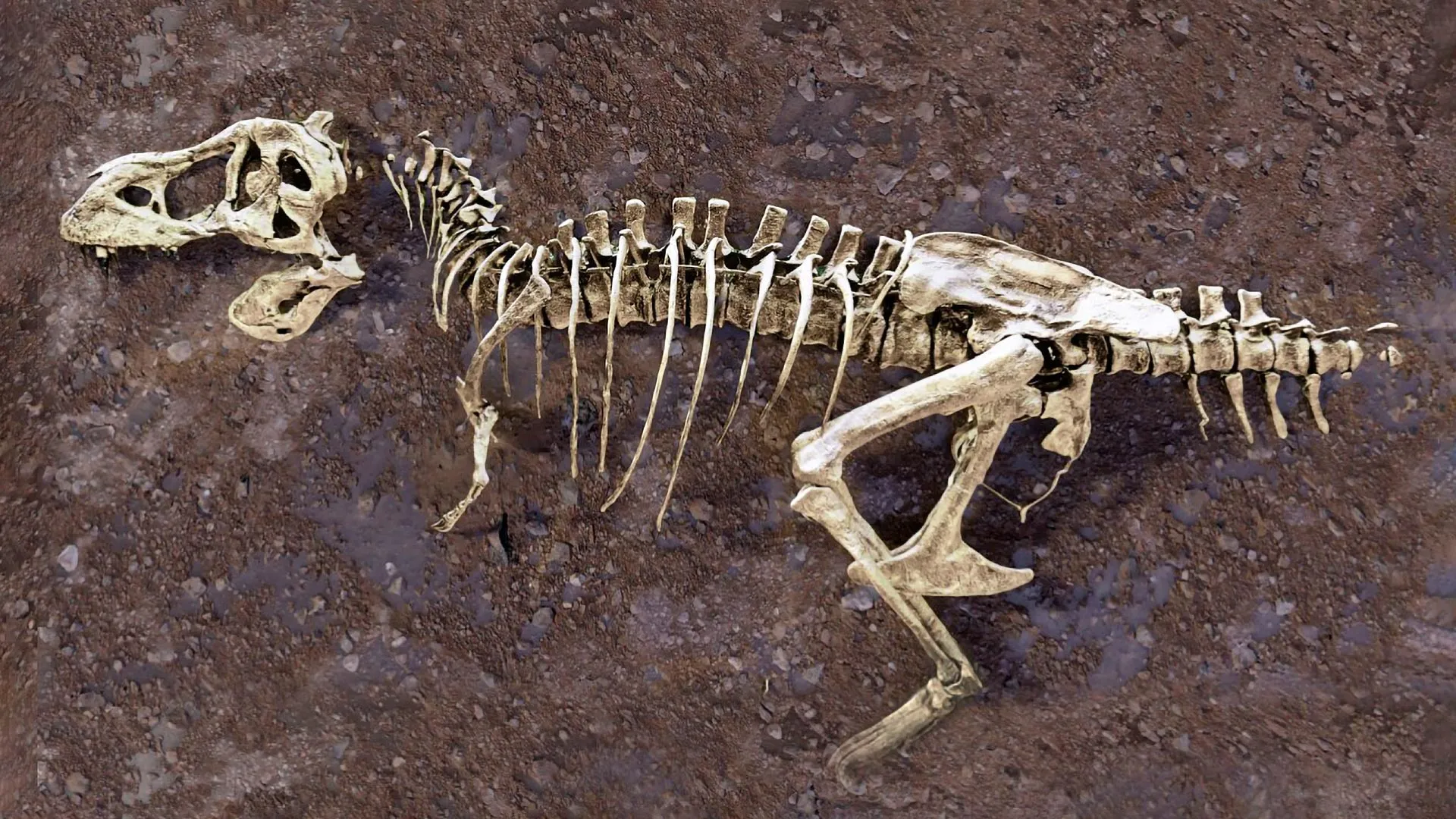
Scientists have conducted an unprecedented examination of a broken rib from Scotty, the largest Tyrannosaurus rex skeleton ever discovered, using advanced imaging techniques at the Department of Energy’s Oak Ridge National Laboratory. The fossil provided researchers with a rare opportunity to observe soft tissue preservation from the Late Cretaceous period, specifically a network of mineralized blood vessels associated with a healing fracture that occurred before the animal’s death.
The rib’s exceptional preservation resulted from unusual environmental conditions. When Scotty sustained the injury, iron-rich blood entered the fracture site and new blood vessels formed as part of the natural healing process. The dinosaur died before the fracture fully healed and became fossilized in a salty marsh environment, where decomposition occurred slowly enough to preserve the delicate vascular structures. This combination of circumstances created what researchers described as an extraordinarily rare window into dinosaur physiology.
The investigation employed complementary imaging approaches to reveal different types of information. Neutron imaging proved particularly effective at detecting light elements such as hydrogen, which characterizes soft tissues, while X-ray techniques excelled at revealing dense structures like bone. In April 2026, researchers used the Multimodal Advanced Radiography Station and the Virtual Environment for Neutron Sciences instrument at Oak Ridge facilities to produce high-resolution three-dimensional images without damaging the specimen. These neutron-based studies corroborated earlier findings from synchrotron X-ray imaging conducted at the Canadian Light Source, where the blood vessel structures were initially detected during scanning performed earlier in the project.
Scotty’s remains were recovered from the Frenchman River Valley in Saskatchewan by teams from the Royal Saskatchewan Museum, a site recognized as one of North America’s most significant locations for dinosaur fossil discoveries. The geological record from this region preserves important evidence of life shortly before the mass extinction event that concluded the age of non-avian dinosaurs. Researchers indicated plans to extend this imaging methodology to additional fossils in museum collections and to examine patterns of injury and healing across different dinosaur species to better understand ancient pathologies and compare them with conditions observed in modern organisms.
Article Attribution | Read More at Article Source
Article summary produced by Claude AI