

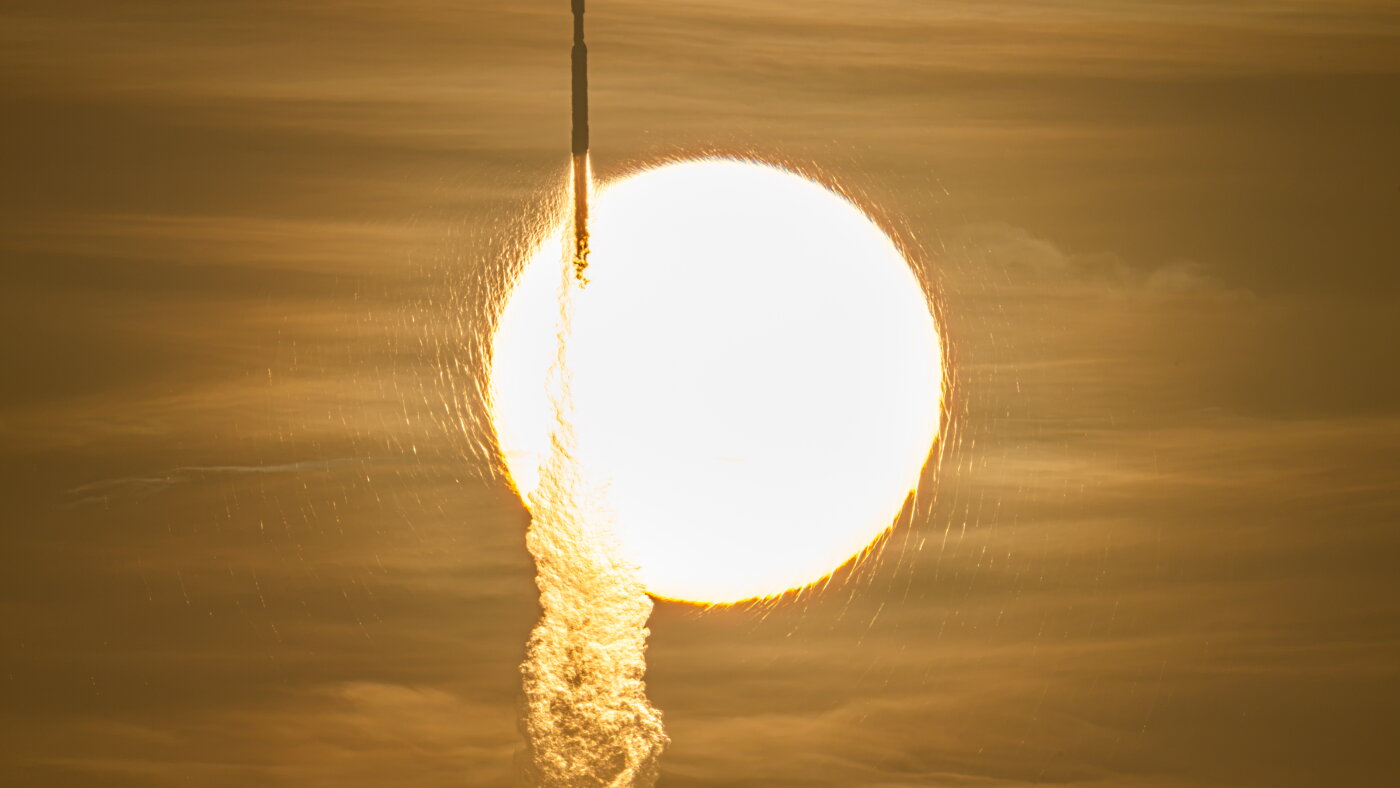
The Nancy Grace Roman Space Telescope launched from NASA’s Kennedy Space Center in Florida on Aug. 30, lifting off at 7:26 a.m. ET aboard a SpaceX Falcon Heavy rocket. The 18,000-pound spacecraft, approximately the size of a tour bus, is now en route to the second Sun-Earth Lagrange point, known as L2, located roughly a million miles from Earth. Initial telemetry data confirmed that all spacecraft systems were functioning nominally following deployment of solar panels and instruments.
The telescope is named after Nancy Grace Roman, NASA’s first chief astronomer, who played a pivotal role in developing the Hubble Space Telescope. Unlike its predecessor, Roman will possess Hubble’s optical sharpness while offering a field of view at least 100 times larger, enabling simultaneous imaging of vast regions of sky. The spacecraft has an unconventional origin, having been initially designed as a reconnaissance satellite for the National Reconnaissance Office before being transferred to NASA.
The mission is designed to investigate fundamental questions about the cosmos. Roman will search for evidence of dark matter by analyzing how gravity subtly influences light traveling across cosmic distances. The telescope will also observe Type Ia supernovae, which serve as “standard candles” for measuring cosmic expansion and understanding dark energy. Additionally, Roman will identify exoplanets through two methods: detecting the dimming of starlight as planets transit their host stars and identifying planets through microlensing techniques that reveal gravitational effects on background starlight.
The spacecraft is expected to catalog more than 100,000 exoplanets during its mission and demonstrate coronagraph technology capable of directly imaging planets and analyzing their atmospheric composition. The telescope will transmit approximately 1.4 terabytes of raw scientific data daily, with all information made immediately available to researchers and the public through a cloud-based platform called Roman Nexus. NASA estimates that the telescope’s five-year prime mission database will exceed the storage capacity of standard music streaming services, enabling scientists and citizen researchers to identify unexpected discoveries within the observational data.
Article Attribution | Read More at Article Source
Article summary produced by Claude AI