

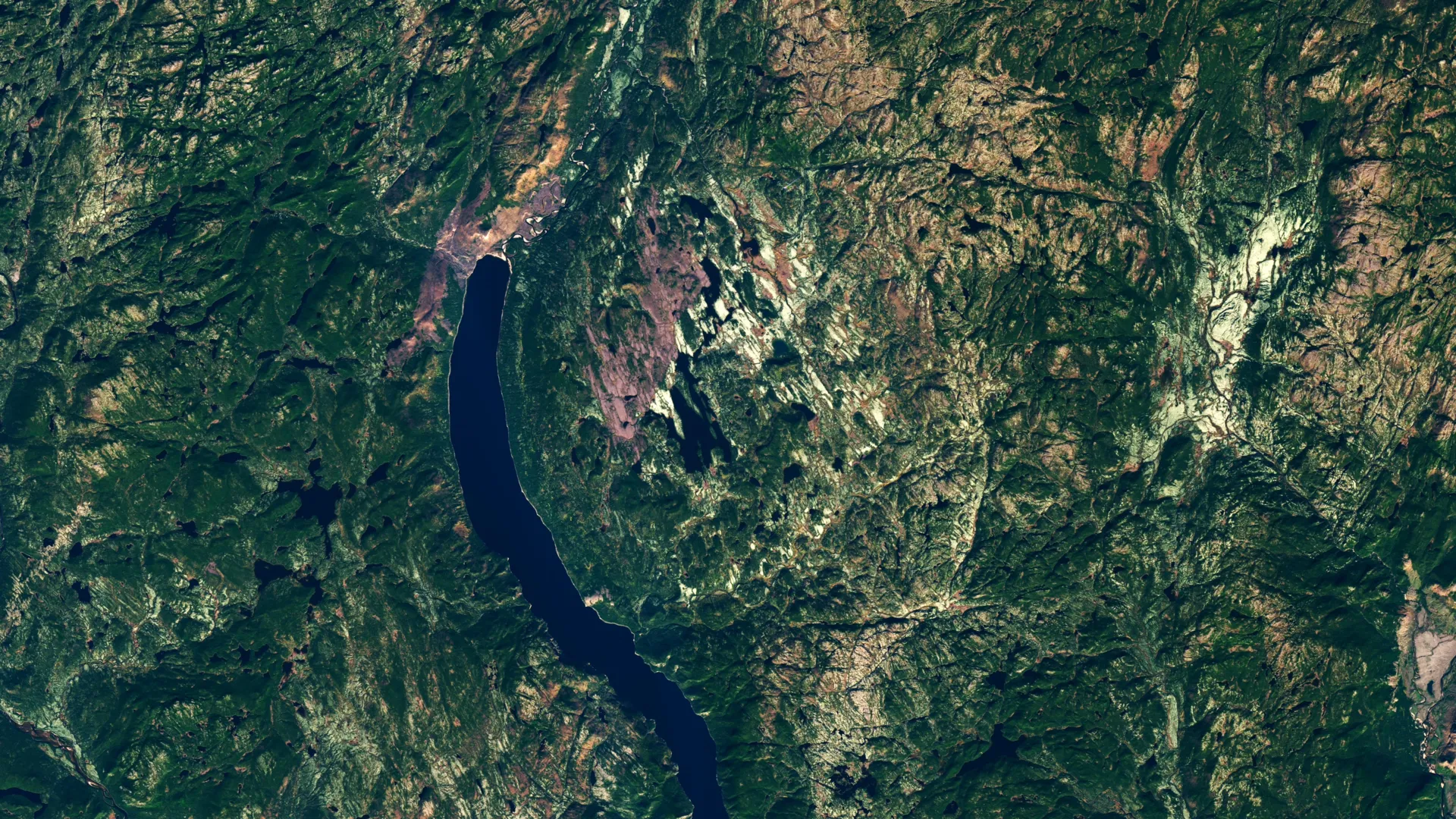
A circular geological feature visible on satellite imagery in Quebec’s remote Côte-Nord region has been confirmed as a substantial impact crater, marking a significant addition to Earth’s recognized extraterrestrial collision sites.
Joël Lapointe, an amateur astronomer planning a camping expedition, first noticed the unusual depression near Lake Marsal in 2024. Intrigued by the formation’s appearance, he contacted impact specialists across Europe and North America. The observation led French researchers to propose the site as Quebec’s 11th known impact structure at a professional conference that same year. The discovery eventually captured the attention of Gordon Osinski, a planetary geologist at Western University, who directed an exploratory expedition to the isolated location in October 2025.
Reaching the crater site presented significant logistical challenges. A floatplane could not navigate close enough to shore, requiring researchers to wade through 50 meters of water while carrying equipment. Once on land, the team encountered dense vegetation, swampy terrain, and insect populations that Osinski described as among the most difficult conditions he had experienced across six continents of fieldwork. Initial geological interpretations had attributed local rock formations to volcanic activity, specifically a diatreme structure formed by magmatic eruptions.
During the expedition’s second day, the team discovered shatter cones in rock outcrops throughout the area. These cone-shaped fracture patterns form exclusively under the extreme pressures generated during impact events and provided definitive evidence of an extraterrestrial collision rather than volcanic origin. The impact created a complex crater structure approximately 25 kilometers in diameter, featuring a central uplift and cliff faces with distinctive columnar jointing patterns. Analysis of rock samples indicates the collision occurred roughly 390 million years ago.
The crater, designated Uhackatik following consultation with the Innu Council of Ekuanitshit, ranks among the largest impact structures discovered in recent years. Formal recognition from the Meteoritical Society’s committee is anticipated following the organization’s next meeting. Osinski noted that a comparable modern impact in Quebec would cause catastrophic regional destruction and global climate consequences. Despite his involvement with NASA’s Artemis geology program, he does not anticipate the site becoming an astronaut training location due to its extreme remoteness.
Article Attribution | Read More at Article Source
Article summary produced by Claude AI