

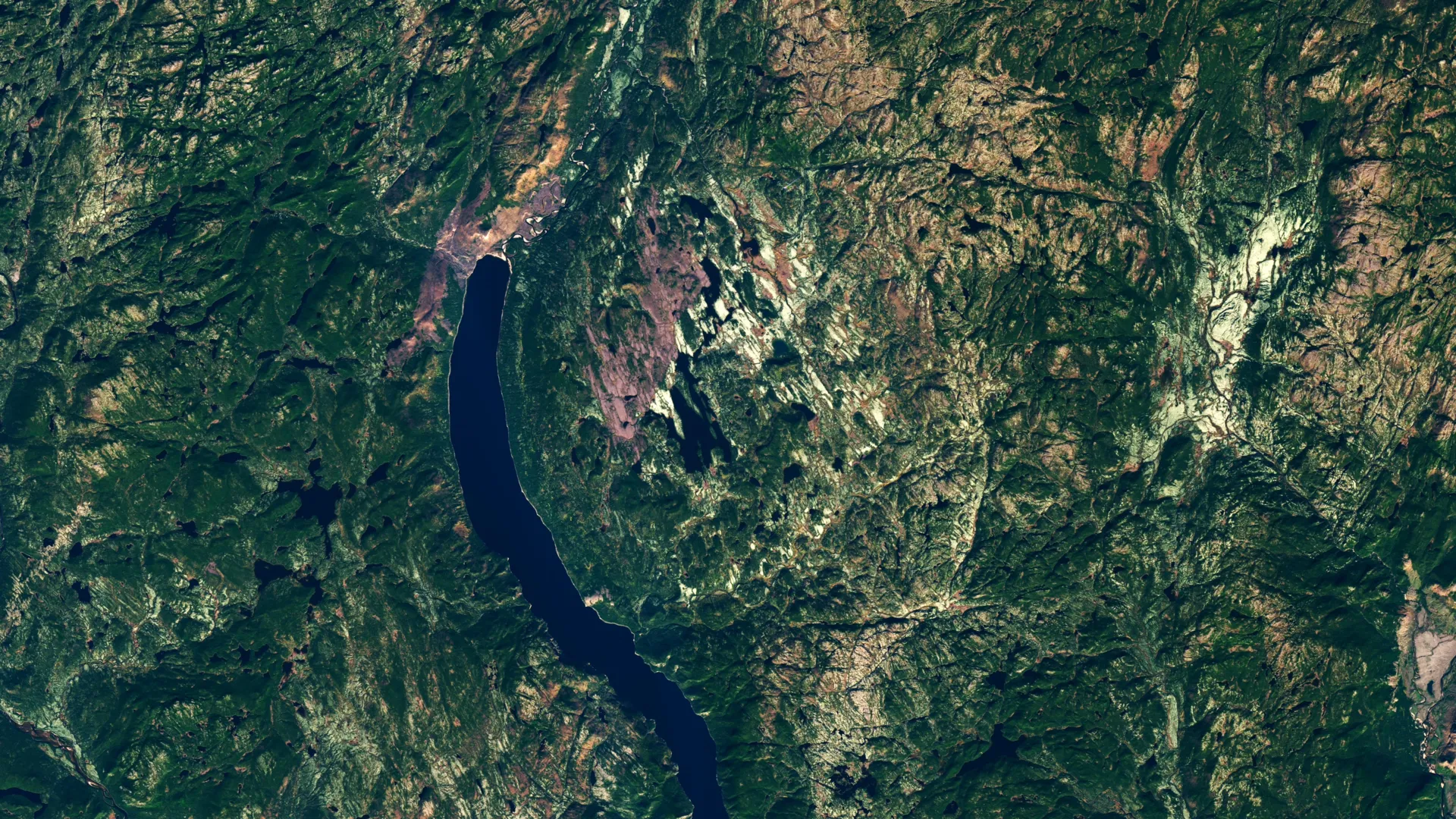
An amateur astronomer in Quebec made an unexpected scientific discovery while planning a camping trip in 2024. Joël Lapointe was examining satellite imagery of the remote Côte-Nord region when he noticed an unusual circular feature near Lake Marsal. Intrigued by the depression’s shape, he contacted impact crater specialists across Europe and North America to explore whether it could represent evidence of an ancient collision.
Lapointe’s observation prompted French researchers to present the site as a potential impact structure at a professional meeting in 2024, eventually bringing the location to the attention of Gordon Osinski, a planetary geologist at Western University. Though initially skeptical, Osinski organized an expedition to investigate the isolated site in October 2025. The journey proved difficult, requiring the team to wade through 50 meters of water after arriving by floatplane and navigate through challenging terrain filled with dense vegetation and swampy ground that Osinski described as extremely difficult even by his extensive standards.
The expedition yielded decisive evidence on its second day when researchers discovered shatter cones in rock outcrops. These distinctive structures form under the intense pressure generated during impact events and definitively indicated the feature was not a volcanic formation, as previously believed. The impact structure measures approximately 25 kilometers across and includes a central uplift with columnar jointing features visible in high cliffs.
Analysis of rock samples determined the crater formed approximately 390 million years ago, preceding a later period of increased cratering activity on Earth. Following consultation with indigenous communities, the site has been named Uhackatik. The discovery represents the largest confirmed impact crater found since the Hiawatha structure was identified in 2018. While formal recognition from the Meteoritical Society remains pending, the scientific community considers the impact origin essentially confirmed. Due to its remote location, the crater is unlikely to serve as an astronaut training site despite its geological significance.
Article Attribution | Read More at Article Source
Article summary produced by Claude AI