

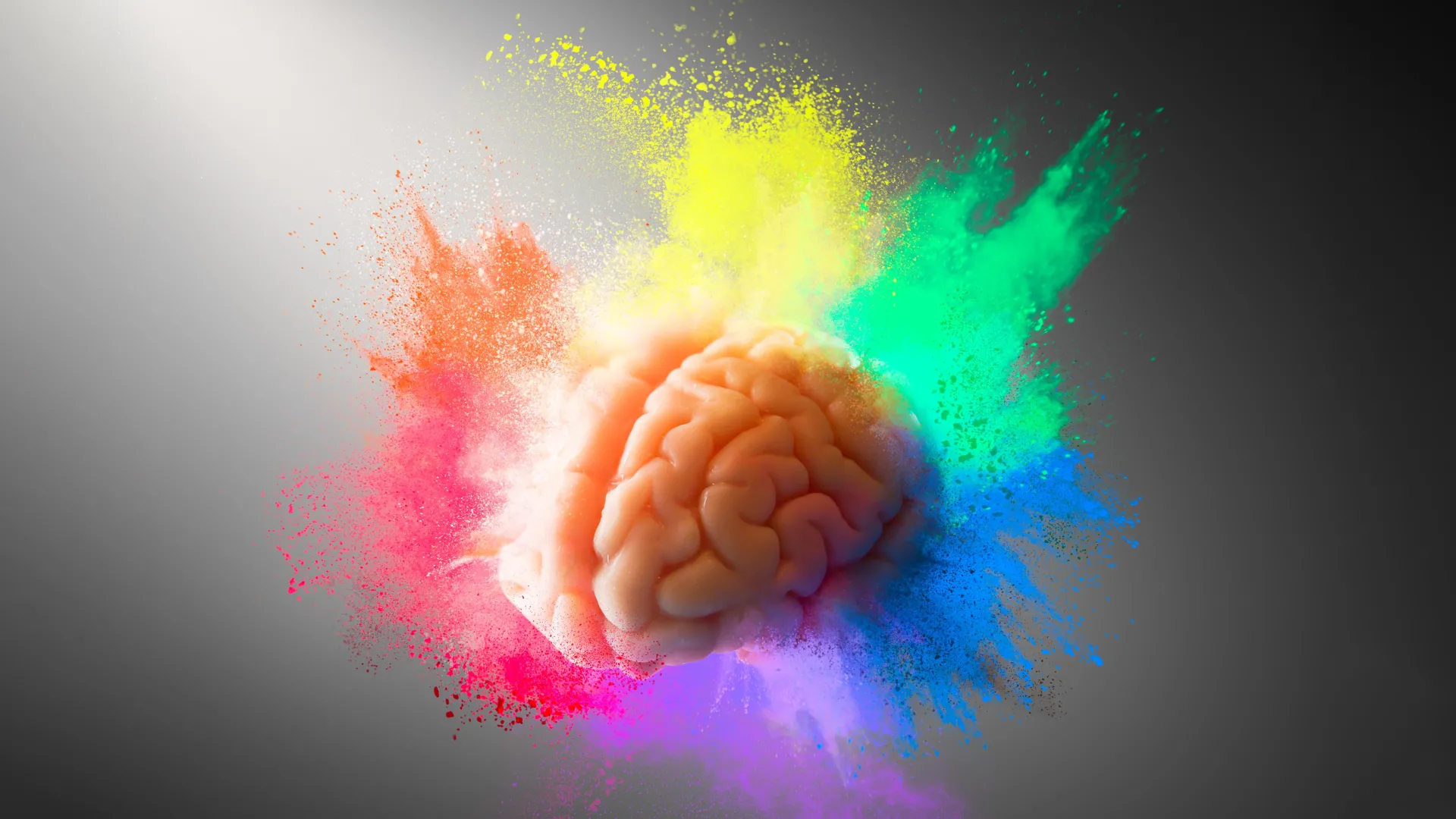
A study published in iScience examines the neurological connections between attention patterns and creative cognition, suggesting that certain mental processes linked to ADHD could facilitate creative thinking when appropriately channeled. The research, led by Dr. Radwa Khalil from Constructor University and co-authored by scientists from French research institutions, challenges the conventional deficit-focused approach to understanding attention-related conditions.
The investigation reveals that attention and creativity rely on overlapping neural networks, meaning that neurodivergent attention patterns need not be viewed solely as problematic. Free-associative thinking, which allows ideas to move in unexpected directions, exemplifies this connection—such mental processes can generate creative insights while simultaneously contributing to distractibility commonly observed in ADHD. Khalil uses a spotlight metaphor to illustrate the distinction: while most people can focus their attentional beam on a single object, those with ADHD possess a wider attentional field that absorbs more information simultaneously, creating challenges with sustained focus but enabling exploratory thinking and novel idea combinations.
The research team proposes that creative pursuits such as art, music, dance, writing, and gaming could provide structured outlets for directing defocused attention in productive ways. Engaging in creative activities may strengthen neural networks associated with attention control, potentially reshaping patterns linked to impulsivity and hyperactivity. Rather than viewing creative expression merely as entertainment, the researchers characterize it as a form of neural exercise that leverages an individual’s natural cognitive style.
While the findings suggest promising applications for nearly 8% of children worldwide affected by ADHD, the authors acknowledge significant gaps in current understanding of the creativity-attention relationship. They call for expanded interdisciplinary research involving neuroscientists, art therapists, clinicians, and other specialists, alongside new methodological approaches and longitudinal studies to determine optimal applications of creative interventions and their potential role in complementing existing treatments.
Article Attribution | Read More at Article Source
Article summary produced by Claude AI