

OpenAI announced earlier this month that its artificial intelligence model had solved the Navier-Stokes problem, one of mathematics’ most challenging unsolved questions and a Clay Mathematics Institute Millennium Prize Problem worth $1 million. The Navier-Stokes equations describe fluid flow and are used extensively in physics and engineering, yet researchers fundamentally do not understand why they work. Despite the celebratory announcement, mathematicians have expressed significant frustration with the outcome, citing concerns about both the process and the practicality of the solution.
The mathematical community views the AI-generated proof as technically correct but practically useless in its current form. Multiple mathematicians interviewed stated that the dense, 166-page manuscript is difficult to extract understanding from, with one Oxford mathematician noting it is “not written for humans.” Another researcher suggested the proof would require “serious re-writing” before it could advance the field. The rushed nature of the solution appears to have resulted in a document that fails to clarify which components are important, which are routine, or how the ideas connect to broader mathematical understanding.
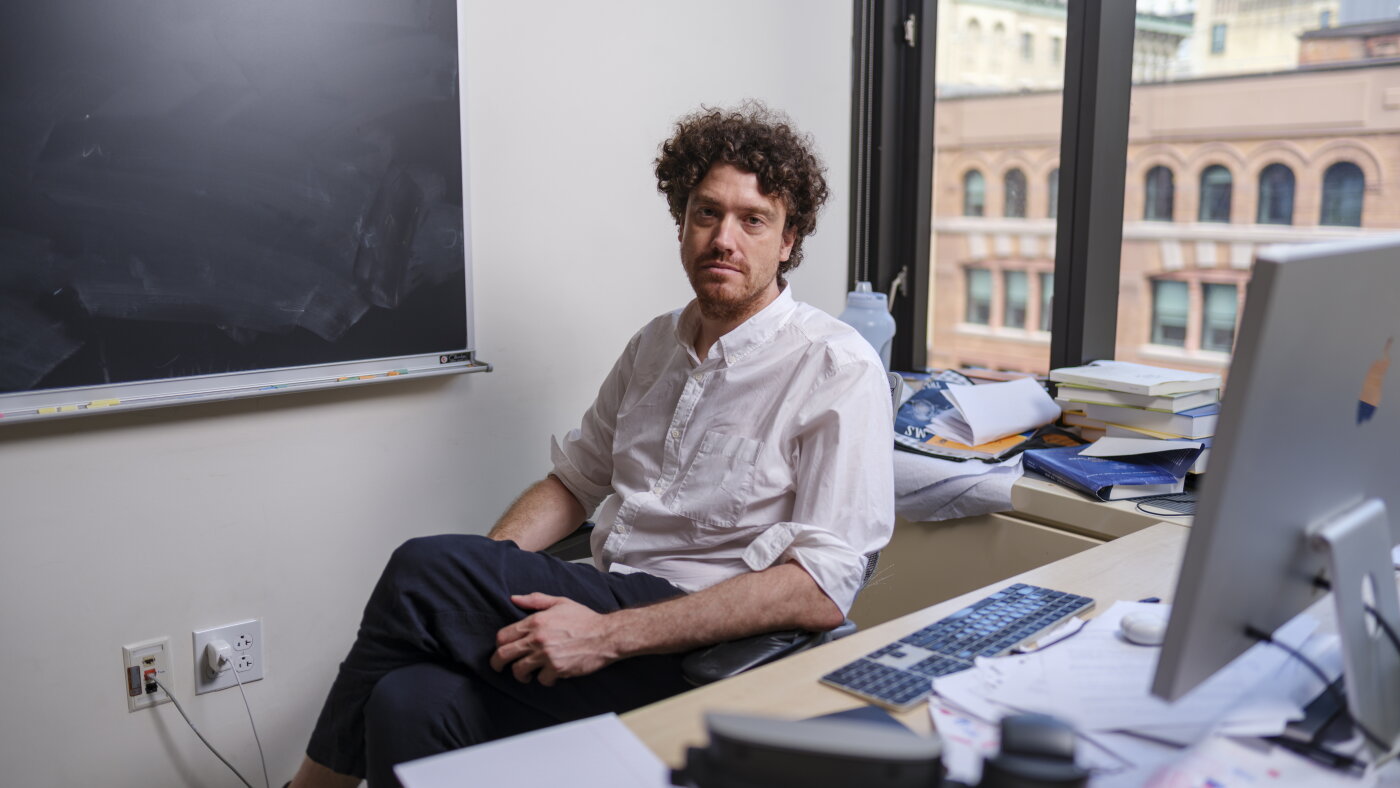
The announcement generated controversy regarding the circumstances under which OpenAI developed its solution. Mathematician Tristan Buckmaster of New York University and collaborator Levent Alpöge at Anthropic were independently working toward solving the same problem using AI tools when OpenAI launched an intensive computational effort. According to Buckmaster, OpenAI approached him offering authorship if he would drop Alpöge, his collaborator at a competing firm. OpenAI has denied using their approaches, though questions remain about the timeline and information flow.
Fields Medal winners, among the most prestigious mathematicians globally, issued a joint statement on September 11 criticizing the “misaligned goals” between AI companies and the mathematics community. Rather than demonstrating collaborative potential between human mathematicians and artificial intelligence, the episode was characterized as a “scrappy, messy battle.” The computational cost of finding the proof was substantial, with OpenAI utilizing 10,000 AI agents working for 88 hours at an estimated expense of $6 million to $20 million. The incident has raised broader questions about how technological breakthroughs in mathematics should be pursued and shared with the academic community.
Article Attribution | Read More at Article Source
Article summary produced by Claude AI