

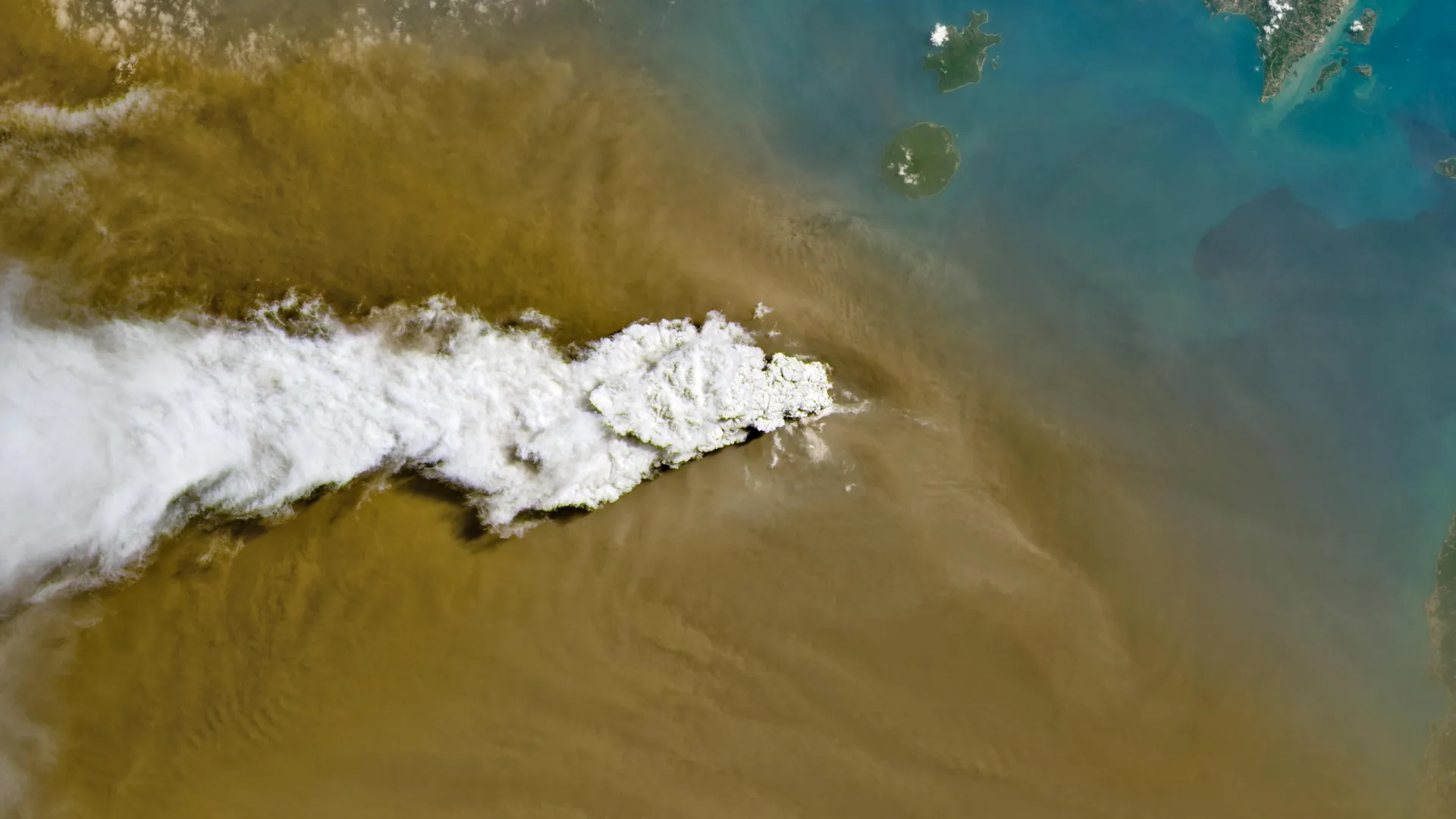
A significant eruption at Anak Krakatau, a highly active volcano situated between the Indonesian islands of Java and Sumatra, occurred in early September 2026. The volcano entered an intense explosive phase lasting more than 24 hours, ejecting substantial quantities of volcanic gas and ash into the atmosphere. The eruption was documented by multiple satellite observations, including imagery from NASA-USGS Landsat 8 and the Suomi NPP satellite, which captured the bright white plume of volcanic gas rising above darker brown ash clouds.
Meteorology officials measured ash reaching elevations of 6,000 meters to the east of the volcano and up to 15,000 meters to the west by September 6. The high atmospheric concentration of volcanic material prompted temporary closures at eight airports spanning Java and Sumatra, leading to disruptions affecting nearly 3,000 flight operations in the region. Communities on the eastern side of Anak Krakatau experienced particularly severe ash fall, with Jakarta and surrounding areas of West Java significantly impacted.
Volcanic ash posed distinct health risks compared to other atmospheric hazards in the region, potentially irritating respiratory systems, eyes, and skin. Officials emphasized that volcanic ash differs fundamentally from wildfire smoke in terms of particle composition, atmospheric behavior, and required protective measures. Airport operations resumed by September 8 following the initial disruptions. The volcano’s intense activity subsided after September 6, transitioning to more characteristic Strombolian eruption patterns involving periodic bursts of material. However, Anak Krakatau remained designated at the second-highest alert level on Indonesia’s volcanic warning scale, a classification maintained since earlier in the year.
Article Attribution | Read More at Article Source
Article summary produced by Claude AI