

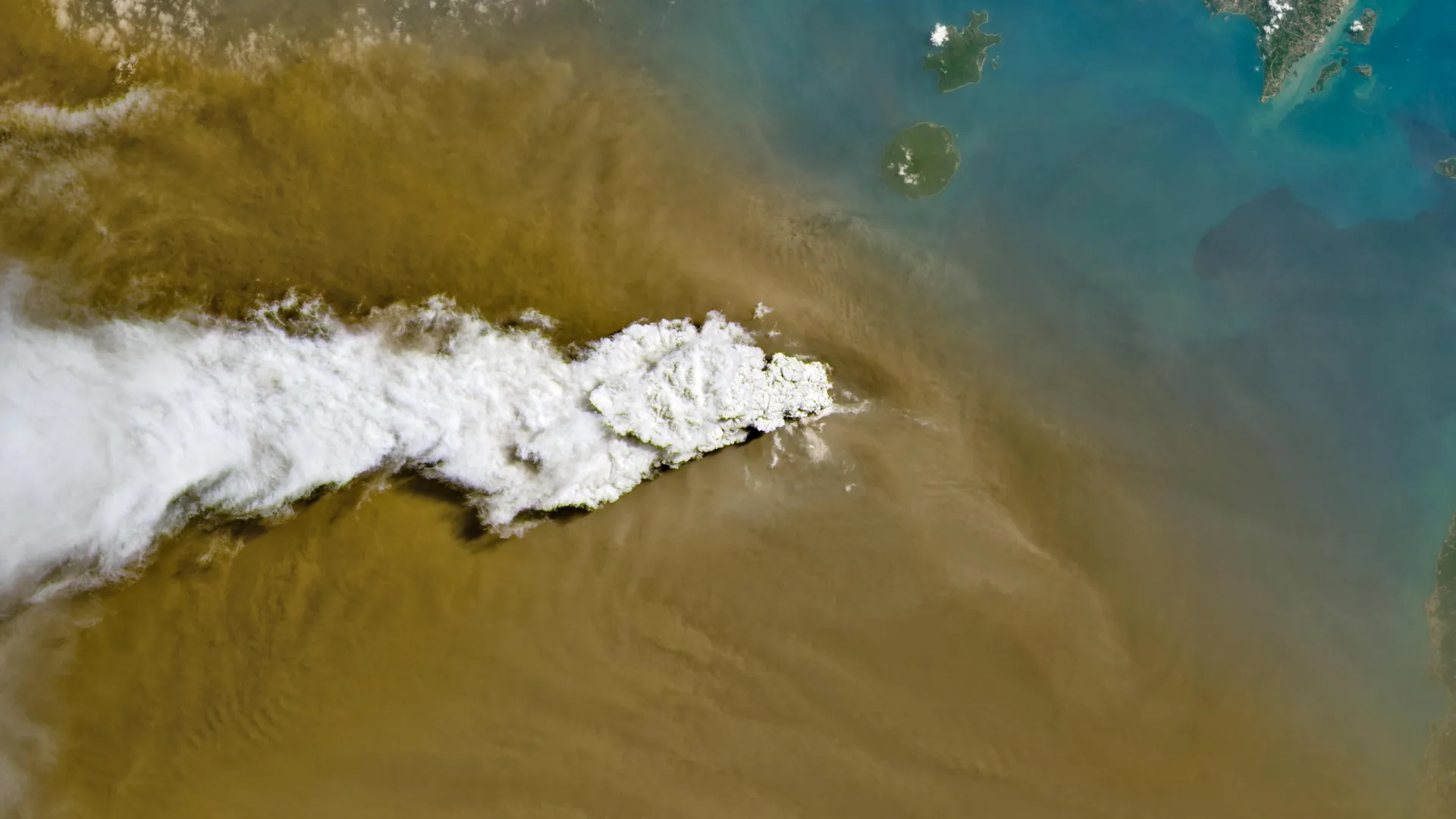
Anak Krakatau, a highly active volcano situated between Java and Sumatra in Indonesia, underwent an intense eruptive phase in early September 2026. The volcano, though typically producing modest eruptions, entered a prolonged explosive period lasting more than 24 hours that generated substantial quantities of volcanic gas and ash into the atmosphere.
Satellite observations captured the eruption activity on September 5, with NASA’s Landsat 8 satellite documenting a bright white plume of volcanic gas rising above a darker brown ash cloud. A second satellite, the Suomi NPP, provided wider imagery showing volcanic material dispersing across a considerably larger area. Measurements from Indonesia’s meteorological agency indicated ash reached altitudes of 6,000 meters in areas east of the volcano and reached 15,000 meters in western zones by September 6.
The high levels of airborne volcanic ash forced temporary closures at eight airports spanning Java and Sumatra, resulting in disruptions affecting nearly 3,000 flights. Ash also settled over populated regions, with communities east of the volcano experiencing particular impact, including Jakarta and surrounding areas of West Java. Health officials noted that volcanic ash presents distinct respiratory and skin irritation concerns compared to wildfire smoke, owing to differences in particle composition and atmospheric behavior.
The volcano’s most intense activity subsided by September 6, though continued rumbling persisted. The eruption reverted to a more characteristic pattern of periodic ash bursts. Airport operations resumed by September 8. The volcano maintained placement at the second-highest level on Indonesia’s volcanic warning scale, a designation it had held since earlier in the season.
Article Attribution | Read More at Article Source
Article summary produced by Claude AI