

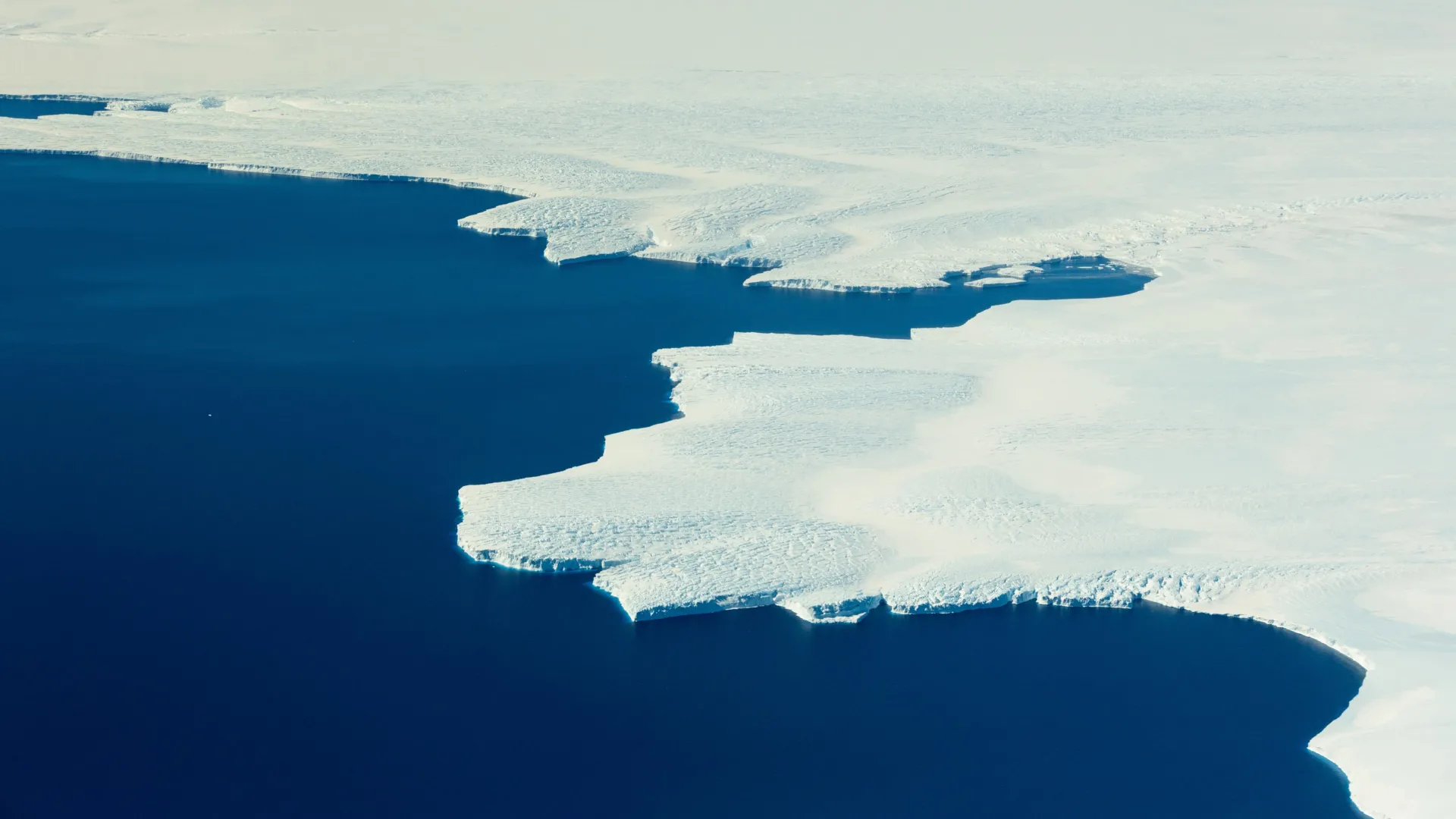
Researchers published findings in Nature describing how sustained warming in the tropical warm pool region during 2021-23 contributed to a temporary net ice sheet mass gain of approximately 695 billion tons in Antarctica. This represented the largest Antarctic mass gain observed by GRACE satellite missions and marked a notable departure from the continent’s long-term trend of ice loss averaging around 140.5 billion tons annually over the past two decades.
The international research team, led by scientists at the Institute of Oceanology of the Chinese Academy of Sciences, employed multiple analytical approaches to trace the connection between tropical ocean conditions and Antarctic ice accumulation. They examined gravity satellite data, snow accumulation records preserved in ice cores, and atmospheric circulation simulations to determine how moisture reached East Antarctica and what weather patterns facilitated its delivery.
The mechanism involved a Rossby wave train, a large-scale atmospheric pattern capable of transmitting weather changes across vast distances. Warming in the tropical warm pool, where the western Pacific meets the eastern Indian Ocean, generated this disturbance that traveled toward the Southern Hemisphere high latitudes. The resulting atmospheric reorganization created a north-south pressure dipole with low pressure south of Australia and high pressure along the East Antarctic coast. This circulation pattern redirected atmospheric rivers, narrow corridors carrying enormous quantities of water vapor, from the midlatitude Indian Ocean toward East Antarctica, producing sustained heavy snowfall across the Queen Mary Land-Wilkes Land region.
The researchers found that anthropogenic forcing accounted for only approximately 9 percent of the observed snowfall increase, suggesting that general atmospheric moisture increases from global warming were not the primary driver of this particular event. Analysis indicated that comparable periods of tropical warm pool warming occur roughly once per decade, positioning the region as a remote climate regulator capable of influencing East Antarctic snowfall and ice mass over multi-year timescales.
Despite the significant temporary gain, scientists emphasized that the event does not reverse Antarctica’s long-term ice loss trajectory. The West Antarctic Ice Sheet continues declining, and outlet glaciers in East Antarctica remain vulnerable to melting from warm ocean water. The findings establish a previously underrecognized climate connection pathway linking tropical ocean conditions to distant Antarctic ice-sheet changes.
Article Attribution | Read More at Article Source
Article summary produced by Claude AI