

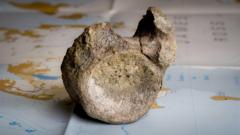
A fossilized vertebra that was collected in 1985 but remained unidentified in storage has been confirmed as the first dinosaur bone ever found in Antarctica. The specimen was discovered on James Ross Island and kept in the geology collection at the British Antarctic Survey in Cambridge, where it remained largely unexamined until recently rediscovered among thousands of other Antarctic specimens.
Dr Mark Evans, collections manager at BAS, identified the fossil as potentially dinosaurian in origin and consulted with Prof Paul Barrett from the Natural History Museum for confirmation. Barrett recognized distinctive anatomical features—including a hollow on one end and a rounded bump on the other—that are unique to Titanosaurs, a group of four-legged herbivorous dinosaurs known for their long necks and tails. The specimen is approximately 10 centimeters wide and represents a tail bone from this type of prehistoric reptile.
Based on the size of the bone, paleontologists estimate the Antarctic Titanosaur measured roughly 23 feet in length, either representing a juvenile or a naturally smaller member of a group whose largest specimens exceeded 115 feet. The dinosaur lived approximately 82 million years ago during the Late Cretaceous Period, when Antarctica featured a warm climate with lush forests capable of sustaining large herbivores. The discovery has been documented in a peer-reviewed paper published in the journal Acta Palaeontologica Polonica.
The finding provides valuable insights into Antarctic paleontology, as fossil recovery in the region remains limited due to challenging environmental conditions and the geological landscape. The discovery demonstrates that the now-inhospitable continent once supported diverse ecosystems with substantial populations of prehistoric fauna, contributing to scientific understanding of how these animals inhabited the world’s southernmost regions millions of years ago.
Article Attribution | Read More at Article Source
Article summary produced by Claude AI