

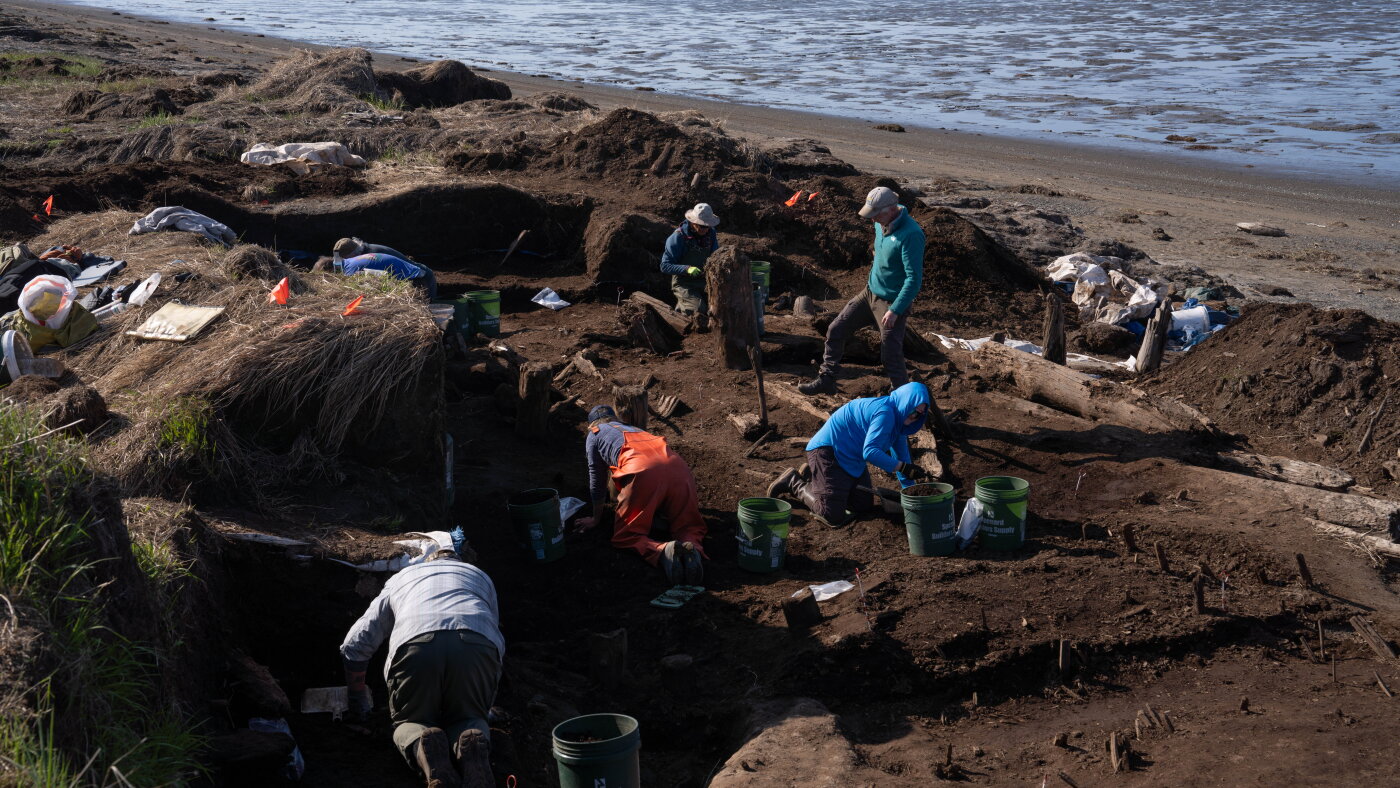
Last October, remnants of Typhoon Halong struck western Alaska, causing widespread flooding and significant damage to communities across the state. In the coastal village of Quinhagak, the storm unearthed a wealth of archaeological artifacts from the Nunalleq dig site, a location renowned for containing some of the best-preserved examples of pre-contact Alaska Native Yup’ik culture. A local resident discovered a hand-carved wooden bowl dating back 400 to 600 years among the storm debris, one of thousands of cultural objects that were scattered along the coastline by the severe weather.
The Nunalleq archaeological site, located near Quinhagak, has been the focus of systematic excavation efforts since 2009. The frozen ground at the location has been instrumental in preserving organic materials including carved animals, grass rope, sewing needles, masks, and kayak components that would likely have deteriorated under typical environmental conditions. When thawing permafrost first revealed significant numbers of artifacts in the early 2000s, community members deliberated and chose to pursue conservation efforts. The research team, led by archaeologist Rick Knecht, operates primarily with volunteer labor and limited funding from organizations such as the Pacific Northwest Archaeological Society and the Daughters of the American Revolution.
The typhoon intensified conservation challenges by accelerating coastal erosion and bringing seawater into the excavation area during high tides. Shoreline vulnerability in this region of Alaska has increased due to declining sea ice coverage and permafrost thaw, phenomena linked to climate change. The emergency excavation conducted this past summer focused on a smaller section comparable in size to a backyard pool, where researchers worked to recover artifacts from buried sod house remnants dating back 400 to 500 years. The research team expressed concern about potential future storms, noting that the previous flooding submerged the site under several feet of water and displaced valuable objects.
The recovered artifacts are maintained at the Nunalleq Culture and Archaeology Center, a facility that serves as both a museum and laboratory accessible to direct descendants and the general public. Community leadership emphasized the cultural significance of stewardship, noting that the artifacts represent connections to ancestral knowledge and resilience. Organizers are currently fundraising through a GoFundMe campaign and Quinhagak Heritage Inc. to support continued excavation efforts planned for the following summer, with urgency mounting as fall storm season approaches.
Article Attribution | Read More at Article Source
Article summary produced by Claude AI