

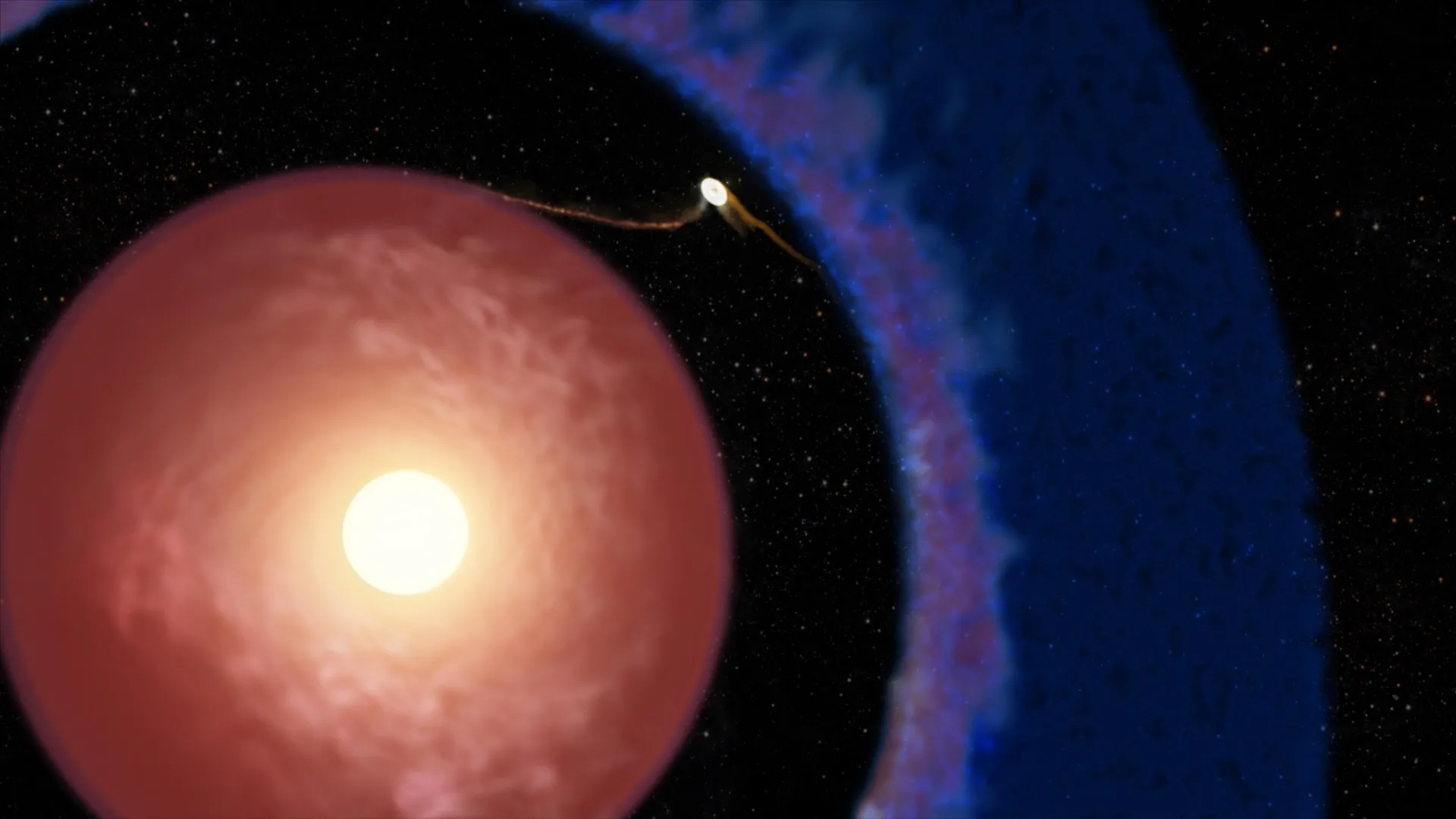
Researchers have identified a newly forming exoplanet designated Elias 2-24 b, which at less than 1 million years old represents the youngest planetary body confirmed to date. The discovery was announced in a study published September 16 in The Astrophysical Journal Letters, led by Andrea Bernardi, a doctoral candidate at the Universidad Diego Portales in Chile. The planet was located using archived observations from NASA-funded astronomical facilities, particularly the W. M. Keck Observatory in Hawaii, which employs a coronagraph instrument to block starlight and detect fainter objects in proximity to young stars.
The newly confirmed exoplanet is approximately the mass of Jupiter and orbits a star roughly 450 light-years from Earth. Notably, it remains embedded within its host star’s dusty disk, providing astronomers with an exceptional opportunity to study planetary formation processes as they actively occur. The planet’s discovery challenges existing theoretical models of planet formation, as conventional theories suggest that a Jupiter-sized planet at such a great distance from its star—approximately 55 times farther than Earth orbits the Sun—should require considerably longer to form than the observed age of this system.
The confirmation of Elias 2-24 b resolves a decade-long scientific debate. Earlier observations from the Atacama Large Millimeter/submillimeter Array and the Very Large Telescope had detected a gap in the star’s disk and a faint point of light within it, but scientists questioned whether the object was genuinely a forming planet or another astronomical phenomenon. By examining archival data collected in 2018 and 2020, researchers tracked the object’s motion and confirmed its orbital behavior around the star, validating it as an actual planet rather than an imaging artifact or background star.
According to Lucas Cieza, a professor at the Instituto de Estudios Astrofísicos in Chile and co-author of the research, the discovery indicates that current planet-formation models are missing important physical processes. The findings provide crucial observational data to test and refine these theoretical frameworks. With the recent launch of NASA’s Nancy Grace Roman Space Telescope on Aug. 30, astronomers anticipate enhanced capability to detect additional young planets in earlier formation stages, potentially addressing a significant observational gap in exoplanet science.
Article Attribution | Read More at Article Source
Article summary produced by Claude AI