

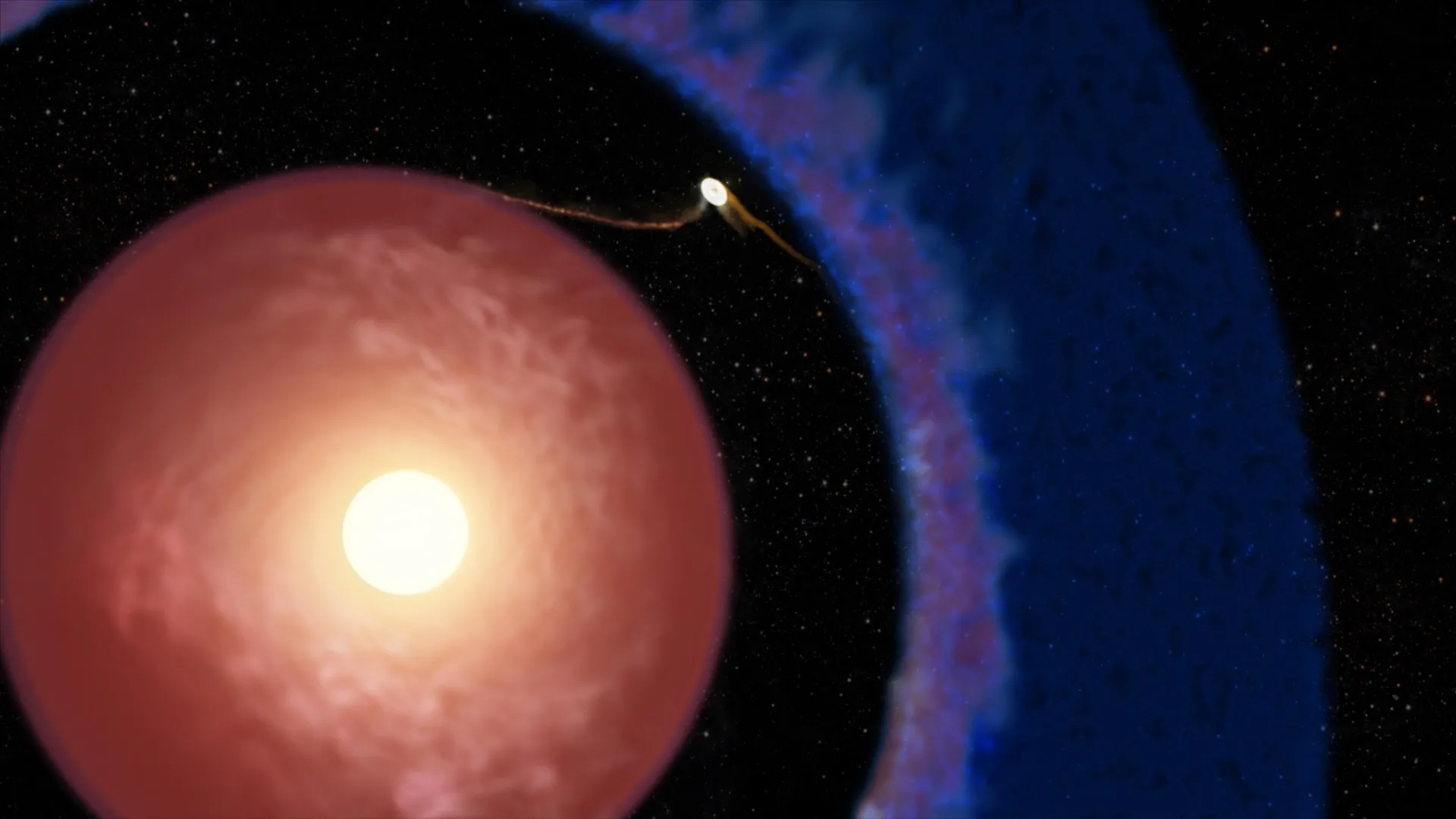
Researchers have identified and confirmed Elias 2-24 b, a planet less than 1 million years old, making it the youngest known exoplanet to date. The discovery was published September 16 in The Astrophysical Journal Letters and was led by Andrea Bernardi, a doctoral candidate at the Universidad Diego Portales in Chile. The team examined archived observations from the W. M. Keck Observatory in Hawaii, which operates through a cooperative agreement with NASA. The planet, roughly Jupiter-sized, orbits a star approximately 450 light-years from Earth and remains embedded within the gas and dust disk from which it is still forming.
The discovery challenges existing planet formation models. Previous record-holders for youngest planets were over 5 million years old, but Elias 2-24 b’s extreme youth suggests that current theoretical frameworks are incomplete. According to Lucas Cieza, a professor at the Instituto de Estudios Astrofísicos in Chile and a co-author of the study, the planet demonstrates that astronomers’ understanding of how planets form is still missing key processes. The planet’s location—approximately 55 times farther from its star than Earth is from the Sun—is particularly puzzling, as standard models suggest giant planets at such distances should require significantly longer to form.
The confirmation resolved a decade-long mystery. Earlier observations had detected a gap in the dust disk surrounding Elias 2-24, and subsequent imaging revealed a faint point of light within that gap. Scientists debated whether this object was genuinely a planet, given that formation theory suggested it should not have been able to develop so rapidly. By analyzing archived Keck Observatory data from 2018 and 2020, researchers tracked the object’s movement over time and determined its behavior was consistent with an orbiting planet rather than an imaging artifact or background star.
The discovery highlights current observational limitations in exoplanet detection. Most of the approximately 6,000 confirmed exoplanets are billions of years old because thick dust obscures young planets from view, and the transit method—detecting when planets pass in front of their stars—proves ineffective for dust-embedded systems. NASA’s Nancy Grace Roman Space Telescope, which launched Aug. 30, features an advanced coronagraph designed to overcome these constraints and should enable detection of planets in tighter orbits during earlier formation stages, potentially revealing additional young planets and closing significant gaps in exoplanet science.
Article Attribution | Read More at Article Source
Article summary produced by Claude AI