

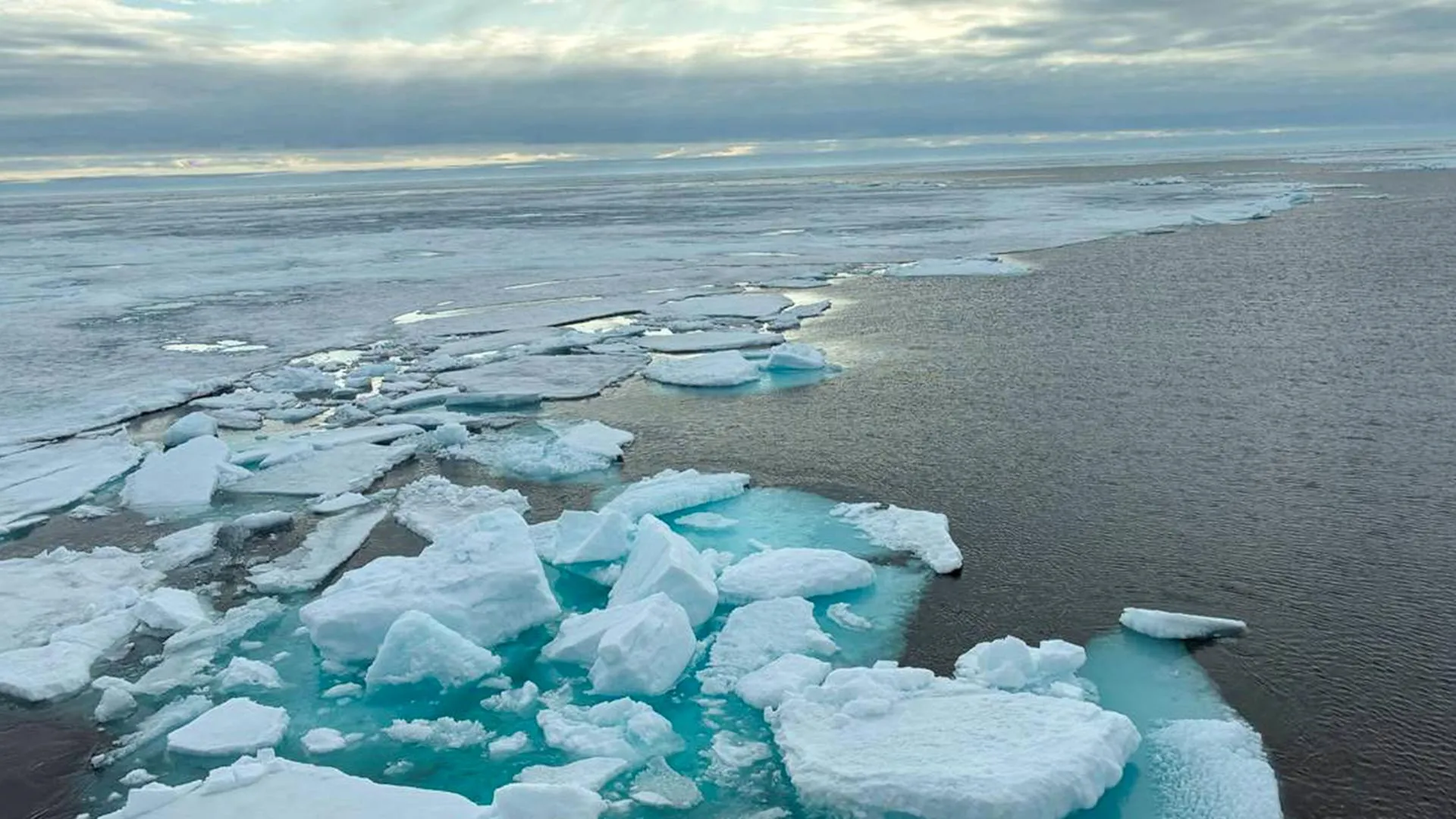
An international research team led by the Alfred Wegener Institute has completed the first systematic study of cyclone clustering in the Arctic, examining decades of satellite and weather data. The research, published in Nature Communications, demonstrates how multiple low-pressure systems arriving in quick succession can dramatically amplify damage to sea ice and increase risks for Arctic coastal regions.
Cyclone clustering occurs when several storms move through the same area with minimal time between them, preventing conditions from stabilizing after one system passes before another arrives. Rather than allowing newly opened gaps in sea ice to refreeze, the prolonged stormy conditions maintain disruption. The research team adapted tracking algorithms to identify these rapid sequences in Arctic weather records spanning 1979 to 2024, then compared satellite observations of sea ice conditions before and after cluster events.
The analysis revealed that cyclones physically disrupt sea ice through multiple mechanisms. Powerful winds break apart ice floes, causing them to move, drift, and collide. During warmer seasons, storms can force ice northward and compress the overall coverage area. Additionally, cyclones transport heat into the region, both through warm air aloft and by bringing relatively warm seawater upward from deeper layers, accelerating melting. Researchers found that cyclone clusters, averaging 2.5 storms per event, reduce Arctic sea ice cover roughly twice as much as isolated storms, with effects persisting about 2.5 times longer.
A concerning long-term trend emerged from the analysis: sea ice loss associated with cyclone clustering has risen substantially in recent decades. As global temperatures increase, Arctic sea ice is becoming thinner and more mobile, making it less resistant to cyclone forces. This creates a potential feedback loop where weakened ice becomes increasingly vulnerable to further damage from clustered storms, which in turn further weakens the ice. The researchers are now using climate projections to determine whether this intensifying trend may continue into the future.
The implications extend beyond the ice itself. Sea ice provides natural protection for Arctic coastlines against powerful waves. As protective ice cover retreats, coastal communities face increased exposure to storm damage, compounding risks from accelerating permafrost thaw that is already weakening shorelines and increasing erosion vulnerability.
Article Attribution | Read More at Article Source
Article summary produced by Claude AI