

An international research team led by the Alfred Wegener Institute has conducted the first systematic study of rapid-succession Arctic cyclones and their effects on sea ice. The researchers analyzed satellite observations and weather records spanning 1979 to 2024, using adapted algorithms to track consecutive low-pressure systems moving through the Arctic region.
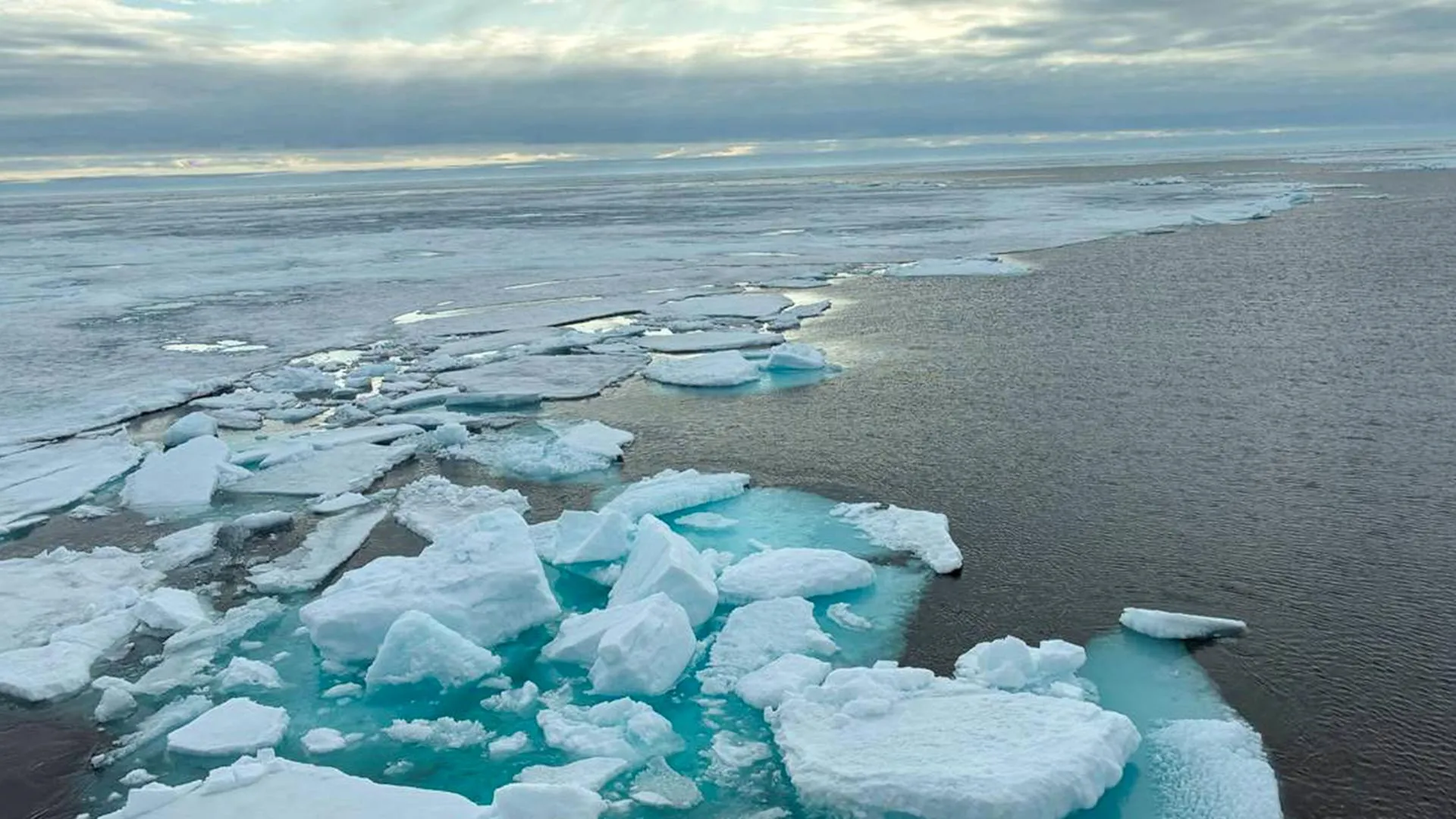
The phenomenon, termed ‘cyclone clustering,’ occurs when multiple storms arrive in quick succession rather than allowing conditions to stabilize between events. During these periods, powerful winds physically break apart ice floes, causing them to move, drift, and collide. In winter months, the prolonged stormy conditions prevent newly opened gaps in the ice from refreezing as quickly as they normally would. During warmer seasons, the storms compress existing ice by forcing floes northward and into each other. Additionally, cyclones can transport warmer air masses that promote melting from above and draw relatively warm seawater upward from deeper ocean layers.
The research found that cyclone clusters reduce Arctic sea ice cover by approximately twice as much as isolated storm systems, with effects persisting about two and a half times longer. The impact varies significantly across different Arctic regions, with some areas experiencing increases in ice loss up to seven times stronger during clustered events compared to isolated cyclones. An average cluster contains approximately 2.5 cyclones.
A concerning long-term trend emerged from the analysis: sea ice loss associated with cyclone clusters has risen substantially in recent decades. Researchers attribute this partly to changes in the Arctic sea ice itself, which is becoming thinner and more mobile as global temperatures increase, making it less resilient to cyclone forces. This creates a potential self-reinforcing cycle where weakening ice becomes increasingly vulnerable to storm damage, which further reduces ice extent.
Beyond direct impacts on sea ice, the findings have implications for Arctic coastal communities. Sea ice naturally protects coastlines from powerful waves, so as the ice retreats, communities face greater exposure to severe storms. The researchers note that accurately modeling cyclone clustering effects could improve projections of future sea ice conditions and associated coastal risks for the Arctic region.
Article Attribution | Read More at Article Source
Article summary produced by Claude AI