

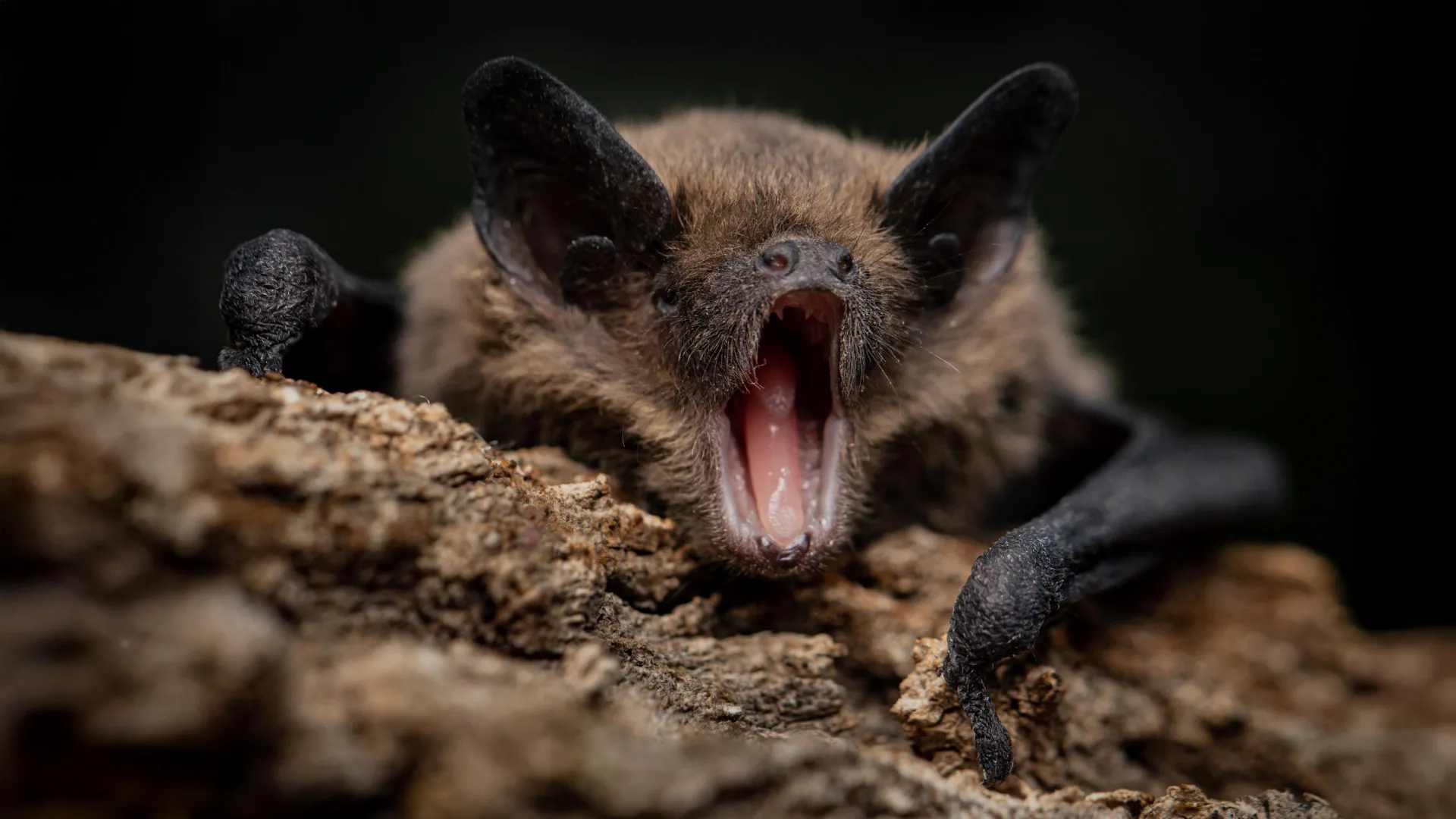
Scientists at Tulane University, collaborating with institutions including Stanford University and the Centers for Disease Control and Prevention, have identified a distinctive feature of bat immune systems that may help explain why these animals can harbor dangerous viruses while remaining healthy.
The research, published in Science Advances, focused on vesper bats, a family comprising over 500 species distributed across every continent except Antarctica. Researchers found that these bats possess two separate sets of genes responsible for producing heavy chains of antibodies—specialized proteins that help the immune system identify and combat infections. This genetic configuration differs markedly from all other known mammals, which possess only a single set of such genes.
Antibodies function as Y-shaped proteins constructed from two heavy protein chains and two light protein chains. The discovery that vesper bats maintain two distinct heavy-chain gene systems suggests they may be capable of producing a broader variety of antibodies than other mammals. Hannah Frank, associate professor of ecology and evolutionary biology at Tulane University and corresponding author of the study, emphasized that this finding represents an unprecedented observation in mammals and fundamentally alters scientific understanding of how mammalian immune systems can be structured.
The findings highlight the importance of examining the adaptive immune system, which produces antibodies, alongside the innate immune system that researchers have traditionally emphasized when studying bat immunity. Frank noted that while this discovery does not fully account for why bats function as effective viral reservoirs, it reveals previously unknown dimensions of immune diversity and opens new avenues for research.
Beyond advancing basic immunological knowledge, understanding how bats maintain health while hosting viruses could eventually inform strategies for reducing disease spillover to other species and improve comprehension of immune responses across different animals. Researchers emphasize that studying diverse species with distinct evolutionary histories offers opportunities to uncover biological principles not apparent from studying only humans and laboratory models.
Article Attribution | Read More at Article Source
Article summary produced by Claude AI