

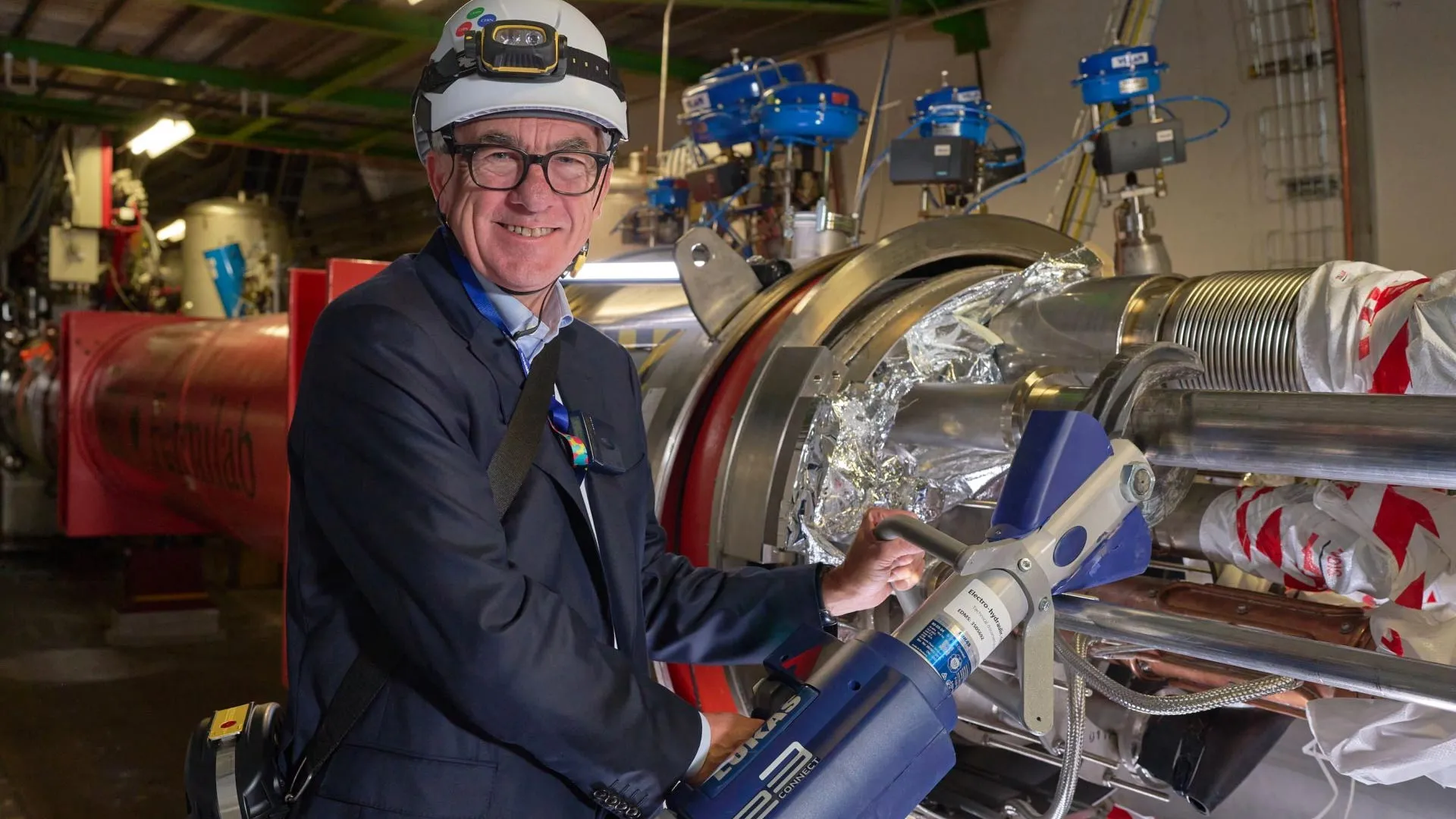
The European Organization for Nuclear Research has initiated the third long shutdown of the Large Hadron Collider, during which crews are removing critical magnet systems to make way for upgraded hardware. The operation began with the cutting of the first magnet interconnection at LHC Point 1, home to the ATLAS experiment, marking a formal transition to the replacement phase of the High-Luminosity LHC project.
The magnets being removed are called inner triplets, sets of three quadrupole magnets positioned on both sides of the LHC’s four main experiments. These components play a crucial role in focusing particle beams to their tightest possible configuration before collision, which directly affects the number of interactions occurring within detector systems. The denser the beam compression, the higher the luminosity, or collision rate, which provides researchers with greater quantities of data for analysis.
The replacement magnets represent a significant technological advancement over the existing equipment, which has functioned since the LHC’s construction phase and was installed between 2005 and 2007. The new inner triplets utilize niobium-tin superconducting coils rather than the current niobium-titanium design, enabling them to generate magnetic fields reaching 11.3 tesla—approximately 40 percent stronger than current capabilities. The upgraded systems will be installed around the ATLAS and CMS experiments, where the increased collision rate will provide the greatest benefits.
According to project leadership, the first new quadrupole magnet is scheduled to arrive in the tunnel at the start of 2029, with a total of 16 cryostats and 28 cryo-assemblies to be installed across the facility. The ALICE and LHCb experiments will retain their existing inner triplets but will receive upgrades to allow them to benefit from the overall luminosity improvements across the collider complex. The dismantling operation, which began September 7, involves removing 28 superconducting magnets from sections on either side of the two major detector systems.
Article Attribution | Read More at Article Source
Article summary produced by Claude AI