

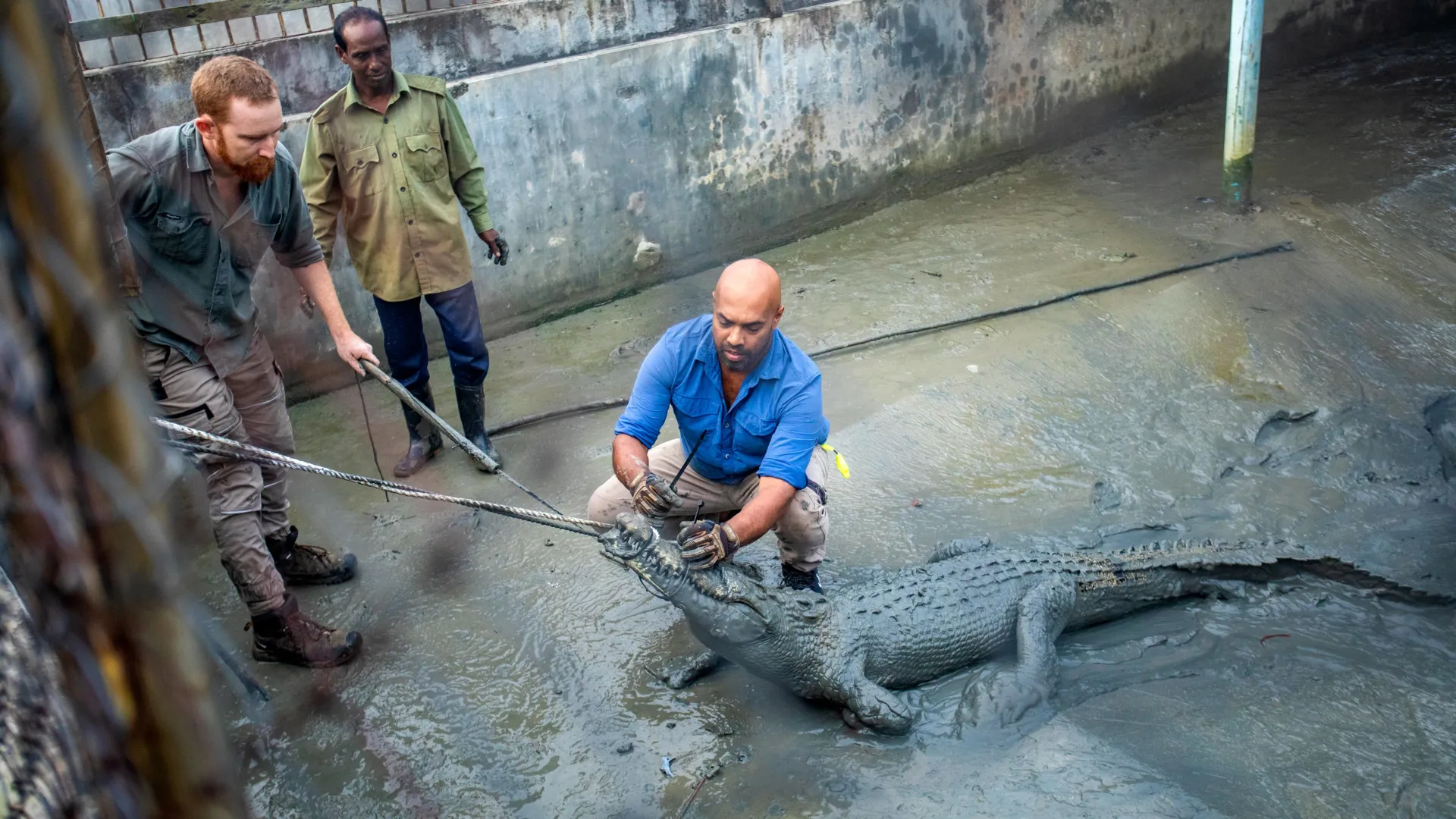
Researchers investigating saltwater crocodile behavior in Bangladesh’s Sundarbans mangrove forest have discovered significant differences in how captive-reared and wild-caught crocodiles respond to being released into natural habitats. The study tracked five mature crocodiles fitted with satellite devices, comparing the movements of three females raised in captivity for 8-22 years, one local wild crocodile captured and released at its original location, and one wild crocodile relocated approximately 132 kilometers from its capture site.
The most notable finding concerned the three captive-reared females, which showed no indication of attempting to return to the breeding facility where they had spent years in captivity. Instead, these animals established small, defined territories and moved in patterns similar to the local wild crocodile monitored in the study, suggesting they were capable of adapting to their new environment without distress or displacement behavior.
The translocated wild crocodile, identified as Jongra, exhibited markedly different behavior. Although it did not reach its original capture site during the study period, its movement patterns clearly indicated an attempt to return home. Jongra traveled substantially farther daily than other tracked individuals, covered an exceptionally large area, and made several single-day movements exceeding 30 kilometers—all characteristics associated with homing behavior.
These findings carry implications for conservation efforts in Bangladesh, where saltwater crocodile populations have declined dramatically. The country’s most recent population survey estimated only 140 mature individuals remaining, primarily in the Sundarbans. The results suggest that releasing adult and subadult captive-reared crocodiles could effectively strengthen wild populations without the complications that arise from relocating wild-caught individuals. Researchers note that traditional reintroduction programs relying on hatchlings have produced poor survival rates and require extended periods before animals reach reproductive maturity.
Article Attribution | Read More at Article Source
Article summary produced by Claude AI