

Researchers at the University of Oxford have identified evidence indicating Mars once harbored large-scale magmatic systems similar to those found on Earth, despite lacking the plate tectonic activity traditionally associated with such geological complexity. The findings, published in Nature Astronomy, expand understanding of how rocky planets can develop and potentially support conditions favorable for habitability.
Mars is classified as a “stagnant lid” planet because its outer shell remains fixed, unlike Earth’s mobile tectonic plates. Scientists have generally assumed the Martian crust formed through relatively straightforward geological processes. However, the new research challenges this perspective, suggesting Mars may have developed sophisticated crustal material through vigorous recycling deep within the planet.
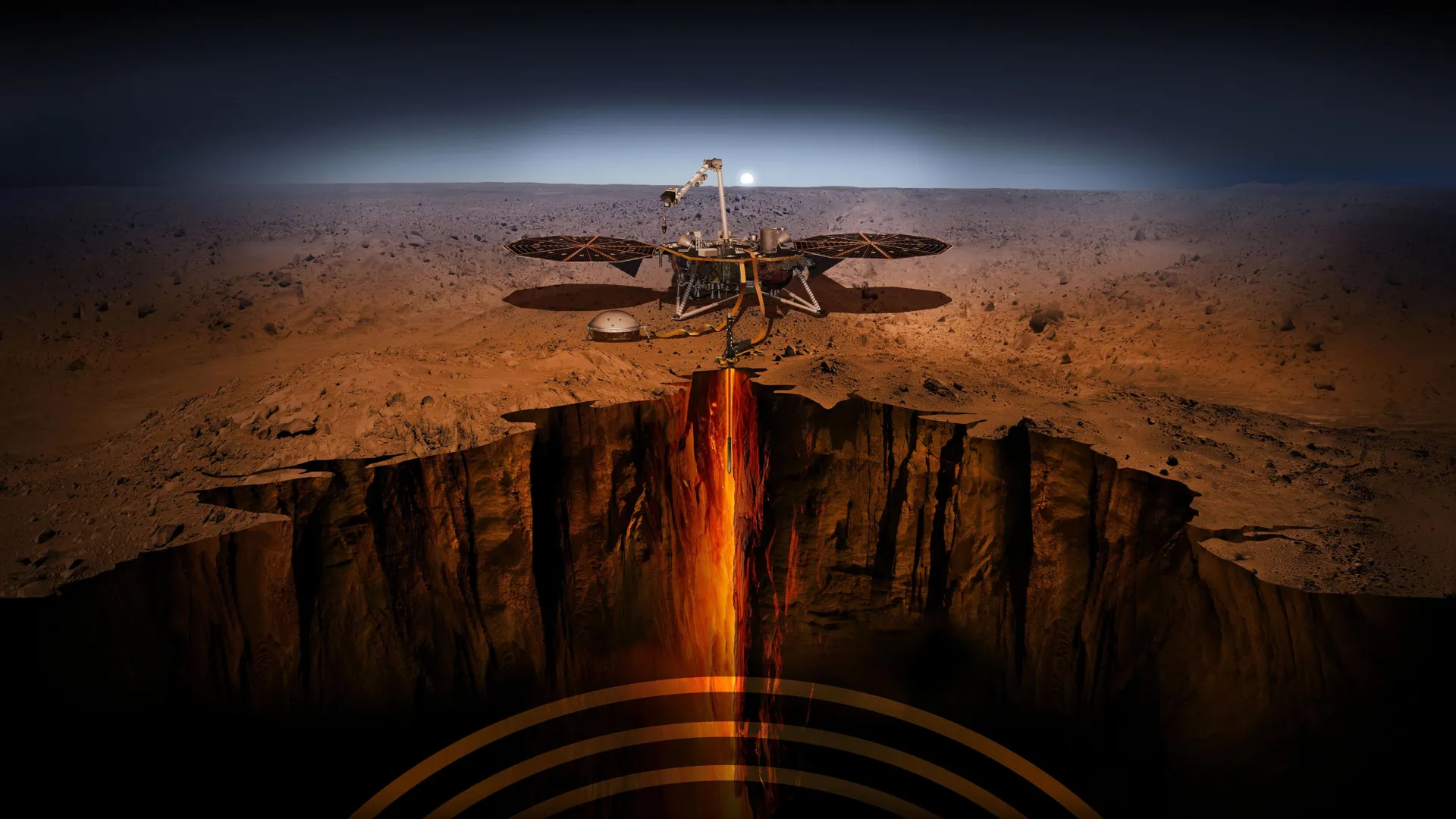
The investigation focused on seismic data collected by NASA’s InSight mission, examining waves produced by meteoroid impacts and marsquakes. The research team analyzed an unexplained boundary located approximately 24 kilometers beneath the Martian surface that had been identified in earlier studies. Using seismic observations combined with thermodynamic modeling and statistical analysis, researchers determined that rocks beneath this boundary consisted of ultramafic material rich in iron and magnesium, while rocks above contained more mafic composition with higher silica levels. These findings suggest the layer formed when molten rock accumulated underground and gradually separated into different materials through a process where dense crystals settled while lighter, more evolved melts rose upward.
The buried magma layer potentially extends hundreds to thousands of kilometers across Mars’ northern hemisphere, indicating ancient Mars may have hosted vast, interconnected magmatic systems rather than simple isolated volcanoes. This process, termed “transcrustal magmatism,” was previously believed unique to Earth.
The research has significant implications for astrobiology. Geological recycling influences atmospheric development and the presence of water and other volatile elements necessary for life. The Mars findings suggest that complex crustal evolution and extensive geological recycling may occur on planets lacking Earth-style plate tectonics, potentially expanding the range of worlds considered capable of developing habitable conditions.
Article Attribution | Read More at Article Source
Article summary produced by Claude AI