

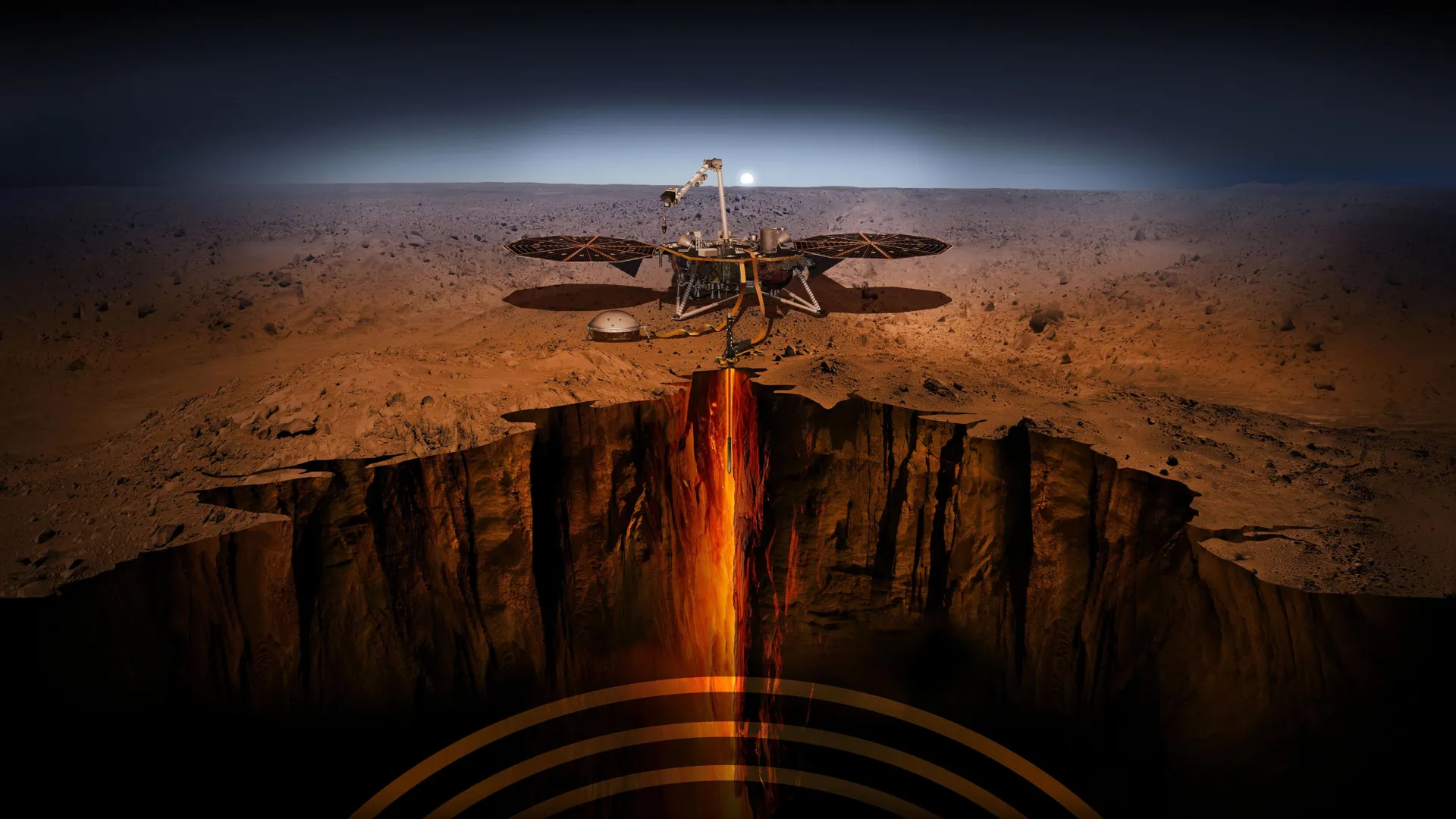
Researchers at the University of Oxford have identified a previously unexplained geological boundary approximately 24 kilometers beneath Mars’ surface, according to findings published in Nature Astronomy. Using seismic data collected by NASA’s InSight mission, which detected waves from meteoroid impacts and marsquakes, scientists determined that this boundary marks a transition between two distinct rock types in the Martian crust.
Through analysis combining thermodynamic modeling and statistical methods, researchers established that rocks beneath the boundary consist of ultramafic material rich in iron and magnesium, while rocks above it contain more silica-rich mafic composition. The team compared hundreds of possible rock compositions against seismic observations to reach their conclusions. This layering pattern suggests that molten rock accumulated underground and gradually separated into different materials as dense crystals settled downward and lighter, more chemically evolved melts rose upward.
The research challenges the long-standing assumption that Mars, classified as a “stagnant lid” planet without Earth-style plate tectonics, developed through simple geological processes. Instead, the findings indicate Mars may have sustained large, long-lived magmatic systems where molten rock recycled and evolved throughout the crust. The buried layer could potentially extend for hundreds or thousands of kilometers across Mars’ northern hemisphere, suggesting the planet once hosted vast, interconnected magmatic systems rather than isolated volcanoes.
These discoveries carry significant implications for understanding planetary habitability more broadly. The process of crustal recycling influences atmospheric development, ocean formation, and conditions where life could emerge. While plate tectonics on Earth drives much of this recycling, the Mars findings suggest that complex crustal evolution and extensive geological recycling may occur even without Earth-style tectonic processes, potentially widening the range of planets capable of developing habitable conditions.
Article Attribution | Read More at Article Source
Article summary produced by Claude AI