

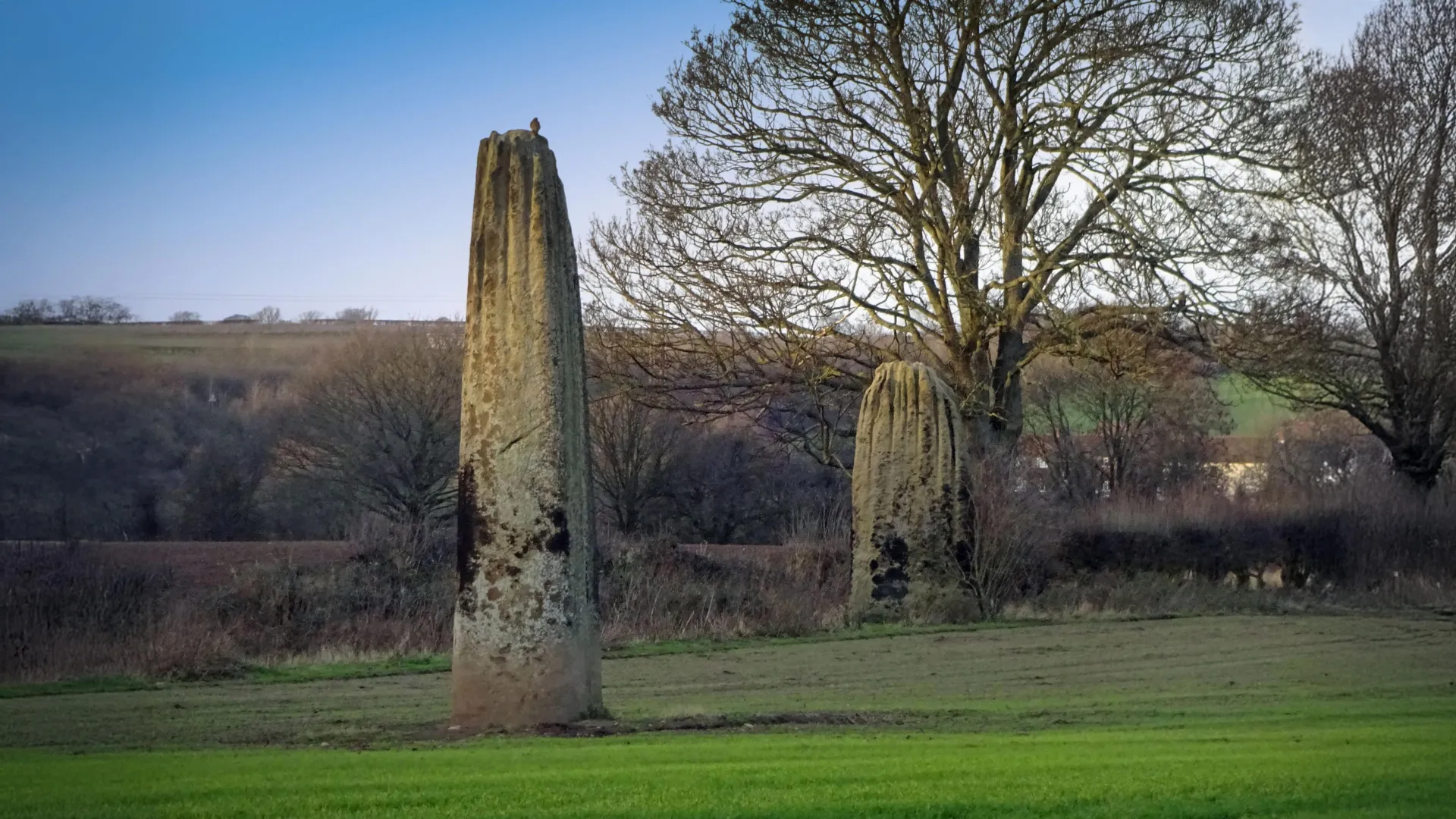
A collaborative research project led by Curtin University and the University of York has identified the geological origin of the Devil’s Arrows, a prominent prehistoric stone alignment located near Boroughbridge in northern England. The three standing stones, which reach heights of approximately seven meters, represent Britain’s tallest surviving prehistoric stone row. Previous research had been unable to determine their source location with certainty.
Using advanced analytical techniques, researchers traced the enormous stones to Brimham Rocks, a rugged area in North Yorkshire. Each stone weighs approximately 25 tonnes, meaning they were transported across at least 18 kilometers from their source location. The research challenges earlier assumptions that builders would have selected stones from the closest available source, as Plumpton Rocks, which lies nearer to the monument, had previously been considered the probable origin.
The study employed a non-invasive sampling method using adhesive tape to collect mineral grains from the stones without causing damage to the monument. Researchers then analyzed the mineral composition and age signatures of these samples and compared them against geological materials from potential source locations. The analysis confirmed the connection to Brimham Rocks while also ruling out natural explanations such as glacial movement, establishing that the stones were deliberately transported by people.
The findings suggest that the prehistoric builders were making intentional decisions based on cultural, symbolic, or spiritual considerations rather than purely practical concerns. Lead researchers indicated that the landscape around Brimham Rocks may have held particular significance for the ancient communities involved in the monument’s construction. The stones are believed to have been transported and positioned during the Late Neolithic or Early Bronze Age period.
The research team plans to apply their low-impact sampling technique to other standing stones whose origins remain unknown, and to conduct targeted excavations at both the Devil’s Arrows and the source area. These future investigations may provide additional insights into the timing and methods of prehistoric monument construction.
Article Attribution | Read More at Article Source
Article summary produced by Claude AI