

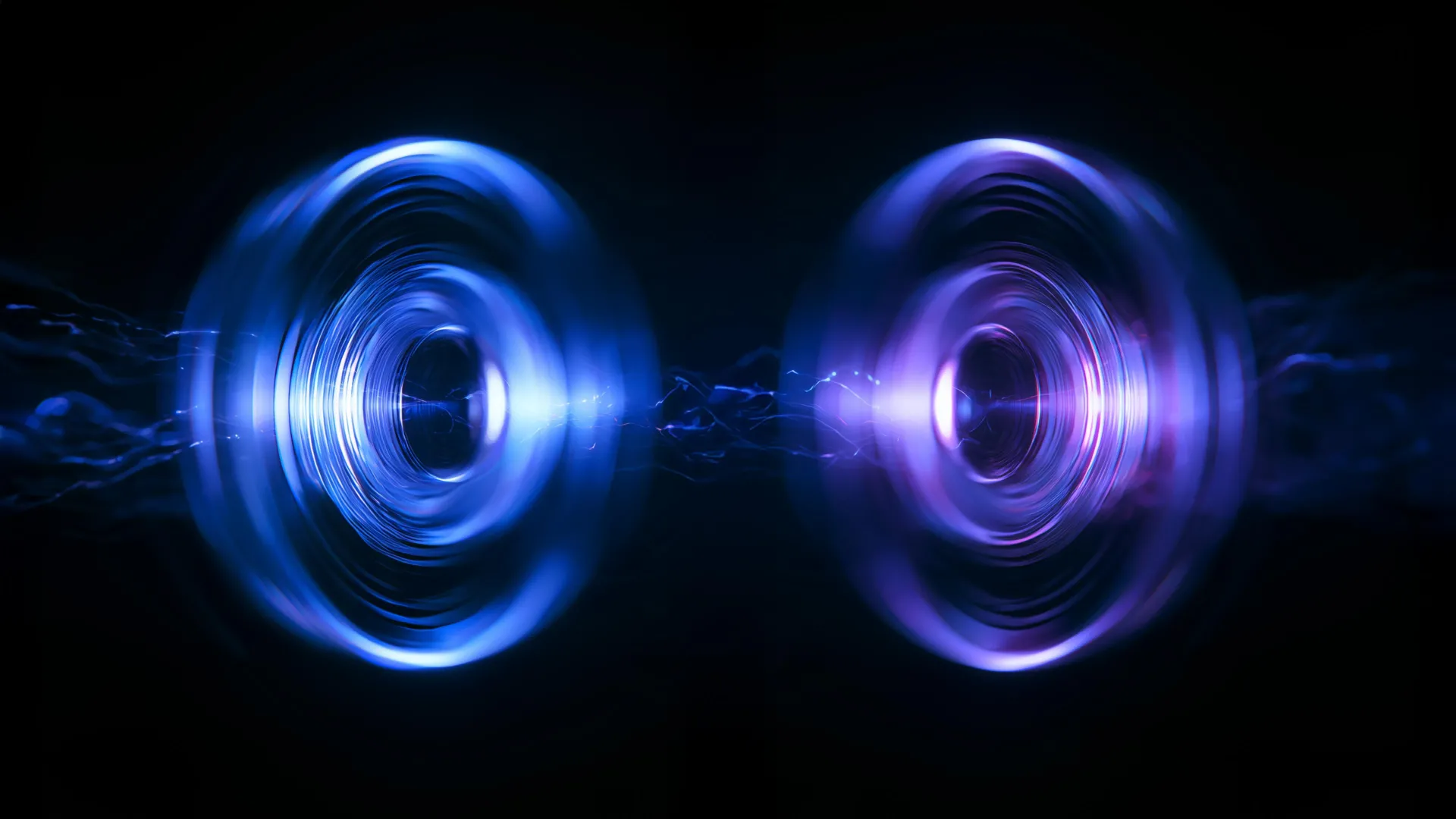
Researchers at TU Dortmund University have demonstrated that distinct time crystals can form within the same semiconductor material and achieve synchronized oscillations, according to findings published in Nature Communications. The study builds on prior work in January 2024 that confirmed continuous time crystals could exist and remain stable within gallium arsenide semiconductors doped with small amounts of indium and silicon.
Time crystals represent unusual physical systems whose internal patterns repeat regularly over time without requiring an external driving signal. In the TU Dortmund experiments, these structures form when localized electrons within the semiconductor interact with approximately one million nearby nuclear spins at temperatures near -270 degrees Celsius. Researchers use a laser to align electron spins, which then transfer their polarization to surrounding nuclear spins. When a weak magnetic field is applied, the nuclear spin polarization begins to rotate in a regular rhythm, maintained through ongoing feedback between electron and nuclear spins.
Although different regions of the semiconductor have slight microscopic variations that would normally cause separately formed time crystals to oscillate at different frequencies, broad laser illumination across multiple regions enables the independent oscillations to lock together and operate at a unified frequency. This synchronization phenomenon parallels observations made by Christiaan Huygens in 1665 regarding mechanical pendulum clocks that synchronized through shared structural coupling, though the semiconductor mechanism operates through the movement of spin-polarized electrons rather than mechanical vibrations.
The research revealed that time crystals positioned as far as 40 micrometers apart could still achieve synchronization, a distance exceeding one thousand times the characteristic size of a single oscillator. Beyond this threshold, time crystals located further apart maintain independent oscillations without locking together. These findings establish evidence of non-local coupling between spatially separated spin systems and may contribute to developing future networks of controllable spin oscillators for potential applications in spin-based technologies.
Article Attribution | Read More at Article Source
Article summary produced by Claude AI