

Two recent NASA-funded research efforts have identified previously underappreciated ways that solar activity and the Sun’s position within the Milky Way may have shaped Earth’s climate and habitability over geological timescales.
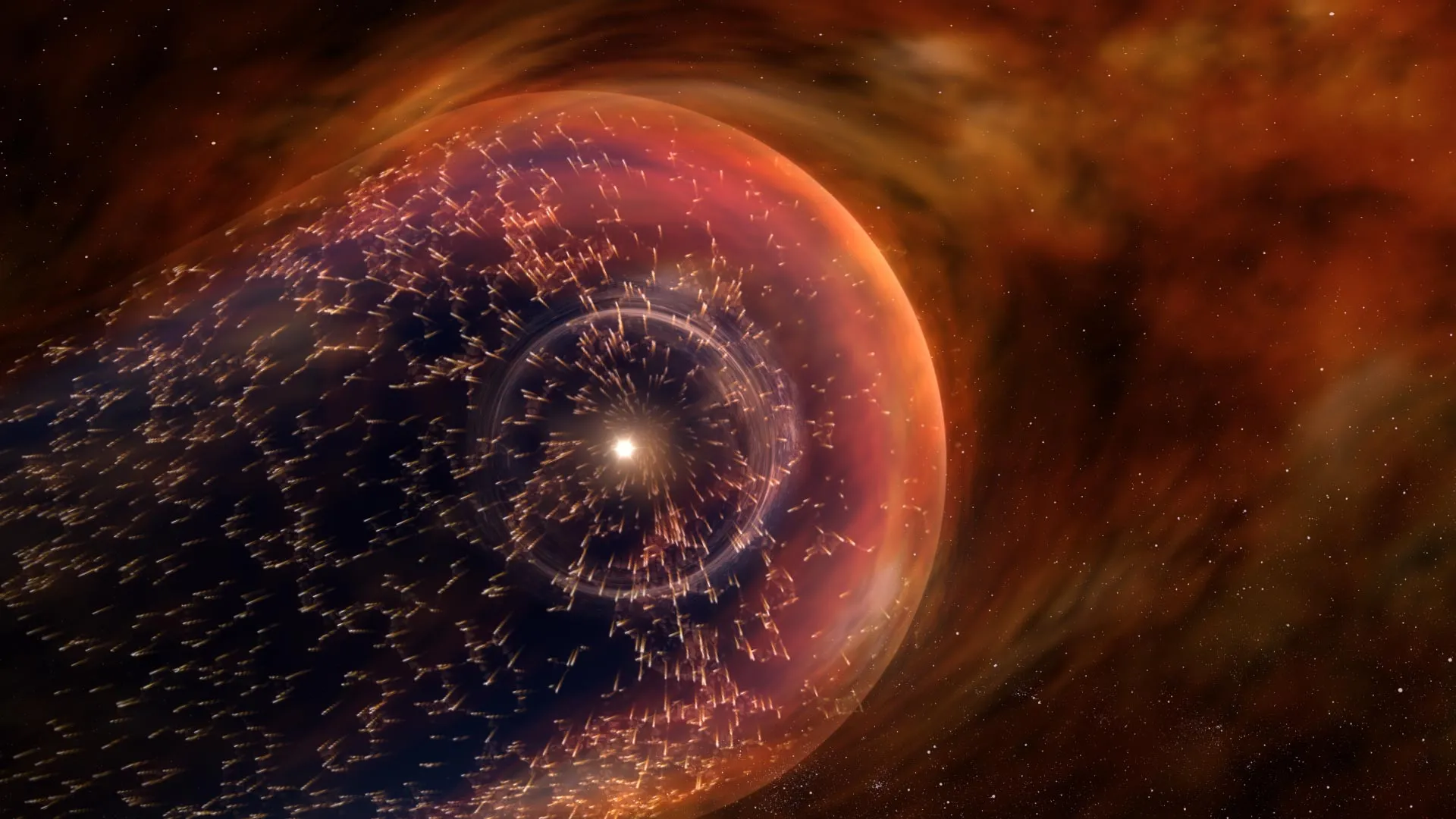
The first study, conducted by researchers at NASA’s SHIELD center, used computer simulations to trace the Sun’s path through the galaxy over its 4.6-billion-year history. The heliosphere, a protective bubble of charged particles surrounding the solar system, travels around the galactic center alongside Earth and the other planets. The simulations indicate that the solar system encountered extremely cold, dense regions of gas and dust at least three times in recent geological history—approximately 2 to 3 million years ago, 6 to 7 million years ago, and 13 to 14 million years ago. During these encounters, the simulations suggest the heliosphere may have compressed dramatically, potentially shrinking to dimensions smaller than Earth’s orbit and temporarily leaving the planet outside the Sun’s protective shield. Evidence supporting this scenario includes the presence of interstellar dust elements found in deep-sea sediment cores, Antarctic ice samples, and lunar material from these corresponding time periods. Researchers propose that exposure to dense hydrogen clouds during these episodes altered Earth’s atmospheric composition, increasing water vapor and affecting upper atmospheric conditions in ways that may have influenced surface climate patterns and contributed to ancient ice ages.
A separate investigation led by Vladimir Airapetian of NASA’s Goddard Space Flight Center addresses a longstanding puzzle known as the Faint Young Sun paradox. About three billion years ago, the Sun produced only 70 percent of its current energy output, which should have left early Earth frozen. However, geological evidence indicates that liquid water existed on the planet during this period. Airapetian’s team proposes that the young Sun may have compensated through heightened activity. Observations of young stars similar to the early Sun reveal they produce enormous superflares daily, releasing high-energy particles into space. If the young Sun exhibited comparable behavior, such energetic particles could have triggered chemical reactions in Earth’s early atmosphere that generated greenhouse gases and maintained habitable temperatures.
Article Attribution | Read More at Article Source
Article summary produced by Claude AI