

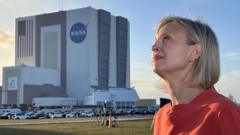
Four astronauts—Reid Wiseman, Victor Glover, Christina Koch, and Jeremy Hansen—completed a historic lunar mission lasting ten days, traveling a record distance of 252,756 miles from Earth. The crew launched from Kennedy Space Center in Florida aboard a 98-meter-tall rocket, entering microgravity and beginning their quarter-million-mile journey to the Moon. The mission represented the first crewed flight of both the rocket and spacecraft design, making it a significant test flight with inherent risks.
During the voyage, the astronauts lived and worked in extremely confined quarters roughly the size of a minibus, with their activities monitored continuously by mission control teams at Johnson Space Center in Houston. The crew transmitted live video feeds and audio descriptions of the lunar surface as they passed, capturing thousands of images. A notable moment occurred when the astronauts named a crater after Reid Wiseman’s late wife Carroll, bringing the entire crew and mission control personnel to tears.
The mission surpassed Apollo 13’s previous record for distance traveled into space. Messages from Apollo-era astronauts, including one recorded from Jim Lovell before his death, were transmitted to the crew during their flight. NASA administrator Jared Isaacman emphasized that the agency aims to build upon Apollo’s legacy through planned lunar landings and an eventual Moon base, with future missions targeting Mars exploration.
The final and most challenging phase involved the spacecraft’s return through Earth’s atmosphere, where it encountered temperatures reaching half the surface temperature of the Sun. The crew experienced reentry as an intense fiery passage, successfully completing their splashdown and returning safely to Earth after their groundbreaking voyage.
Article Attribution | Read More at Article Source
Article summary produced by Claude AI