

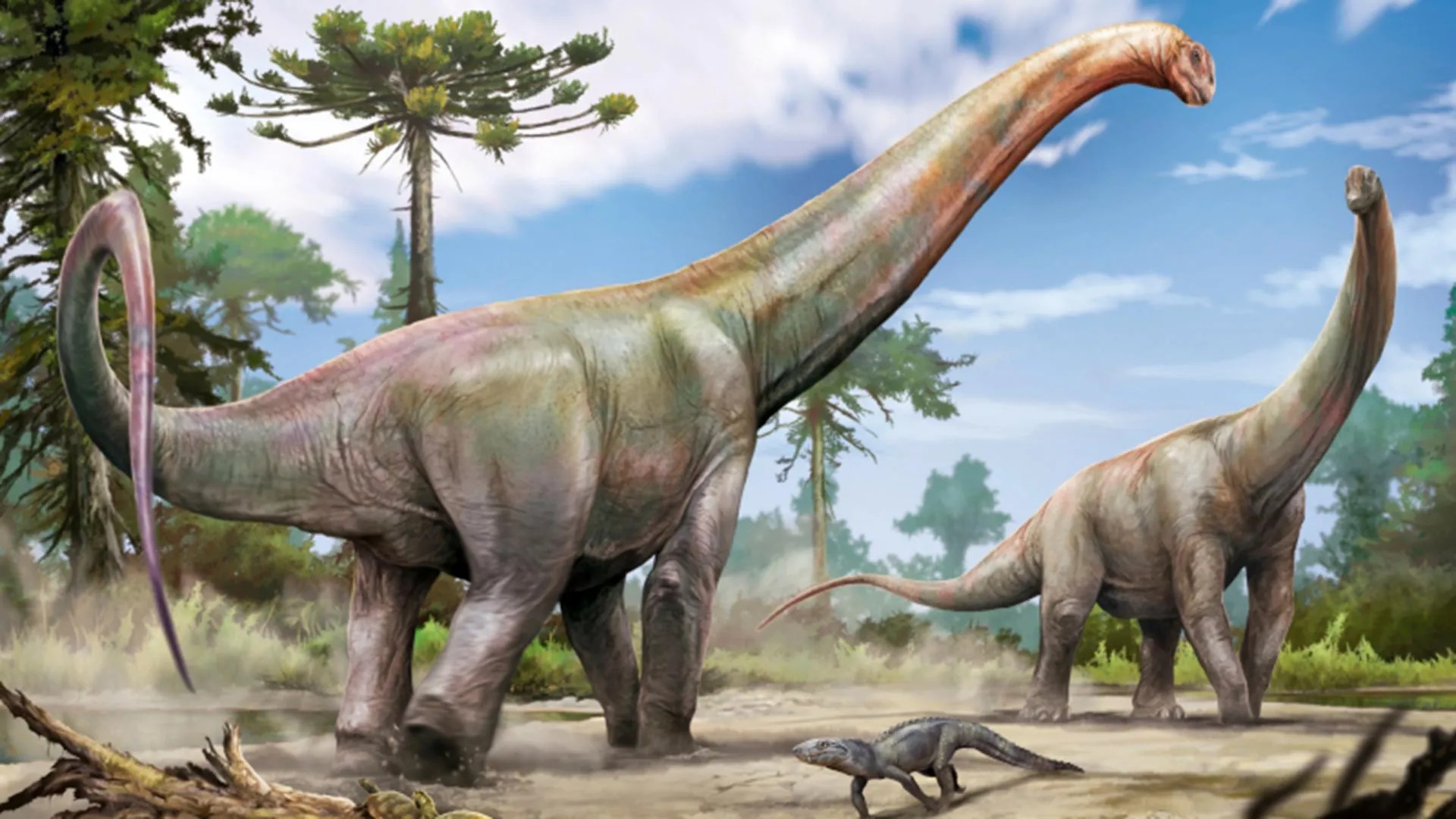
A previously unknown dinosaur species, designated Dasosaurus tocantinensis, has been formally described following its discovery at a construction site in Davinópolis, Maranhão state in northeastern Brazil. The specimen, detailed in a study published in the Journal of Systematic Palaeontology, represents a significant addition to the region’s paleontological record and measures approximately 20 meters in length. Based on geological dating, the animal inhabited the region roughly 120 million years ago during the Cretaceous period.
The discovery carries particular significance for understanding prehistoric animal distribution patterns. Researchers have identified Dasosaurus tocantinensis’s closest evolutionary relative in what is now Spain, suggesting both animals belonged to a shared lineage that once spanned territories now separated by the Atlantic Ocean. Scientists propose that ancestral populations migrated through North Africa between 140 and 120 million years ago, when the continents remained connected within the supercontinent Gondwana. This finding contributes to broader understanding of how sauropod lineages dispersed across ancient landmasses.
The fossil remains constitute a relatively complete specimen for a dinosaur of this type, including tail vertebrae, a 1.5-meter femur, ribs, and various limb bones. The recovered material underwent extensive preparation and analysis before being transferred to the State Center for Natural History and Archaeology Research in São Luís, where it is now housed. Microscopic examination of bone structure revealed growth patterns combining characteristics from both older sauropods and related titanosaurs, potentially indicating that certain bone development processes appeared earlier in dinosaur evolution than previously documented.
The excavation emerged from environmental monitoring protocols mandated during the construction project. Initially, archaeologists believed the remains belonged to large prehistoric mammals, but researchers recognized the material’s considerably greater age based on the specimen’s depth and the geological formation’s established chronology. The construction site’s exposure of otherwise inaccessible rock layers underscores both the opportunities and challenges that development projects present for paleontology in Brazil. Researchers are currently seeking permission from the construction company to resume excavations at the location, where additional fossil material from the same specimen may remain buried.
Article Attribution | Read More at Article Source
Article summary produced by Claude AI