

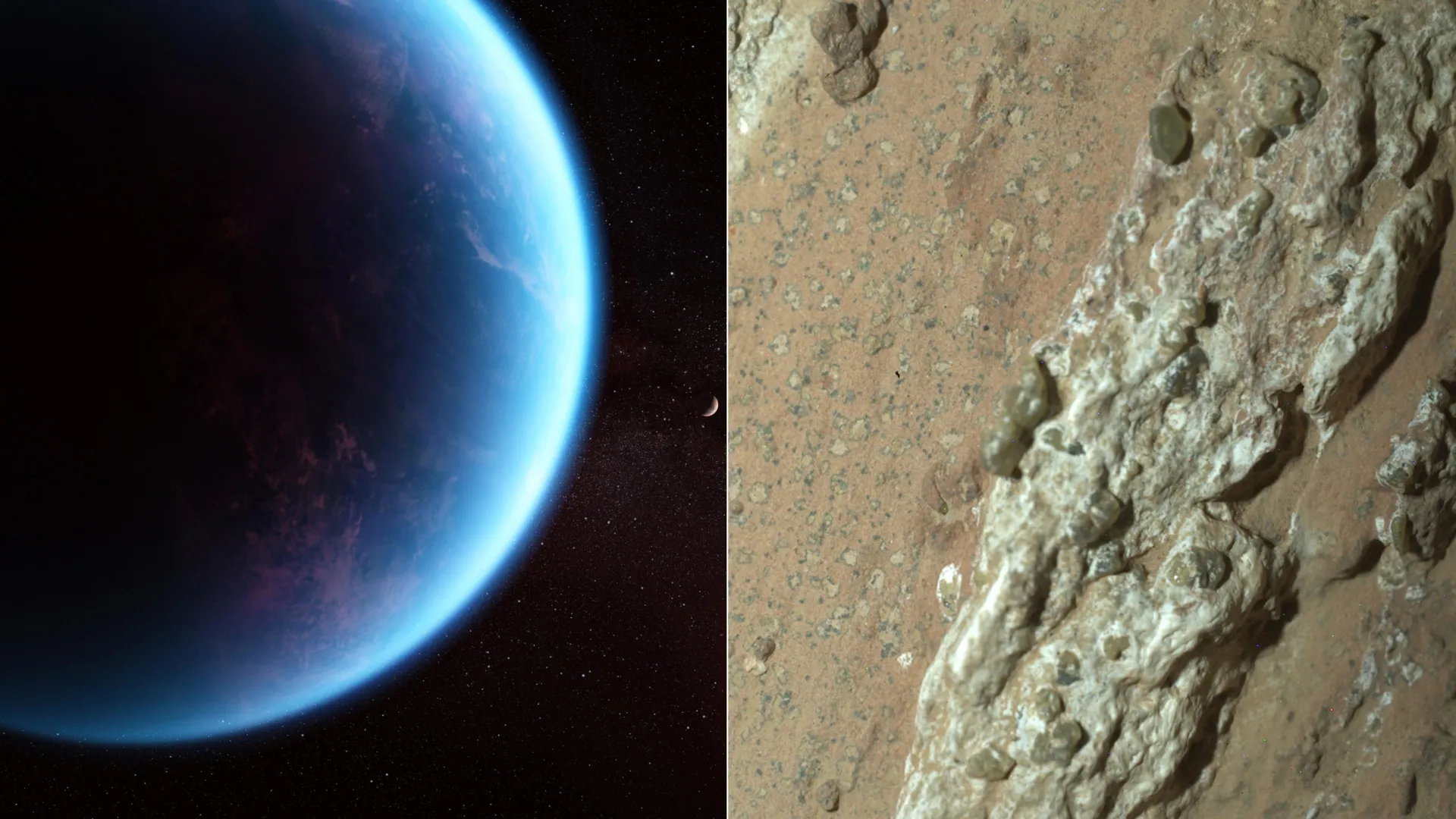
Recent announcements regarding the possible discovery of extraterrestrial life have generated significant media attention and public interest. In 2025, researchers reported detecting potential biosignature molecules on the exoplanet K2-18b, while NASA announced that a Martian rock sample called Cheyava Falls appeared to contain evidence of past microbial activity. Both findings received extensive coverage suggesting major breakthroughs in the search for alien life.
However, a comprehensive survey of hundreds of astrobiologists conducted shortly after these announcements reveals a more measured response from the scientific community. When asked whether extraterrestrial life had probably been discovered, only 6.6% of surveyed experts agreed regarding K2-18b, with nearly two-thirds disagreeing and 28% remaining neutral. The Mars case showed somewhat higher confidence at 15.1% agreement, though disagreement still reached 44.6% with 40.3% expressing neutrality. The distribution of opinion across the scientific community thus presents a notably cautious picture rather than enthusiasm for confirmed discovery.
The variation in response between the two cases reflects differences in the types of evidence involved. The K2-18b claim depends on atmospheric signatures detected from vast distances, while the Martian sample represents a physical object available for detailed study. Additionally, scientists recognize that biological and non-biological processes can sometimes produce similar observable features, making definitive interpretation challenging.
The survey results highlight important nuances in scientific opinion often overlooked in public discourse. Rather than simple binary agreement or disagreement, expert opinion distributed across multiple positions—strong agreement, agreement, neutrality, disagreement, and strong disagreement—each carries distinct meaning. The notable shift away from strong disagreement toward more tentative positions suggests the scientific community became more open to possibilities without endorsing them definitively.
This research underscores a broader challenge in science communication. Public discussions frequently invoke phrases like “the science says” or “scientists believe” without systematic measurement of actual expert opinion. As scientific communities grapple with emerging evidence and substantial uncertainty across multiple fields, more structured approaches to understanding how scientists respond to contested claims would improve the quality of public understanding and inform discussions about scientific knowledge advancement.
Article Attribution | Read More at Article Source
Article summary produced by Claude AI