

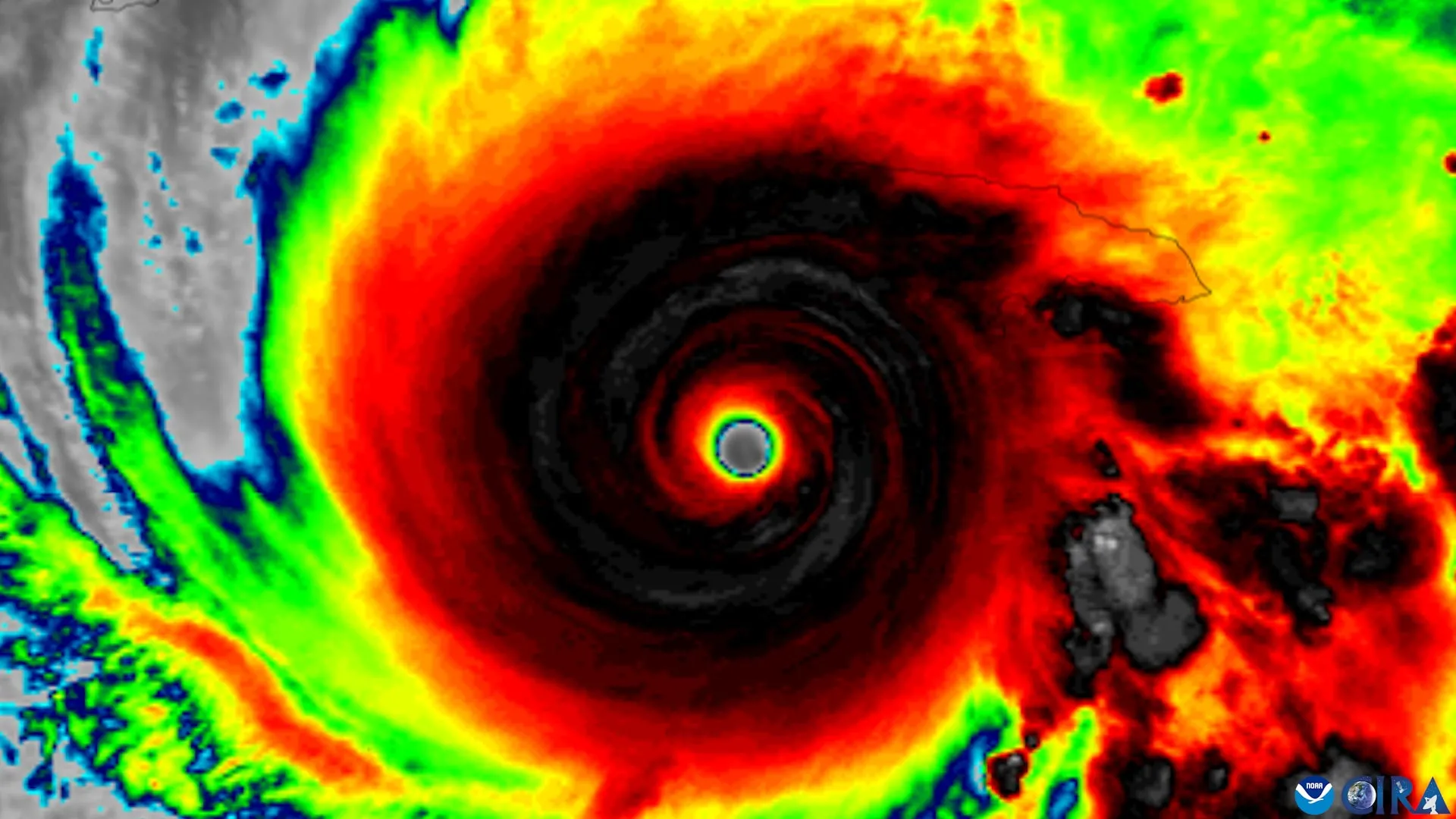
Scientists from the University of Miami Rosenstiel School and NOAA’s Atlantic Oceanographic and Meteorological Laboratory have identified four characteristics that indicate when a disorganized tropical cyclone is likely to become vertically aligned and capable of rapid intensification.
Vertical organization is a critical factor in tropical cyclone strengthening. When a storm’s rotating centers at different atmospheric levels become misaligned—a condition known as tilt—the cyclone typically cannot intensify substantially. Strong winds in the upper atmosphere can push the top of a storm’s circulation away from its center near the ocean surface. The research, based on nearly three decades of observations from NOAA Hurricane Hunter aircraft, reveals which conditions favor the realignment process.
The four indicators of impending vertical organization are: a compact, tightly organized circulation near the ocean surface; favorable positioning of the storm tilt relative to vertical wind shear; stronger rising air and heavier rainfall near the storm’s lower-level center; and environmental conditions featuring warm ocean water, abundant atmospheric moisture, and relatively weak middle-level winds. Lead researcher Michael S. Fischer noted that storms destined to align “already looked different about a day beforehand,” displaying stronger surface circulations and more vigorous thunderstorms.
The study examined data from 1,510 radar analyses collected across 28 hurricane seasons from 1997 through 2024, allowing researchers to compare storms that successfully aligned with those remaining tilted. The findings suggest that thunderstorms near the lower circulation may actively facilitate the organization process rather than simply indicating existing organization.
The research has practical applications for hurricane forecasting and emergency preparedness. Reconnaissance aircraft already collect many of the measurements identified in the study during operational missions. Earlier identification of organizational trends could provide coastal communities and emergency managers with additional preparation time before rapid intensification occurs. The study, titled “To Align or Not to Align? That Is the Question,” was published in the Journal of Geophysical Research: Atmospheres.
Article Attribution | Read More at Article Source
Article summary produced by Claude AI